Live

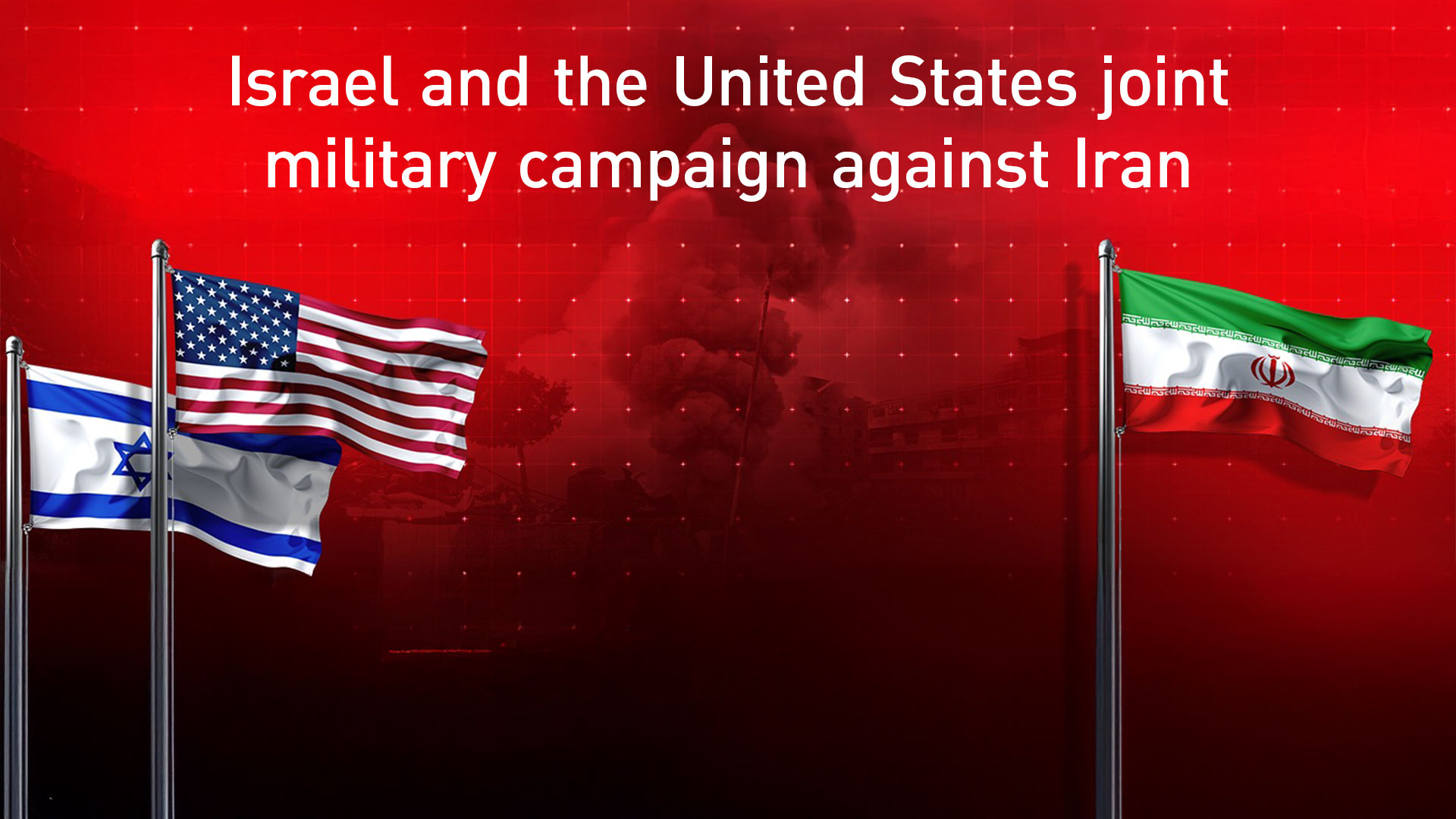
Israel and the United States joint military campaign against Iran

A coordinated offensive by Israel and the United States targets strategic military sites across Iran, marking a dramatic escalation in regional tensions.

Iran
Graphic Designed by Kurdistan24
Shared

Donald Trump Says U.S. to Extend Israel-Lebanon Ceasefire by Three Weeks

Dr. Kamaran Aziz
Dr. Kamaran Aziz
Dr. Kamaran Aziz

U.S. President Donald Trump announced a three-week extension of the ceasefire between Israel and Lebanon following direct talks at the White House.

The negotiations, representing the first direct bilateral diplomatic engagement between the two nations since 1993, aim to address Hezbollah's disarmament, border disputes, and the withdrawal of Israeli military forces. 

Concurrently, broader regional peace efforts with Iran remain heavily stalled. Prospective negotiations in Pakistan face operational delays as the Strait of Hormuz remains contested.

The U.S. military deployed a third aircraft carrier to the Middle East and intercepted a vessel transporting Iranian oil, while Tehran reported collecting its first maritime tolls from international shipping.

Despite the diplomatic progress in Washington, hostilities persist locally, with recent Israeli strikes in southern Lebanon and Hezbollah rocket fire directed at northern Israel.

Furthermore, Israeli officials denied involvement in explosions reported over the Iranian capital of Tehran.

 
Click to Read More

Key Points

Trump Extends Ceasefire Window as Iran Divisions Delay Islamabad Talks: Axios Read More

Three Vessels hit by Iran's Gunfire in Strait of Hormuz as Maritime Tensions Escalate Read More

Trump Extends Iran Ceasefire Deadline, Maintains Naval Blockade as Talks Hang in Balance Read More

Trump Accuses Iran of Ceasefire Violations as Strait of Hormuz Crisis Deepens Read More

US, Iran Envoys to Arrive in Islamabad for Talks as Ceasefire Deadline Nears: AP Read More

Netanyahu Warns Conflict With Iran far From Over, Says New Developments Possible 'at any Moment' Read More

Iran Conditions Strait of Hormuz Reopening on End to U.S. Naval Blockade Read More

Iran Reviews New U.S. Proposals as Strait of Hormuz Tensions Escalate Read More

US ramps up pressure on Iran with troop deployment and blockade as talks edge toward restart Read More

Trump Criticizes Italy’s Meloni Over Refusal to Back Iran War Read More

Auto updates

Iran Asserts Military Dominance Amid US Talks

Dr. Kamaran Aziz
Dr. Kamaran Aziz
Dr. Kamaran Aziz

Iranian leadership issued a coordinated series of declarations on Saturday asserting military control over the Strait of Hormuz while simultaneously reopening civilian airspace.

The head of the judiciary and defense officials dismissed U.S. ceasefire proposals as a sign of enemy desperation, warning that Iran's armed forces are prepared to inflict severe damage if the U.S. continues its maritime blockades.

The defiant rhetoric coincides with indirect peace negotiations in Islamabad involving U.S. envoys Steve Witkoff and Jared Kushner.

Despite projecting a unified wartime posture against a massive U.S. naval deployment, Tehran moved toward administrative normalization by resuming Iran Air flights to multiple foreign destinations, reopening the eastern airspace to international overflights, and inaugurating a multi-purpose underground civil defense shelter in the capital.


Hezbollah Rejects US-Mediated Direct Negotiations With Israel

Dr. Kamaran Aziz
Dr. Kamaran Aziz
Dr. Kamaran Aziz

On Saturday, senior Hezbollah official Mahmoud Qamati rejected US-mediated direct negotiations between Lebanon and Israel, labeling them an illegal recognition of the Israeli state.

In an exclusive statement to Kurdistan24, Qamati warned of a foreign plot to incite a Lebanese civil war and asserted that Hezbollah’s weapons remain a domestic issue not subject to foreign interference.

The rejection followed US President Donald Trump’s Friday announcement extending a fragile bilateral ceasefire by three weeks.

Trump stated the Washington meetings, attended by key US, Israeli, and Lebanese officials, aimed to help Lebanon protect its sovereignty against Hezbollah.

The diplomatic friction occurs amid severe regional warfare; Hezbollah officially entered the conflict on March 2, 2026, following the assassination of Iranian Supreme Leader Ayatollah Ali Khamenei, resulting in over 850 combined missile and drone attacks against Israel throughout March alone.

 
Click to Read More

Kurdistan Region Reports 809 Strikes Over 50 Days

The KRG’s Media and Information Department released official data documenting 809 drone and missile attacks on the Kurdistan Region between Feb. 28 and Apr. 20, 2026.

The strikes, coinciding with the broader U.S.-Israel-Iran conflict, resulted in 20 fatalities and 123 injuries.

Despite the Region’s neutrality, it has sustained the highest civilian and material losses among non-participating entities.

Erbil Province bore the brunt of the offensive, absorbing 477 attacks that killed 10 people and damaged the properties of 726 citizens. 

Additional strikes affected Sulaimani, Halabja, Duhok, and the Soran Administration, heavily disrupting the private sector.

The international community has condemned the bombardments, while Erbil continues to urge the federal government in Baghdad to punish the perpetrators and protect the shared sovereignty of the Kurdistan Region and Iraq.


U.S.-Iran Diplomacy Resumes Indirectly in Islamabad, Prospects Unclear

Dr. Kamaran Aziz
Dr. Kamaran Aziz
Dr. Kamaran Aziz

U.S. envoys Steve Witkoff and Jared Kushner have arrived in Islamabad for a new round of peace negotiations with Iran, though direct bilateral meetings remain unlikely. Iranian officials stated that Pakistan will serve as an intermediary to convey messages between the delegations.

The diplomatic push occurs amid a fragile ceasefire and significant economic disruptions caused by Iran's blockade of the Strait of Hormuz. In response to energy market volatility, President Trump extended a Jones Act waiver to facilitate oil shipments.

Concurrently, the U.S. military maintains a strict blockade on Iranian ports, with three aircraft carriers now deployed to the region. Despite an extended ceasefire between Israel and Lebanon, violence continued with deadly Israeli strikes in southern Lebanon.

Divisions within Iran's leadership and the notable absence of U.S. Secretary of State Marco Rubio continue to complicate the negotiation process.

 
Click to Read More

U.S. Department of War Expands Blockade of Iran Globally

Dr. Kamaran Aziz
Dr. Kamaran Aziz
Dr. Kamaran Aziz

Secretary of War Pete Hegseth and Gen. Dan Caine reported Friday that Operation Epic Fury has achieved "decisive results," shifting the U.S. mission to a global maritime blockade of Iran.

The U.S. Department of War confirmed the seizure of the M/V Touska and the interdiction of two "dark fleet" tankers in the Indian Ocean. 

While a ceasefire remains in place, President Trump has issued "shoot and kill" orders for any Iranian forces attempting to mine the Strait of Hormuz.

The president extended the ceasefire indefinitely, citing a desire for a "wise deal" with a fractured Iranian leadership. 

Regional tensions remain high as Iran continues cargo ship seizures, and a second U.S. aircraft carrier is deployed to the region.

Internally, the Navy faces a leadership change following Secretary John Phelan's exit. The Department of War maintains "total control" over the strategic waterway.

 
Click to Read More

Iran and Pakistan Consult on U.S. Diplomatic Engagement

Dr. Kamaran Aziz
Dr. Kamaran Aziz
Dr. Kamaran Aziz

Iranian Foreign Minister Abbas Araghchi held high-level telephone consultations on Friday with Pakistan’s Deputy Prime Minister Mohammad Ishaq Dar and Army Chief Asim Munir.

The discussions centered on regional security and the ongoing Pakistan-mediated diplomatic efforts between Iran and the United States.

While Pakistan emphasized the importance of sustained dialogue for regional stability, Iran raised concerns over alleged U.S. ceasefire violations and "excessive demands" during previous negotiations held in Islamabad on April 11-12. 

These talks, which included U.S. Vice President J.D. Vance, ended without agreement. A subsequent U.S. proposal delivered by Field Marshal Munir remains under review in Tehran.

The diplomatic activity follows President Donald Trump’s April 21 extension of the ceasefire initially established on April 8. Both sides agreed to maintain close contact as mediation continues.

 
Click to Read More

U.S. Prepares Strike Options as Iran Ceasefire Fails

Dr. Kamaran Aziz
Dr. Kamaran Aziz
Dr. Kamaran Aziz

U.S. military planners are developing "dynamic" strike plans against Iranian naval and energy targets in the Strait of Hormuz, anticipating a potential collapse of the current ceasefire, according to reporting from Israel's Channel 12 (N12).

U.S. President Trump has authorized the military to "shoot and kill" Iranian boats obstructing the waterway and has ordered intensified mine-clearing operations, as detailed by The Associated Press.

While a three-week ceasefire extension was reached between Israel and Hezbollah, cross-border exchanges continue.

The U.S. has deployed a third aircraft carrier, the USS George H.W. Bush, to the region to bolster its presence. Iran maintains a defiant posture, with its judiciary chief touting the "swarm fleet" capability to saturate U.S. defenses.

Meanwhile, the Strait remains closed to commercial shipping, and the U.S. has seized a sanctioned tanker, the Majestic X, in the Indian Ocean.

 
Click to Read More

Israel–Hezbollah Ceasefire Strains as Cross-Border Strikes Continue

Dr. Kamaran Aziz
Dr. Kamaran Aziz
Dr. Kamaran Aziz

The Israel-Hezbollah ceasefire has devolved into a cycle of "coercive diplomacy," with both sides utilizing strikes to gain leverage. While Washington extends the truce, Hezbollah rockets and Israeli airstrikes continue, highlighting the failure of a stable enforcement architecture.

 
Click to Read More

U.S. Offers $10 Million Bounty for Militia Leader

Dr. Kamaran Aziz
Dr. Kamaran Aziz
Dr. Kamaran Aziz

The U.S. Department of State’s Rewards for Justice program announced a $10 million reward for information on Hashim Finyan Rahim al-Saraji, leader of the Kata’ib Sayyid al-Shuhada militia.

The announcement, published on social media on Friday, accuses al-Saraji’s group of killing Iraqi civilians and attacking U.S. diplomatic and military facilities across Iraq and Syria.

This bounty follows closely on an April 17 action by the U.S. Treasury Department’s Office of Foreign Assets Control, which imposed sweeping economic sanctions on seven commanders from various Iran-aligned Iraqi militias, including Kata’ib Sayyid al-Shuhada, Kata’ib Hizballah, Harakat al-Nujaba, and Asa’ib Ahl al-Haqq.

The Treasury designations block all U.S.-based property of the targeted individuals and threaten secondary sanctions against foreign financial institutions facilitating their transactions.

 
Click to Read More

Iran Rejects Arab League Condemnation Over Regional Strikes

Dr. Kamaran Aziz
Dr. Kamaran Aziz
Dr. Kamaran Aziz

The diplomatic dispute between Iran and neighboring Arab states has escalated following a formal exchange of condemnations regarding recent regional military actions.

The Arab League, in an extraordinary ministerial meeting detailed by the Saudi Press Agency, strongly condemned Iran for launching missile and drone attacks against eight Middle Eastern nations, including Saudi Arabia, the UAE, and Iraq.

The League accused Tehran of violating UN Security Council Resolution 2817, demanded full economic reparations, and condemned threats to close the Strait of Hormuz and Bab Al Mandeb.

In response, the IRGC-affiliated Tasnim News Agency reported that Iran's Foreign Ministry unequivocally rejected the Arab League's statement. Iranian spokesperson Esmaeil Baqaei justified the strikes as legitimate self-defense against U.S. and Israeli operations, warning that any Gulf nations facilitating foreign military access against Iran will bear international responsibility.

 
Click to Read More