Trump Accuses Iran of Ceasefire Violations as Strait of Hormuz Crisis Deepens
Shipping disruptions strand thousands, while uncertainty clouds peace talks and global markets hold cautious optimism
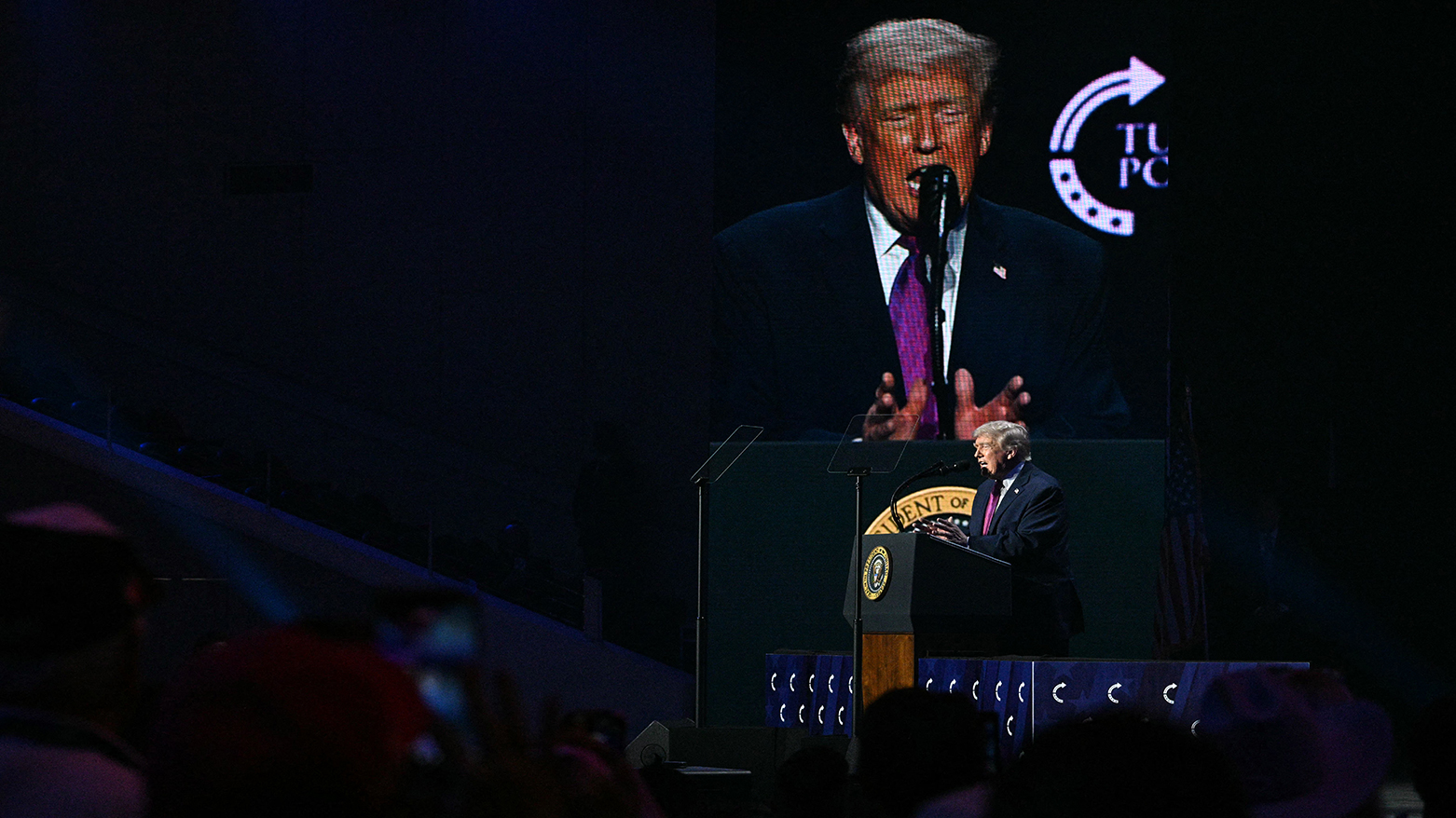
ERBIL (Kurdistan24) — Donald Trump on Tuesday accused Iran of repeatedly violating a fragile ceasefire, warning that the Middle East could soon slide back into open conflict as the truce nears its expiration.
“Iran has violated the ceasefire numerous times!” Trump wrote on his Truth Social platform, referring to the two-week pause in hostilities set to expire by Wednesday. His remarks come as both sides weigh the possibility of resuming negotiations aimed at ending a war Trump describes as necessary for preventing Iran from making a nuclear bomb.
Trump also cast doubt on the feasibility of securing Iran’s enriched uranium stockpile, describing the process as “long” and “difficult” following U.S. strikes on Tehran’s nuclear facilities last year.
He reiterated that “Operation Midnight Hammer” had obliterated what he called Iran’s “nuclear dust” sites—a term he uses to describe enriched uranium or remnants of nuclear infrastructure.
Meanwhile, the head of the International Maritime Organization (IMO), Arsenio Dominguez, appealed for urgent assistance for thousands of seafarers stranded due to the closure of the Strait of Hormuz, a critical global shipping route.
According to the IMO, around 20,000 seafarers and 2,000 vessels have been affected since maritime traffic was severely curtailed following U.S.-Israeli strikes on Iran on February 28. The strait typically handles about one-fifth of global oil and liquefied natural gas shipments.
Dominguez warned that stranded sailors are facing mounting stress and fatigue, urging shipping companies and governments to provide greater psychological and logistical support. While some countries have established helplines and supplied food, he stressed the need for more direct engagement to address the isolation experienced by crews.
Shipping remains limited as both Washington and Tehran signal readiness for escalation. Maritime intelligence reports indicate that more than 20 Iranian “shadow vessels” have managed to pass through the U.S. blockade, compared to roughly 120 daily transits in peacetime.
Separately, the United States Department of War on Tuesday stated that U.S. Marine forces overnight conducted a right-of-visit maritime interdiction and boarding of the stateless, sanctioned tanker M/T Tifani in the Indo-Pacific area of responsibility without incident.
U.S. officials said the operation was part of broader global enforcement efforts aimed at disrupting illicit maritime networks and intercepting vessels accused of providing material support to Iran, stressing that international waters would not serve as a safe haven for sanctioned ships.
Diplomatic uncertainty continues to cloud efforts to de-escalate the conflict. Iranian state media reported that no delegation has yet departed for planned talks in Islamabad, contradicting earlier expectations of imminent negotiations. A source familiar with U.S. planning said an American delegation would travel to Pakistan “soon.”
The White House confirmed that Vice President JD Vance is prepared to return to Pakistan to pursue a new round of talks, though Iran has accused Washington of breaching the ceasefire through port blockades and the seizure of a vessel.
Despite escalating rhetoric, global markets showed cautious optimism. Oil prices dipped slightly on Tuesday after earlier surges triggered by renewed tensions in the Strait of Hormuz, while stock markets in London, Paris, and Frankfurt recorded gains.
Investors remain hopeful that a diplomatic breakthrough could reopen the vital shipping corridor. “There is optimism within the market that the U.S.-Iran ceasefire will be extended,” Kathleen Brooks of trading group XTB told AFP.
However, concerns persist that prolonged disruptions could fuel inflation and weigh on global economic growth. “The longer oil remains elevated, the higher the risk of an inflationary shock,” said Russ Mould of AJ Bell.
Asian markets also posted strong gains, led by Seoul, where the benchmark index reached a record high amid a renewed rally in technology stocks. Markets in Tokyo, Taipei, Hong Kong, Shanghai, and Singapore also advanced.
Investors are closely watching developments in Washington, including confirmation hearings for Kevin Warsh, whose potential leadership of the Federal Reserve could shape interest rate policy as the U.S. navigates inflation risks linked to the ongoing conflict.
Despite tensions and ongoing military deployments in the Gulf waters, market sentiment suggests a prevailing belief that Washington and Tehran may ultimately reach an agreement to stabilize the region and restore critical energy flows through the Strait of Hormuz.