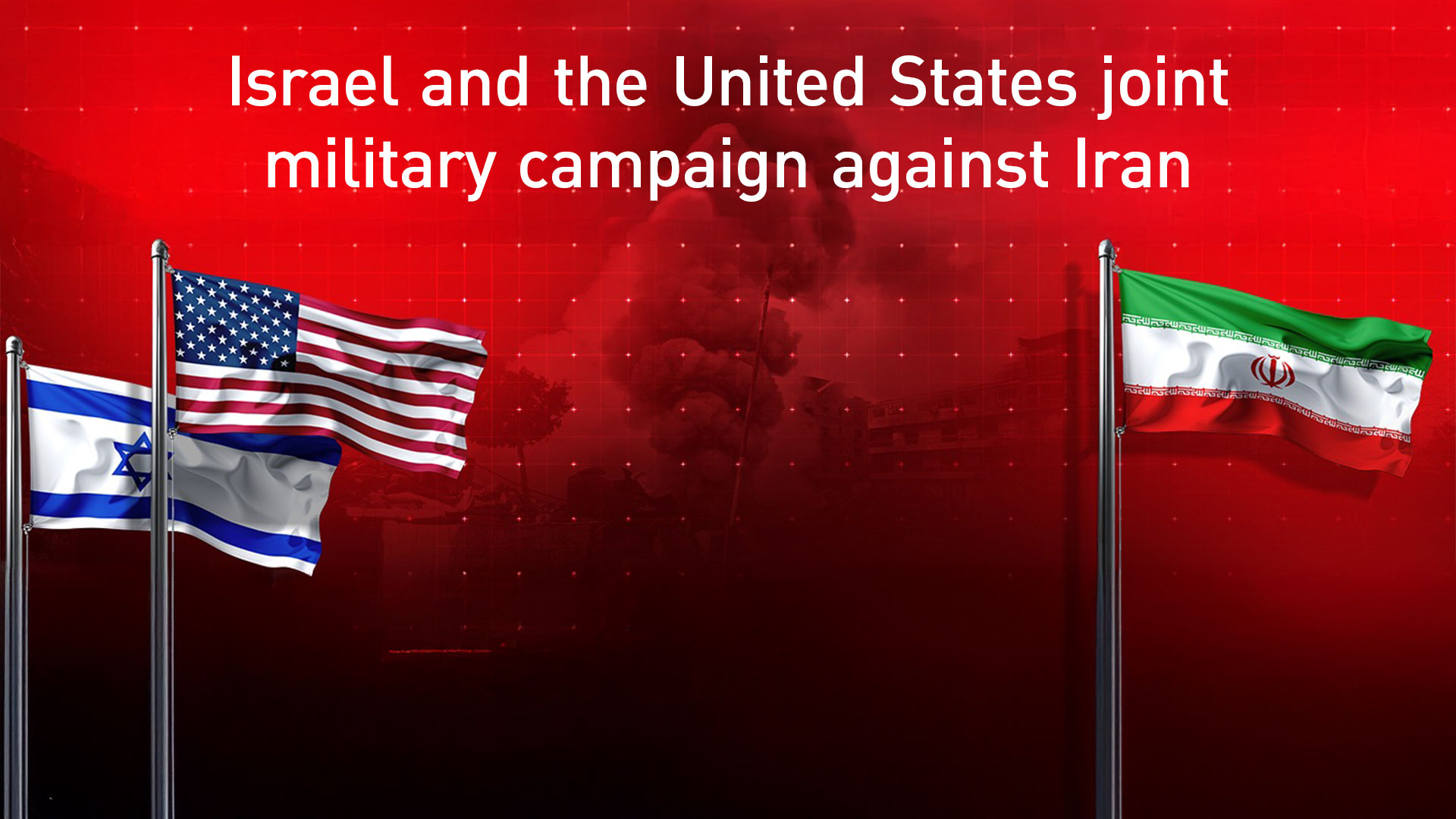
US–Iran–Israel Conflict | Strait of Hormuz Flashpoint
A regional conflict driven by US–Iran rivalry, Israel’s role, and nuclear tensions, fueling military escalation. At its core is the Strait of Hormuz flashpoint, where threats to shipping risk disrupting global oil flows.
Iran
Graphic Designed by Kurdistan24
Shared
Iran Expected to Respond Thursday to U.S. Proposal as Washington Pushes for Deal to End War
Iran is expected to respond on Thursday to a U.S. proposal aimed at ending the ongoing conflict between the two countries, as diplomatic efforts intensify amid continued military tensions in the Strait of Hormuz.
Sources familiar with the negotiations told CNN that Washington and Tehran are moving closer to agreeing on a short memorandum that could formally halt the war and launch a new phase of talks focused on unresolved disputes, including Iran’s nuclear program, sanctions relief, and maritime security.
Iraqi officials have adopted a formal stance of "no comment" following The Wall Street Journal's report on a clandestine Israeli military installation in Iraq's western desert. Key points from the government's response to Kurdistan24 include:
- Unverified Claims: Sabah al-Numan, spokesperson for the Commander-in-Chief, stated that the allegations remain "unconfirmed" by domestic intelligence. He emphasized that the government will not rely on anonymously sourced foreign media to dictate official policy.
- Geopolitical Sensitivity: Analysts suggest Baghdad's silence is a deliberate strategy to avoid domestic upheaval and potential retaliation from Tehran-aligned factions, which a confirmation of an Israeli presence would likely trigger.
- Contradictory Narratives: While Iraq previously filed a UN complaint regarding an "unauthorized incursion" in March, initially blaming the U.S., the WSJ report clarifies that Israeli forces were responsible for the engagement that killed an Iraqi soldier.
- Ongoing Investigation: National security agencies continue to evaluate physical evidence found by the Counter Terrorism Service during a secondary sweep of the region.
A bombshell report from The Wall Street Journal has detailed the existence of a clandestine Israeli military installation in Iraq's western desert, used to support the five-week air campaign against Iran. Key findings include:
- Tactical Hub: The base housed special forces and search-and-rescue teams, providing a forward position for the Israeli Air Force to manage strikes on targets 1,000 miles away.
- Sovereignty Breach: Iraqi forces nearly discovered the site in March 2026 after a local shepherd reported unusual helicopter activity. Israeli forces reportedly used airstrikes to repel approaching Iraqi units, killing one soldier.
- U.S. Awareness: The WSJ reports the base was established with the knowledge of U.S. officials, though Baghdad was not coordinated with or authorized the "reckless" incursion.
- Physical Evidence: Iraqi Counter Terrorism units later swept the area, finding physical proof of a foreign military presence. Baghdad has since lodged a formal complaint with the United Nations.
As the Strait of Hormuz remains effectively closed, the human cost of the maritime standoff has reached a critical point. Humanitarian and maritime organizations report:
- Massive Displacement: Approximately 20,000 crew members are currently stranded aboard 1,500 ships. Since the conflict began on February 28, at least 11 sailors have been killed in missile and drone attacks.
- Psychological Toll: Charities like the Sailors' Society describe a climate of "panic and hypervigilance." Crews report feeling like "mere bait" as they witness nearby strikes and constant drone activity.
- Detentions and Boardings: Beyond the physical threat of projectiles, Iranian forces have detained at least two commercial vessels. Reports indicate officers have suffered panic attacks during IRGC boarding operations.
- Persistent Danger: Despite the April 8 ceasefire, the waters remain a "zone of fear," with the U.S. blockade of Iranian ports and Tehran's closure of the strait leaving thousands caught in a high-stakes geopolitical deadlock.
Iran's Football Federation has outlined seven mandatory conditions for its national team's participation in the 2026 FIFA World Cup, hosted across the U.S., Canada, and Mexico. Key demands include:
- Visa Guarantees: Complication-free U.S. entry visas for all players and staff, specifically those with past IRGC military service, with an exemption from immigration questioning upon arrival.
- National Identity: A strict ban on any flags other than the official "Islamic Republic of Iran" flag and guarantees that the national anthem will be played without interruption.
- Security & Media: Heightened security at U.S. airports and stadiums, alongside a mandate that press conference questions remain strictly limited to sporting matters.
- Diplomatic Context: Despite ongoing U.S.-Iran tensions, President Donald Trump has supported their participation, stating, "Let them play."
Iran is currently scheduled to debut against New Zealand in Los Angeles on June 15.
U.S. President Donald Trump has warned he may launch "Project Freedom Plus," an expanded naval escort mission in the Strait of Hormuz, if diplomatic efforts with Tehran fail. Key updates include:
- Military Posture: Trump characterized the current Iranian military as having "not a lot left," signaling confidence while maintaining the threat of a "much higher intensity" bombing campaign if a comprehensive settlement isn't reached.
- Maritime Crisis: Over 1,600 merchant ships remain stranded in the region. Recent U.S. actions include disabling an Iranian oil tanker's rudder to enforce the ongoing naval blockade.
- "Operation Economic Fury": The U.S. Treasury expanded sanctions against firms in China and Dubai, targeting networks supplying drone and missile components to Iran.
- Israeli Skepticism: Jerusalem has reportedly urged the White House to prioritize the total destruction of Iran's energy infrastructure within 24 hours, fearing a bilateral deal could leave Tehran's core capabilities intact.
A recent CIA assessment reported by Reuters suggests Tehran possesses the logistical and economic capacity to endure the current U.S. naval blockade for approximately four months. Key developments include:
- Strategic Stalemate: Despite a technical ceasefire, the finding indicates that maritime isolation has yet to force Iran's diplomatic capitulation, providing Tehran a perceived "economic buffer."
- Maritime Escalation: Tensions are peaking in the Strait of Hormuz. U.S. forces recently disabled an Iranian tanker attempting to breach the blockade and repelled "unprovoked" attacks on three American destroyers.
- Regional Fallout: The conflict has spilled over, with the UAE intercepting Iranian drones and missiles. Shipping giants like Hapag-Lloyd report weekly losses of $60 million due to the waterway's closure.
- New "Strait Authority": Iran has established a "Persian Gulf Strait Authority" to vet ships and collect tolls, a move maritime experts call a violation of international law.
A senior official from the office of Iran's Supreme Leader has moved to quell international rumors regarding Mojtaba Khamenei's condition following the February 2026 airstrikes. Key highlights include:
- Official Denial: Mazaher Hosseini dismissed reports of "catastrophic injuries" or facial disfigurement as "nonsense," insisting the Supreme Leader is in "perfect health."
- Acknowledgment of Injuries: Hosseini confirmed for the first time that Mojtaba sustained minor injuries to his kneecap, back, and behind his ear during the U.S.-Israeli strikes that killed his father, Ali Khamenei, and his wife.
- Strategic Absence: Officials framed Mojtaba's complete absence from public view since his March appointment as a "deliberate security posture" rather than medical incapacitation.
- Geopolitical Stability: The update aims to project institutional continuity as Iran reviews a U.S.-backed ceasefire proposal amid ongoing regional military tensions.
French presidential candidate Jean-Luc Mélenchon has sparked intense debate after calling Israel "the most dangerous state in the region" during an interview with LCI. His key points include:
- Regional Escalation: Mélenchon accused Benjamin Netanyahu's government of being the primary force driving military tensions and fueling conflicts across the Middle East.
- Serious Allegations: He accused the current Israeli government of committing "genocide crimes," specifying that his criticism targets the leadership rather than the state itself.
- UN Peacekeeping Criticism: Mélenchon revealed that UN forces have reportedly been ordered to withdraw in the event of an Israeli ground incursion into Lebanon. He condemned this, arguing peacekeepers should separate combatants, not retreat.
- Warning to Israel: Emphasizing French sovereignty, Mélenchon stated that France would not tolerate attacks on its soldiers and insisted on a firm response to any such provocation.
- Israeli authorities are set to indict three soldiers and one civilian on charges of espionage for Iran.
- The suspects, several of whom were students at an elite Air Force technical school, allegedly utilized the Telegram app to transmit intelligence on sensitive military installations and critical transit hubs.
- This case highlights a sophisticated digital grooming process targeting the Israeli security apparatus, with payments made via cryptocurrency to bypass traditional financial oversight.
The Strait of Hormuz has returned to a state of active military friction following a severe naval clash between U.S. and Iranian forces.
Tehran has branded Gulf states "reckless" while issuing a metaphorical warning that its "fangs" are out.
The escalation, which included missile strikes on the UAE's Fujairah energy hub, a critical bypass for global crude, marks the most significant threat to maritime stability since the April truce.
While the White House characterizes the day's violence as a "trifle," the systemic pressure on global energy corridors continues to mount.