As fight against IS enters fourth year, group concedes 'prophetic' defeat in Mosul
In the latest edition of the Islamic State’s (IS) propaganda magazine Rumiyah, the militant group warned the fight for its Syrian stronghold of Raqqa would be “no picnic,” and described its dramatic defeat in Mosul as “part of the prophecy.”
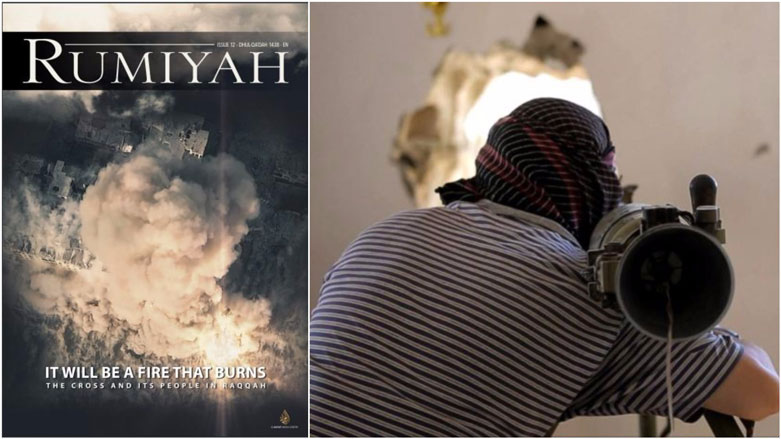
ERBIL, Kurdistan Region (Kurdistan 24) – In the latest edition of the Islamic State’s (IS) propaganda magazine Rumiyah, the militant group warned the fight for its Syrian stronghold of Raqqa would be “no picnic,” and described its dramatic defeat in Mosul as “part of the prophecy.”
As the battle against IS enters its fourth year, Rumiyah featured an interview with an IS commander in the group’s de facto Syrian capital of Raqqa.
The commander warned the city was littered with deadly booby traps and emphasized coalition-backed forces would face “waves” of car and truck bombs.
Aug. 8 marks the beginning of the US-led coalition’s war against IS as two FA-18 jets in 2014 dropped 500-pounds of laser-guided bombs on militants near the Kurdistan Region’s capital of Erbil.
The air raid marked the start of an ongoing aerial campaign against the extremist group in Iraq and Syria.
On July 10, Iraqi Prime Minister Haider al-Abadi declared victory over IS in its Iraqi stronghold of Mosul.
Despite conceding to the defeat, the militants framed the loss of the strategic city as “part of the prophecy,” ahead of the “great battle” with Western nations.
The issue of Rumiyah also alluded to the Iraqi government’s nine-month long campaign to retake Iraq’s second largest city, deriding the forces and highlighting its own tenacity.
The military commander mentioned in the magazine noted the group had “set the stage” in Raqqa.
He claimed rigged buildings, VBIEDs, and sniper units across the city were awaiting the Kurdish-led, US-backed Syrian Democratic Forces (SDF) as they push further into the city.
“The Battle of Raqqa will not be a picnic for the [apostates] and their supporters,” the unnamed commander was quoted as saying.
At the height of its existence, when the group first emerged in 2014 and stormed northern Iraq and expanded to Syria, IS held close to 100,000 square kilometers (38,000 square miles) of territory.
The group threatened Baghdad as the Iraqi military collapsed in disarray and militants pressed forward.
Since then, IS has lost over 60 percent of its territory in Iraq and Syria and has threatened to focus its efforts on lone-wolf attacks carried out in Europe and other nations belonging to the anti-IS coalition.
Editing by Karzan Sulaivany