Iraqi court arrest warrants political, hold no weight: Kurdistan Electoral Commission member
The decision to arrest members of the Kurdistan Region’s referendum commission is entirely political and would not be implemented by the Region, said an official from the Kurdistan Region’s Independent High Electoral and Referendum Commission (IHERC).
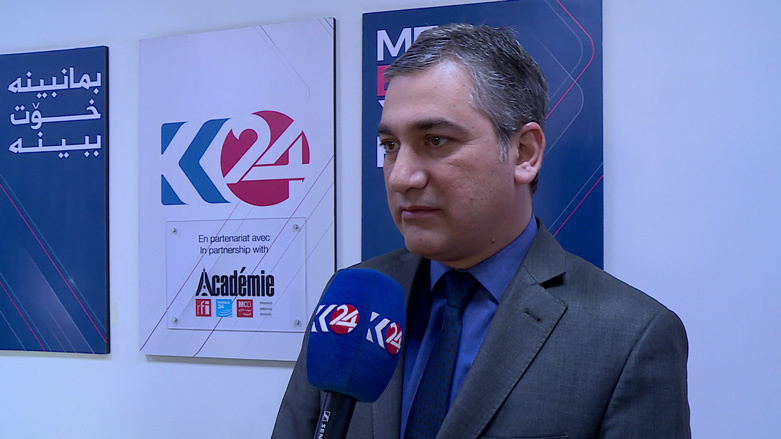
ERBIL, Kurdistan Region (Kurdistan 24) – The decision to arrest members of the Kurdistan Region’s referendum commission is entirely political and would not be implemented by the Region, said an official from the Kurdistan Region’s Independent High Electoral and Referendum Commission (IHERC).
“The decision is political, not based on a legal argument against the referendum,” said IHERC member Jutyar Adil. “Our decision for holding the referendum was legal, and it was a great honor for us to hold it.”
Adil spoke with Kurdistan 24 regarding the warrants issued earlier on Wednesday by an Iraqi court ordering the arrest of the head and members of the Kurdish electoral body.
“The Iraqi court’s ruling has no legal standing with us,” he said. “Iraqi officials have repeatedly violated multiple articles in the Constitution, as well as reversed the decision of independent bodies when instructed by the central government.”
The dozen-or-so members of the Commission have been accused of acting against the ruling of Iraq’s highest court by holding and overseeing the Sep. 25 referendum on independence for the Kurdistan Region.
Claiming the order will have no bearing on the members in the Kurdistan Region, Adil said the IHERC intends to continue with its duties, most particularly with the Nov. 1 scheduled presidential and parliamentary elections.
“Baghdad’s words are toothless, the Commission member said. “They had voted to remove Kirkuk Governor Najmaldin Karim, but as you see, he is still in office.”
In a mid-September vote, the Iraqi Parliament elected to dismiss Karim as Governor of the disputed oil-rich province of Kirkuk. Despite the vote, Karim is still carrying out his role as Governor.
“The ruling reminds me of decisions the former Iraqi Ba’ath regime would make,” Adil continued, recalling that the previous regime had a court dedicated to prosecuting those who were involved in the turn of the century revolutions against the system.
The official affirmed the referendum was the people of the Kurdistan Region’s “legal and democratic right,” and that the Kurdistan Regional Government (KRG) would add up all sanctions and decisions taken by Baghdad against the Region to present to the international community.
“The more sanctions and rulings Baghdad issues against the KRG, the more sympathy, and support they generate from the international community for the Kurdistan Region,” Adil opined.
The head of IHERC, in a statement to Kurdistan 24 responding to the latest measures taken by Baghdad in retaliation to Kurdistan’s referendum, also noted the issuance of arrest warrants reminded him of the former regime’s behavior.
“It is a political decision,” said Handren Mohammed Salih. “It is similar to decisions Iraq’s previous dictators would have taken.”
The relationship between Erbil and Baghdad has been tense for the past few years, but quickly deteriorated following the Sep. 25 vote as Baghdad ramps up its collective punitive measures against the people of the Kurdistan Region.
Editing by G.H. Renaud and Karzan Sulaivany