Discussions between Erbil, Baghdad going well: Canadian official
Canada indefinitely suspended its Special Forces’ activities in Iraq in response to heightened tensions between Kurdish Peshmerga Forces and Iraqi security forces.
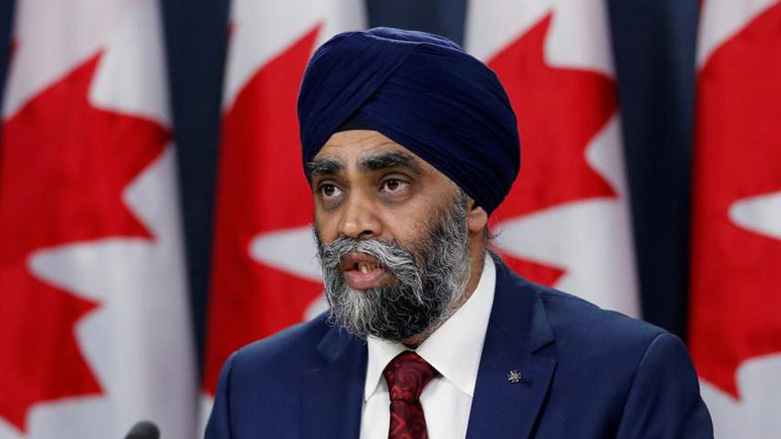
ERBIL, Kurdistan Region (Kurdistan 24) – Canada will resume its activities once Erbil and Baghdad resolve their disputes but will not take sides, according to the top Defense official.
Canadian Defense Minister Harjit Sajjan said he was hopeful the Federal Government of Iraq and the Kurdistan Regional Government (KRG) would resolve their outstanding issues “as quickly as possible” so that they could “get back to the mission at hand” – defeating the Islamic State (IS).
Speaking to Global News, Sajjan claimed US-led coalition members’ defense ministers were told that discussions between Erbil and Baghdad “were going well.” Kurdish officials, however, have argued that the central government still refuses to initiate talks within the framework of the Iraqi Constitution.
Canada’s main mission in Iraq remains the “unity side of things,” which focuses on defeating Daesh Sajjan said using the pejorative Arabic acronym for the jihadist group.
The Kurdish leadership has repeatedly called on western powers to intervene and lay the groundwork for a constructive dialogue to begin with Baghdad. While the minister did not clarify if Canada would mediate talks, he reiterated his government would not take sides.
“We are ready to provide support that is necessary.”
Canada indefinitely suspended its Special Forces’ activities in Iraq in response to heightened tensions between Kurdish Peshmerga Forces and Iraqi security forces.
The minister and hundreds of other delegates — including the Head of the Department of Foreign Relations Falah Mustafa Bakir — gathered in Nova Scotia for the ninth annual Halifax International Security Forum where the Kurdish officials reiterated calls for peace, dialogue and for the international community to intervene.
The Canadian Government still has a presence in Iraq and the Kurdistan Region and is focused on “capacity building” for local forces to have the ability to deal with future threats, the Sajjan affirmed. He added that they do not want “conditions to be set again for a group like this to be reconstituted or a new version of it created,” but did not mention what those conditions were.
Sajjan described the Sep. 25 referendum on independence for the Kurdistan Region an internal Iraqi matter. When asked if he believed the Kurds should remain as part of Iraq, he said it would be a decision “they will have to make.”
The independence vote saw 93 percent of the population voting in favor of secession from Iraq. Since then, Baghdad has imposed a set of punitive measures, threatened constitutionally-enshrined Kurdish rights, and launched attacks on disputed areas.