Sadr tells Iran, US not to interfere in Iraqi government formation
Muqtada al-Sadr, whose political coalition won Iraq’s 2018 national election, called on Tehran and Washington not to interfere in Iraqi affairs, especially in relations to the formation of the new government.
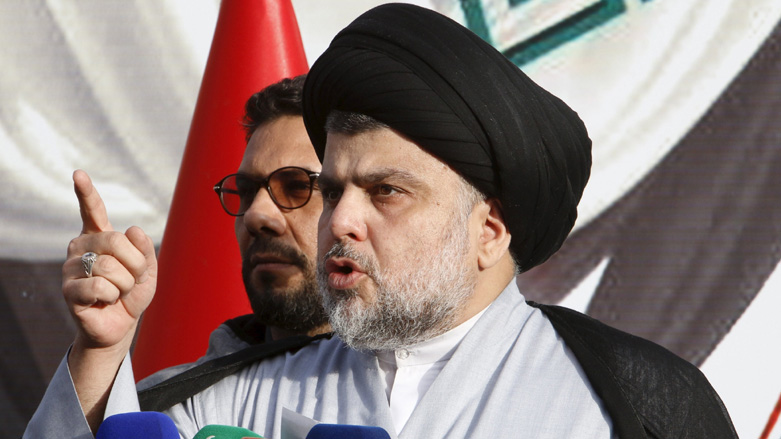
ERBIL (Kurdistan 24) – Muqtada al-Sadr, whose political coalition won Iraq’s 2018 national election, called on Tehran and Washington to not interfere in Iraqi affairs, especially in relation to the formation of the nation's next government.
The influential Iraqi Shia cleric, whose Sairoon Coalition swept the May 12 parliamentary elections in a surprise for both Iran and the US, made the statement on Monday. Both countries have been widely seen as jockeying for influence in Baghdad since a US-led operation toppled Sunni dictator Saddam Hussein in 2003 and thrust the Shia majority into power.
Unlike current Iraqi Prime Minister Haider al-Abadi, a rare ally of both the United States and Iran, Sadr is a vocal opponent of both countries and any attempts by them to influence the post-election process.
In past years, he led two uprisings against US forces in Iraq and is one of the few Shia leaders to have distanced himself from Iran.
He addressed the subject in a response to a question ostensibly raised by one of his followers and published on his official website, a common device used by him to expound views on various topics. The question spoke of the "impossibility" of forming a government without interference from Iran and America, to which Sadr replied, “Iran is a neighboring country that fears its interests,” and “America is an occupying country, and we do not allow them to interfere at all.”
Tehran has already said it will not allow non-allies to rule Iraq before it changes its rhetoric after the surprise result of the elections.
US statements about Sadr's victory appeared more diplomatic, while other officials said Washington's relations with Baghdad would not be substantially altered as a result of the cleric's newfound clout.
The winning list in Iraqi elections has the daunting task of negotiating with other parties and coalitions in order to form an alliance large enough to successfully form a cabinet within 90 days of the announcement of the results of the vote, a task undoubtedly made more difficult following the present election by charges of mass voter fraud.
After three meetings in which a necessary number of lawmakers could not be assembled to convene an official session on the election's disputed results, the Iraqi parliament passed a seemingly non-binding resolution to cancel portions of the contested recent national elections and demand a manual recount in others.
Editing by John J. Catherine