Threats to Iranian Infrastructure Constitute War Crimes, Says Iran's Deputy FM
“The U.S. President, as the highest official of his country, has publicly threatened to commit war crimes, an act that carries individual criminal responsibility before the International Criminal Court and any national court,” Gharibabadi added.
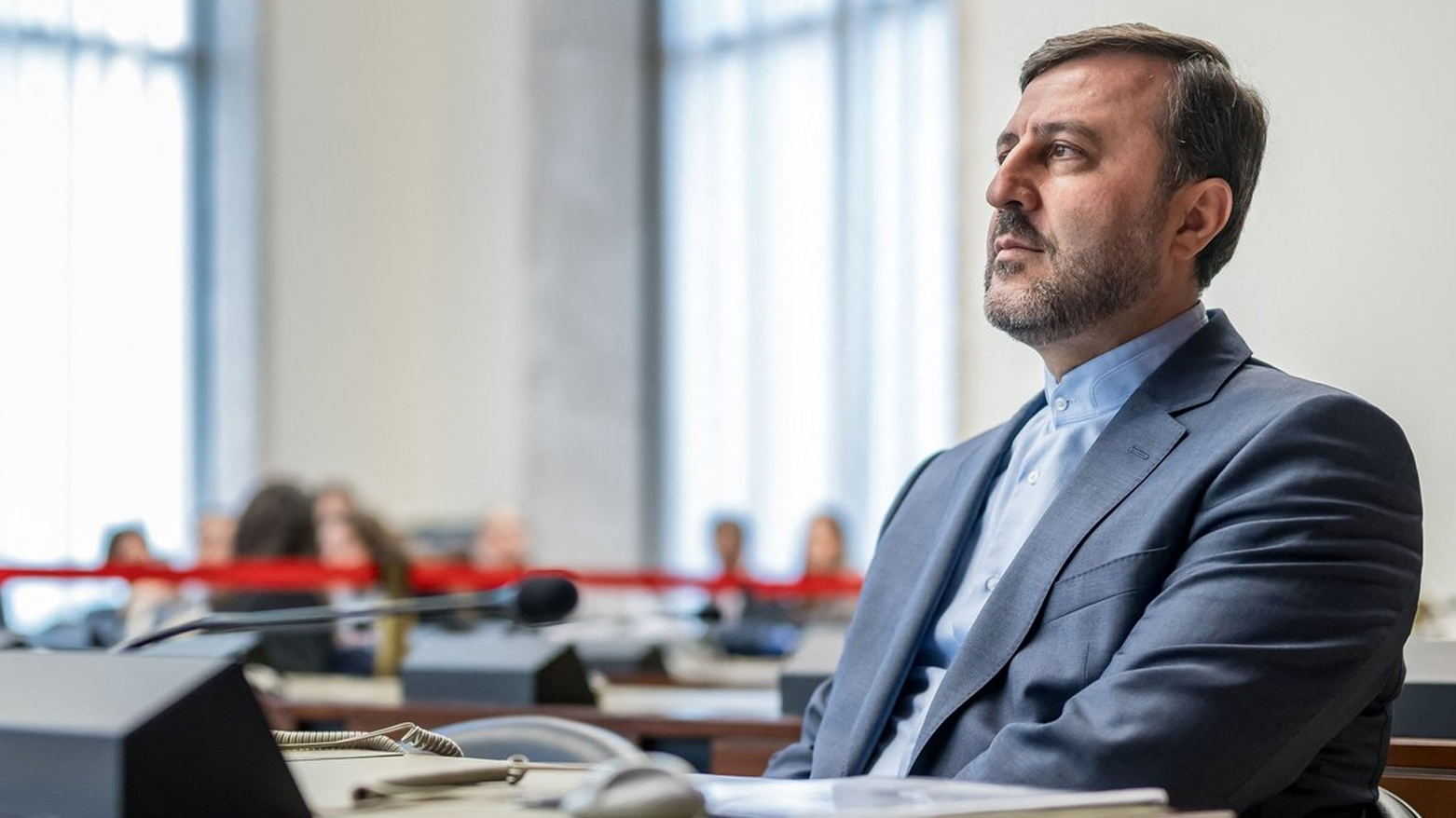
ERBIL (Kurdistan24) - Iran’s Deputy Foreign Minister for Legal and International Affairs, Kazem Gharibabadi, warned on Monday that threats to attack civilian infrastructure constitute war crimes and said Tehran would respond decisively to any aggression. The statement follows U.S. President Donald Trump’s recent public threats to strike Iranian power stations and bridges unless the country reopens the Strait of Hormuz within 48 hours.
Gharibabadi wrote on the X platform that “the use of force against Iran’s territorial integrity is a clear violation of Article 2, paragraph (4) of the United Nations Charter, which absolutely prohibits the threat or use of force against states.” He further cited Article 8(2)(b) of the Rome Statute of the International Criminal Court, noting that “the threat to attack power stations and bridges (civilian infrastructure) is a war crime.”
“The U.S. President, as the highest official of his country, has publicly threatened to commit war crimes, an act that carries individual criminal responsibility before the International Criminal Court and any national court,” Gharibabadi added. He emphasized that Iran, invoking Article 51 of the UN Charter, will respond immediately to any aggression or threat, and advised Trump to refrain from making further threats, warning that they would not be limited to Iran.
The statement follows a series of messages by Trump on his Truth Social platform, in which he described an imminent military operation targeting Iran’s power plants and bridges. In one post on Sunday, the U.S. president wrote, “Tuesday will be Power Plant Day, and Bridge Day, all wrapped up in one, in Iran,” adding a warning to Tehran to reopen the Strait of Hormuz or “you’ll be living in Hell — JUST WATCH!”
Trump’s messages underscored frustration in Washington over Iran’s control of the strategically vital Strait of Hormuz, which links the Persian Gulf to the Gulf of Oman and carries roughly one-fifth of global oil exports. The posts framed a 48-hour ultimatum for Tehran to allow international shipping, or face potential strikes on critical infrastructure.
Iranian officials immediately dismissed the ultimatum as “helpless” rhetoric and warned that any attack on their territory would provoke a strong retaliatory response. Tehran has emphasized that control over the strait is a matter of national sovereignty and has repeatedly rejected external pressure to alter maritime operations.
The latest exchange comes amid a six-week military confrontation initiated by U.S. and Israeli strikes on Iranian territory on February 28, which has seen Iran conduct multiple missile and drone strikes across the Gulf, targeting shipping lanes, oil infrastructure, and military installations, according to official statements.
Earlier on Sunday, Trump also posted about a successful U.S. military operation to recover a wounded airman from inside Iran. He described the rescue of the second crew member of a downed F‑15 fighter jet as “one of the most daring Search and Rescue Operations in U.S. History,” saying the operation involved dozens of aircraft and special forces units. The pilot of the aircraft had been recovered in a previous mission, and both efforts resulted in no U.S. fatalities, officials said.
The F‑15E Strike Eagle had been struck by Iranian air defenses over southwestern Iran on Friday. Both crew members ejected and initially evaded capture as U.S. and Iranian forces searched the mountainous terrain. Trump highlighted the rescues as a demonstration of U.S. operational capability, and he scheduled a news conference with military leaders at the White House for Monday, according to his posts.
Diplomatic efforts to resolve the standoff have continued but so far have not led to concessions from Tehran. International actors have urged restraint on all sides, emphasizing the need to maintain open shipping lanes and prevent civilian casualties, officials noted.
As the 48-hour deadline approaches, attention remains on whether Tehran will respond to Trump’s warnings or maintain its current stance. Iranian authorities reiterated that any attack on infrastructure would be met with a decisive response under international law, according to Gharibabadi.
The statements by Iranian officials underscore the country’s position that threats to civilian power stations and bridges constitute violations of both the UN Charter and the Rome Statute of the International Criminal Court.
The escalation between Washington and Tehran continues to heighten tensions in the Gulf, with potential implications for global energy markets and regional security.