Israel to Deploy 'Game-Changing' Iron Beam Laser Defense System End of 2025, Officials Announce
Israel will deploy the "Iron Beam" laser defense system by Dec 30, 2025, offering a low-cost, unlimited-ammo solution to drone and missile threats.
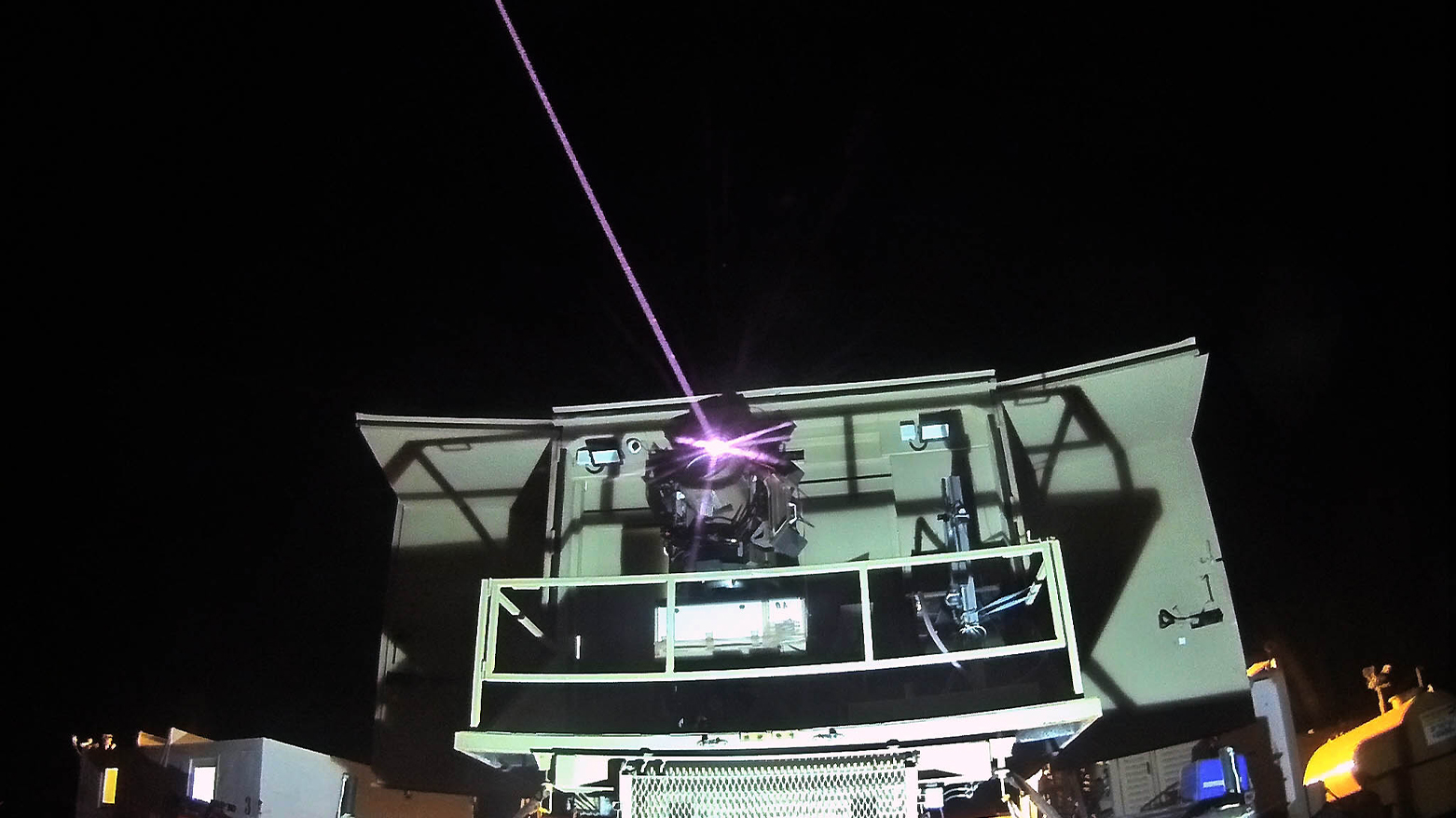
ERBIL (Kurdistan24) – Israel’s Ministry of Defense has officially announced that its cutting-edge high-powered laser interception system, known as "Iron Beam," will be delivered to the military for initial operational capability at the end of December. The deployment marks the culmination of over a decade of research and development, introducing a weapon that officials believe will fundamentally alter the rules of engagement on the battlefield by providing a near-infinite, low-cost solution to aerial threats ranging from drones to mortar fire.
Speaking at the International DefenseTech Summit held at Tel Aviv University on Monday, Danny Gold, the head of the Defense Ministry’s Directorate of Defense Research and Development (DDR&D), confirmed the timeline for the system's rollout.
According to reports from The Times of Israel, Gold stated that with development complete and a comprehensive testing program validating the system’s capabilities, the ministry is prepared to deliver the Iron Beam to the Israel Defense Forces (IDF) on December 30, 2025.
The system, which has been in development since 2014 and was declared operational in September following final tests, represents a significant leap in directed-energy warfare.
The Iron Beam is designed to serve as a complementary layer to Israel's existing multi-tiered air defense architecture, rather than a replacement for it.
As detailed by Agence France-Presse (AFP), the laser system will work in tandem with the renowned Iron Dome, which intercepts short-range rockets, as well as the David’s Sling and Arrow systems, which are engineered to counter medium- and long-range ballistic missiles.
The primary strategic advantage of the Iron Beam lies in its economics and logistics; officials note that as long as there is a constant source of energy for the laser, there is no risk of running out of ammunition.
State-owned arms manufacturer Rafael Advanced Defense Systems, which developed the project alongside private defense group Elbit, highlighted that the system possesses the unique advantage of rapidly neutralizing threats using laser technology at a "negligible cost," a sharp contrast to the expensive interceptor missiles used by kinetic systems.
The urgency of this deployment is underscored by the intense security challenges Israel has faced over the past year.
AFP reported that the announcement comes as the Israeli military steps up strikes against Hezbollah infrastructure, despite a ceasefire that began just over a year ago.
Furthermore, the defense establishment is still analyzing the fallout from a "12-day war" launched against Iran in June 2025. During that conflict, Israel’s existing missile defense shield failed to intercept all projectiles fired by Tehran, with the country acknowledging hits by more than 50 missiles that resulted in 28 deaths.
The introduction of the Iron Beam is seen as a critical step in plugging these defensive gaps.
While the full system is set for deployment in late December, The Times of Israel reported that elements of the technology have already seen combat.
During the recent conflict with Hezbollah, the IDF’s newly revived 946th Air Defense Battalion utilized a lower-powered, shorter-range version of the laser system to successfully shoot down approximately 35 drones launched at northern Israel from Lebanon.
This operational success has bolstered confidence in the technology, with Gold noting at the summit that the defense establishment is already advancing next-generation versions of the system.
The versatility of the laser technology was showcased earlier this year when Rafael displayed a family of high-energy laser weapon systems at the Paris Air Show.
These included the Iron Beam 450, an upgraded variant; the Iron Beam M, a compact mobile version designed for mounting on trucks to protect strategic sites or ground forces; and the Lite Beam, a lightweight interceptor intended for armored personnel carriers.
However, officials acknowledge that the technology is not without limitations. The Times of Israel noted that the main downside of the laser system is its reduced functionality in low visibility conditions, such as heavy cloud cover or inclement weather, necessitating the continued reliance on kinetic interceptors during storms.
The DefenseTech Summit also addressed the evolving threat of unmanned aerial systems (UAVs) along Israel's borders.
Brigadier General Benny Aminov, head of the Defense Ministry’s military research and development unit, told attendees that the country was moving toward a solution for the threat of drones crossing from neighboring territories.
He cited frequent attempts over the past year to smuggle weapons and drugs across the Egyptian border using small drones, which the military has struggled to detect.
Aminov announced that recent weeks have seen a technological breakthrough in enemy drone detection, and development is accelerating on interception solutions for "swarm scenarios." He emphasized that directed-energy weapons like the Iron Beam demonstrate a unique strength in addressing "unknown unknowns"—threats that have yet to fully materialize on the battlefield.
As the December 30 delivery date approaches, the Israeli defense establishment views the Iron Beam not just as a new weapon, but as a paradigm shift.
By integrating directed energy into its defensive umbrella, Israel aims to counter the economic asymmetry of modern aerial warfare, where cheap drones and rockets can force defenders to expend costly interceptors.