Netanyahu Demands Demilitarized Zone from Damascus to Israeli Border
Israeli PM Netanyahu demands a demilitarized zone from Damascus to Mount Hermon following deadly clashes in Beit Jinn, despite US President Trump urging Israel not to destabilize Syria's political transition.
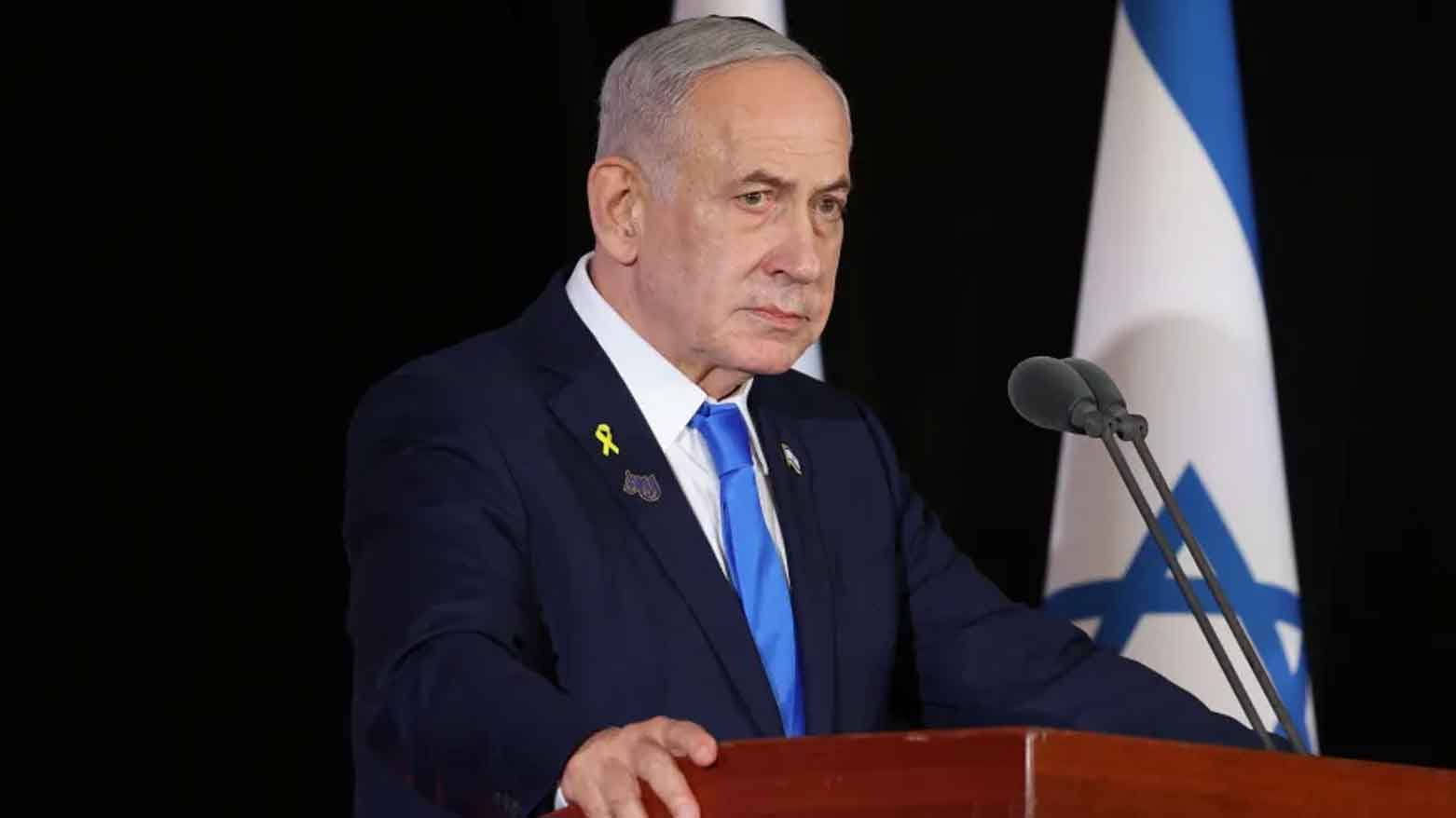
ERBIL (Kurdistan24) – Israeli Prime Minister Benjamin Netanyahu on Tuesday called for the establishment of a sweeping demilitarized buffer zone stretching from Damascus to the foothills and summit of Mount Hermon, declaring that Israel would “stand by its principles” despite ongoing tensions following a deadly raid in southern Syria.
The statement from his Office came as Netanyahu visited wounded soldiers from the 55th Reserve Paratroopers Brigade at Sheba Medical Center, injured during intense clashes that erupted after an Israeli incursion into the village of Beit Jinn on November 28, 2025 — an operation that triggered airstrikes, armed confrontations, and sharp regional condemnation.
“It is our duty to defend our northern border, prevent terrorist entrenchment, protect our Druze allies, and ensure that Israel is safe from ground and other attacks from the border areas,” Netanyahu said.
“What we expect Syria to do, of course, is establish a demilitarized buffer zone from Damascus to the buffer-zone area, including the approaches to Mount Hermon and the summit of Mount Hermon.”
Netanyahu added that an agreement with Damascus could be achievable “in a good spirit and understanding,” but emphasized that Israel “will stand by our principles in any case.”
On Monday, US President Donald Trump issued a pointed warning on his Truth Social platform, urging Israel not to destabilize Syria or obstruct its political transition under Interim President Ahmed al-Sharaa.
“It is very important that Israel maintain a strong and true dialogue with Syria, and that nothing takes place that will interfere with Syria’s evolution into a prosperous State,” Trump wrote.
He said he was “very satisfied” with al-Sharaa’s performance following the Syrian leader’s historic White House visit in November, describing him as working “diligently to make sure good things happen” and to build “a long and prosperous relationship” between Syria and Israel.
Trump added that Washington was doing “everything within our power” to support Syria’s reconstruction and ensure that the Syrian government continued with its intended reforms.
He argued that improved Syrian–Israeli relations would complement broader U.S. efforts to stabilize the Middle East following the fragile Gaza ceasefire in October.
Netanyahu’s remarks came days after a violent confrontation in southern Syria that began with an Israeli raid on the village of Beit Jinn, roughly seven kilometers from the Israeli border. According to the Israeli military, the pre-dawn operation targeted two brothers affiliated with al-Jama’a al-Islamiyya, whom the IDF accused of planning attacks and launching previous rockets toward Israel.
The two men were detained without resistance, but as Israeli forces began withdrawing, they were ambushed by unidentified gunmen. Helicopters, drones, and fighter jets carried out strikes on predetermined targets, while troops detained another Syrian who fled toward them.
The clashes left six Israeli soldiers wounded — three seriously — according to Israeli media, and at least 13 people dead, according to Syrian media.
Syria’s Foreign Minister Asaad Hassan al-Shibani condemned the raid as “a treacherous attack” and “a grave threat to regional peace and security.”
The incident intensified debate over Israel’s security posture along the Syrian frontier, as well as Damascus’ insistence that Israeli military actions undermine its sovereignty and regional stability.
As Netanyahu presses for a demilitarized corridor stretching deep toward Damascus, and as Trump simultaneously warns Israel against “interference,” the Syrian–Israeli front enters a critical and uncertain phase.
While Israel frames the buffer-zone demand as a security necessity, Washington emphasizes political restraint and the preservation of Syria’s current trajectory under its new leadership.
Against the backdrop of the fatal clashes in Beit Jinn and growing diplomatic friction, the coming weeks will determine whether de-escalation is achievable — or whether the frontier absorbs yet another cycle of confrontation.