From Moscow, Assad Loyalists Plot a Return: Spy Chief and Billionaire Cousin Back Insurgency
Exiled Assad loyalists in Moscow are funding a Syrian insurgency, competing for control of fighters and arms caches to topple the new government.
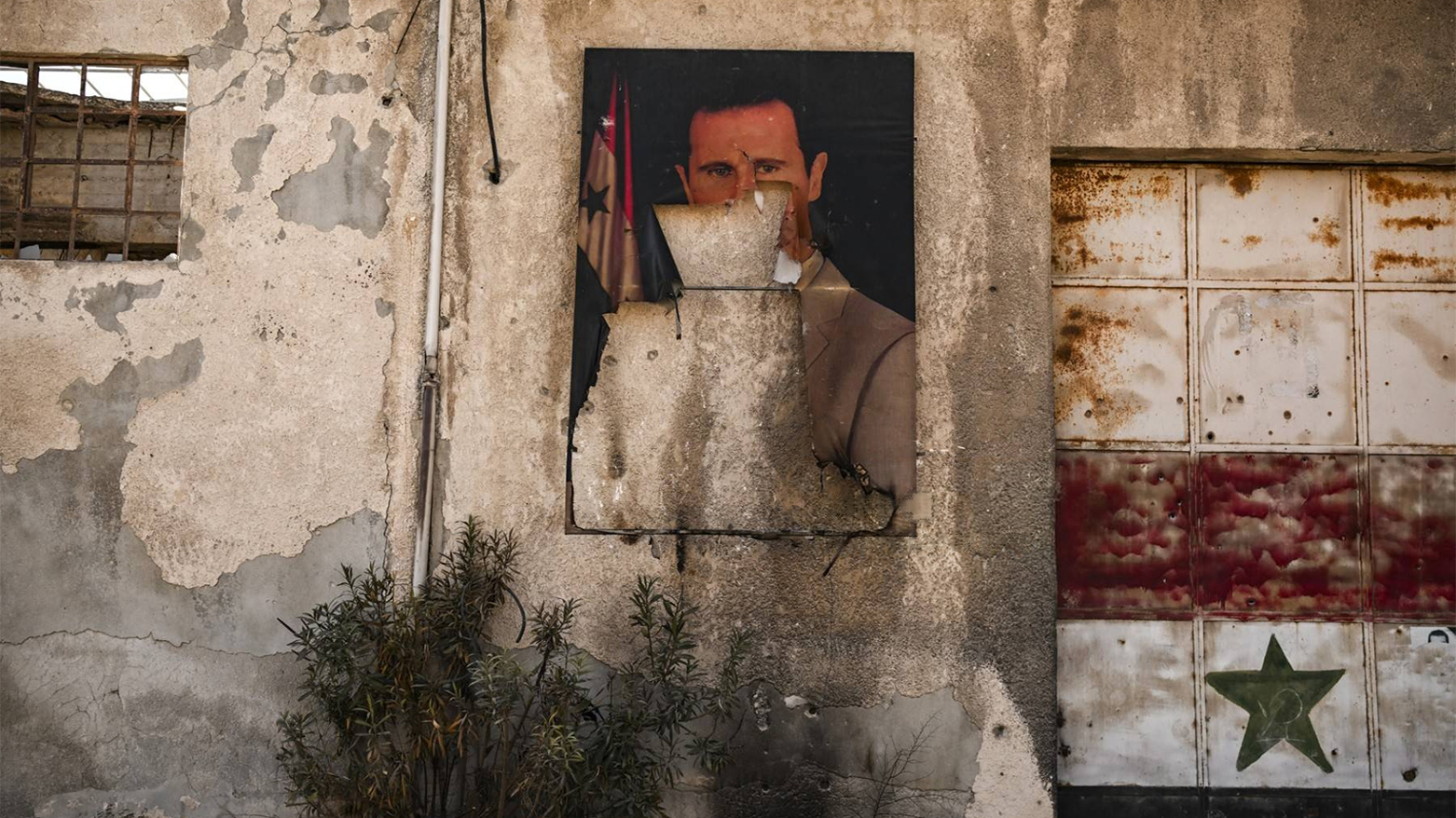
ERBIL (Kurdistan24) – In the shadowy aftermath of Bashar al-Assad's fall from power, a new and volatile chapter is being written in the history of Syria, one orchestrated not from the palaces of Damascus, but from the opulent exile of Moscow. A Reuters investigation has revealed that former heavyweights of the Assad regime, including the notorious ex-intelligence chief Major General Kamal Hassan and the billionaire tycoon Rami Makhlouf, are actively channeling millions of dollars to build paramilitary forces, aiming to incite uprisings against the fragile new government led by President Ahmed al-Sharaa.
Operating from Russia, these once-loyal pillars of the dictatorship are locked in a fierce competition for control over Syria's coastal heartlands, vying for the loyalty of tens of thousands of potential fighters and access to a secret network of underground command bunkers stocked with heavy weaponry.
The landscape of post-Assad Syria remains fraught with tension a year after the dictator fled to Russia in December 2024. While Bashar al-Assad himself is reportedly resigned to his fate in exile, members of his inner circle have refused to accept the new reality.
According to four sources close to the family cited by Reuters, other senior figures are plotting a return to power. Chief among them are Hassan and Makhlouf, two men whose rivalry is as intense as their hatred for the new administration.
They are financing more than 50,000 fighters, predominantly from the Alawite minority, capitalizing on the fears and economic destitution of a community that has long been associated with the Assad dynasty.
Central to their ambitions is control over a clandestine infrastructure built during the final days of the regime. Reuters has confirmed the existence of a network of 14 underground command rooms strategically located along Syria's coast. These subterranean nerve centers are equipped with solar power, internet connectivity, GPS units, and vast caches of arms, including AK-47s, hand grenades, and ammunition.
For the plotters, this network represents a "Treasure Island," a tangible asset that could serve as the logistical backbone for a sustained insurgency. However, Ahmed al-Shami, the governor of the coastal region of Tartous appointed by the new government, told Reuters that while the network is real, it has been "significantly weakened since the liberation" and poses little immediate danger due to a lack of strong tools on the ground.
The strategies employed by Hassan and Makhlouf diverge sharply, reflecting their backgrounds. Hassan, the former military intelligence chief who ran the regime's brutal detention system, is leveraging his deep connections within the security apparatus. From his three-story villa in suburban Moscow, he has been sending voice messages to commanders, seething about his lost influence and promising to restore Alawite dignity through force.
"Be patient, my people, and don’t surrender your arms. I am the one who will restore your dignity," Hassan declared in a WhatsApp recording reviewed by Reuters. His operations coordinator in Lebanon claims Hassan has spent $1.5 million since March on 12,000 fighters in Syria and Lebanon. Additionally, Hassan has reportedly recruited a team of hackers to launch cyberattacks against the new government, stealing and selling sensitive datasets on the dark web.
In contrast, Rami Makhlouf, the disgraced cousin who once controlled a vast business empire before running afoul of Bashar al-Assad, has adopted a messianic persona. Living on a private floor of a luxury Radisson hotel in Moscow, Makhlouf portrays himself as "The Coast Boy," a divine figure destined to lead Alawites in an apocalyptic final battle.
His narrative is steeped in religious prophecy, casting President Sharaa as a villain who will be swallowed by the earth.
Makhlouf’s financial muscle remains significant; financial records indicate he has funneled at least $6 million into salaries for fighters, utilizing trusted intermediaries in Lebanon and the UAE. Despite his grand visions, commanders on the ground report that fighters are often paid a pittance, accepting money from both rivals out of sheer economic necessity.
The specter of violence looms large over the Alawite community, which finds itself caught between the ambitions of these exiled leaders and the realities of the new Syria. In March, a failed uprising in rural Latakia, sparked by an independent Alawite unit, led to the deaths of nearly 1,500 civilians in retaliatory violence.
This bloodshed has fueled anger and fear, sentiments that erupted again on November 25 when thousands took to the streets in Homs and coastal cities demanding autonomy and the release of detainees.
While neither Makhlouf nor Hassan organized these specific protests, they are keenly aware of the fertile ground for unrest. A top military coordinator for Hassan told Reuters that the sect must be prepared to offer up "sacrificial lambs" to defend itself, a chilling indication of the cost they are willing to impose on their own people.
To counter this threat, the new Syrian government has deployed a strategic asset of its own: Khaled al-Ahmad. A former Assad loyalist and childhood friend of President Sharaa, al-Ahmad is tasked with the delicate mission of winning over the Alawite community.
Operating between Beirut and Damascus, he is spearheading efforts to foster trust through economic development and job creation, arguing that the future of the Alawites lies in integration with the new Syria rather than in insurgency.
"The work of healing – of uprooting sectarian hatred and honoring the dead – remains the only path toward a Syria that can live with itself again," al-Ahmad stated in response to the Reuters findings. His role is critical, as he attempts to dismantle the narrative of victimhood peddled by the exiles.
The geopolitical dimension of this struggle is complex. While Russia harbors the exiles, the Kremlin has so far withheld explicit support for their insurgent plans. Moscow’s priority remains securing continued access to its military bases in coastal Syria, a goal that requires a stable relationship with the new government in Damascus.
Diplomatic sources suggest that President Sharaa’s visit to Moscow in October was pivotal, sending a signal to insurgents that "there was no one abroad coming to save them." Furthermore, the United States and regional powers have thrown their support behind Sharaa, raising the stakes for any foreign actor considering backing a destabilizing revolt.
Maher al-Assad, the former dictator’s brother and commander of the fearsome 4th Armored Division, remains a wildcard.
Also in Moscow, he still commands the loyalty of thousands of former soldiers but has yet to mobilize them or provide funding. Sources say Maher cannot fathom the loss of power and still harbors hopes of influence, but unlike Hassan and Makhlouf, he has not yet made his move.
As the exiles plot and the new government works to consolidate control, the situation in coastal Syria remains a powder keg. With tens of thousands of potential fighters, underground weapons caches, and millions of dollars flowing from Moscow, the ingredients for a renewed conflict are present.
However, the deep mistrust among Alawites towards figures like Makhlouf, combined with the new government’s counter-measures and the lack of international backing for the insurgents, suggests that a successful uprising is far from guaranteed. Yet, for a country yearning for stability after 14 years of war, the continued machinations of the old guard serve as a dangerous reminder that the ghosts of the past are not easily exorcised.