Iraqi Presidency Says It Learned of Hezbollah, Houthi Designations Through Social Media
Iraq's Presidency denied knowledge of the Hezbollah and Houthi asset freeze, admitting they learned of the now-reversed decision via social media.
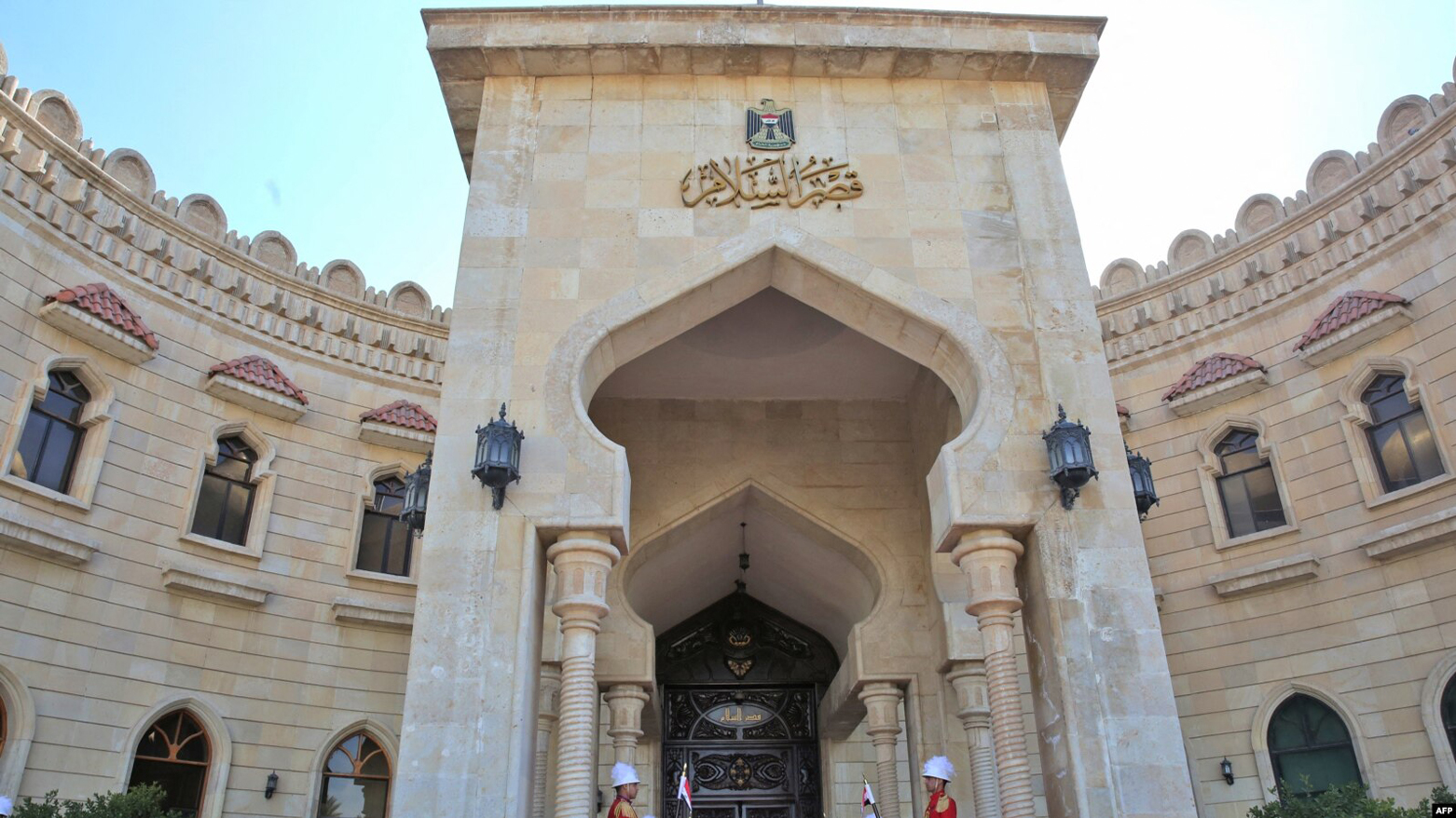
ERBIL (Kurdistan24) – In a startling revelation that exposes deep fissures and communication breakdowns within the highest echelons of the Iraqi state, the Presidency of the Republic of Iraq officially denied on Friday any prior knowledge of or involvement in the ratification of a controversial decision to designate the Yemeni Houthi movement, known as "Ansar Allah," and the Lebanese "Hezbollah" as terrorist organizations.
The denial, issued in a formal explanatory statement on December 5, 2025, included the admission that the Presidency had learned of the designation and the subsequent order to freeze the assets of these Iran-backed groups not through official government channels, but through social media platforms, a disclosure that has intensified questions regarding the cohesion of Baghdad’s administrative and security apparatus.
The statement from the Presidency comes amid a whirlwind of conflicting administrative orders and retractions that have characterized Baghdad's handling of the sensitive file over the past 48 hours.
The Presidency sought to clarify its constitutional position relative to the executive decisions made by the government, distancing itself entirely from the administrative chaos that saw these prominent members of the so-called "Axis of Resistance" briefly listed as entities involved in terrorism before being abruptly removed due to what officials termed an "error."
In its detailed clarification, the Presidency of the Republic emphasized that the procedural mechanisms of the Iraqi state do not require decisions issued by the Council of Ministers, the Committee for Freezing Terrorist Funds, or the Money Laundering Committee to be submitted to the President for review or ratification.
The statement elucidated that instructions issued by executive bodies operate independently of the presidential office's oversight in their initial implementation phases. Consequently, the Presidency asserted that legally, such files are not sent to them, thereby explaining why President Abdul Latif Rashid and his advisors were unaware of the move until it circulated in the public domain.
The Presidency further delineated its constitutional powers to correct public misconceptions regarding its role in the affair. It indicated that its authority regarding ratification and publication is limited exclusively to laws that have been debated and voted upon by the Council of Representatives, as well as specific Republican Decrees.
Administrative orders related to financial sanctions and counterterrorism designations, which fall under the purview of specific regulatory committees and the Central Bank, bypass the Presidential palace. This bureaucratic separation of powers was cited as the primary reason for the lack of presidential awareness regarding the listing.
"The Presidency had not viewed the aforementioned designation and asset-freezing decision except through social media," the statement read, affirming that the clarification was issued to state the facts for public opinion and to dispel any rumors suggesting the President had signed off on a policy shift that would have significant geopolitical ramifications.
This admission of learning about critical national security decisions via social media highlights a significant gap in internal state communication, particularly given the sensitivity of targeting groups with deep ties to Iraq’s neighbor and ally, Iran.
The Presidency’s disclaimer follows a dramatic sequence of events that began earlier in the week, creating a diplomatic and political firestorm in Baghdad. As reported by Kurdistan24, the confusion stems from a directive that appeared in the official government gazette, issue No. 4848, published on November 17, 2025.
This document had listed Hezbollah and the Houthis as entities involved in "participation in committing a terrorist act," a designation that legally mandates the freezing of assets and the criminalization of financial support. The publication marked a rare and politically significant move, given Iraq’s historically close ties with Tehran and the fact that Iran has long supported both groups with funding, training, and weapons.
However, the designation was short-lived. On Thursday, just one day prior to the Presidency’s statement, Iraq issued an urgent clarification reversing its earlier decision. According to a directive dated December 4, 2025, from the Central Bank of Iraq’s Governor’s Office, the inclusion of the two groups was declared a bureaucratic mistake. The acting deputy governor, Prof. Dr. Ammar Hamad Khalaf, who also serves as the chairman of the Terrorist Funds Freeze Committee, instructed the General Secretariat of the Council of Ministers to immediately issue a public clarification. Khalaf emphasized that paragraphs 18 and 19 of the previously published decision, which referred to Hezbollah and the Houthis, were included in error and that the committee had not, in fact, approved the freezing of funds belonging to these organizations.
The initial listing, had it been enforced, would have raised profound questions about the fate of networks linked to Hezbollah and the Houthis currently operating within Iraq. Both organizations are known to maintain support offices, logistical channels, and members affiliated with Iran-aligned militias within the country, including various factions within the Popular Mobilization Forces (PMF).
Observers and analysts had warned that closing these networks or taking legal action against them would likely trigger fierce resistance from entrenched Iran-backed factions, potentially deepening domestic political tensions and destabilizing the fragile government coalition.
The quick reversal and the subsequent statement from the Presidency underscore the extreme sensitivity and complexity of designating foreign armed groups in Iraq. The country remains a battleground for competing regional influences, and political fragmentation often leads to disjointed decision-making.
While the initial publication in the gazette suggested to some international observers that Iraq might be willing to take a rare stand against Iran-backed groups in compliance with international financial standards, the rapid retraction highlights the limitations of Baghdad’s ability to navigate its internal alliances and external pressures.
Legal and political observers note that the incident demonstrates a critical need for accuracy and coordination in terrorism financing lists, given the potential consequences for financial institutions, law enforcement, and Iraq’s diplomatic standing.
The erroneous listing could have exposed Iraqi banks to international compliance risks while simultaneously alienating powerful domestic political blocs aligned with the "Resistance." The clarification from the Central Bank, followed by the Presidency’s denial of involvement, appears to be a concerted effort to limit the damage and reassure both domestic allies and international partners that the status quo remains unchanged.
For the time being, Hezbollah and the Houthis remain off Iraq’s official terrorist funding lists. The government has yet to signal whether it will pursue any future designation or if the "error" will lead to a review of how such sensitive decisions are processed and published.
The episode reflects the precarious tightrope Baghdad must walk between asserting its sovereignty, complying with global anti-money laundering and counter-terrorism financing (AML/CFT) standards, and managing the potent internal political and regional pressures exerted by Tehran and its local proxies.
The Presidency’s statement on Friday serves as the final capstone to this week of confusion, effectively absolving the head of state of any responsibility for the diplomatic incident.
By publicly stating that they learned of the freeze through social media, the Presidency has highlighted the often-disjointed nature of Iraqi governance, where the right hand of the state is not always aware of what the left hand is writing into law.
As the dust settles, the fundamental dynamics that led to this error—the tension between international obligations and local power brokers—remain unresolved, leaving open the possibility for future friction as Iraq continues to navigate its complex geopolitical environment.