Egypt Urges Swift Deployment of Gaza Ceasefire Monitors as Mediators Press for Next Phase of Peace Deal
Cairo, Doha, and Ankara warn that Israel’s continued violations threaten the fragile truce, insisting full troop withdrawal and a robust stabilization force are essential for lasting peace.
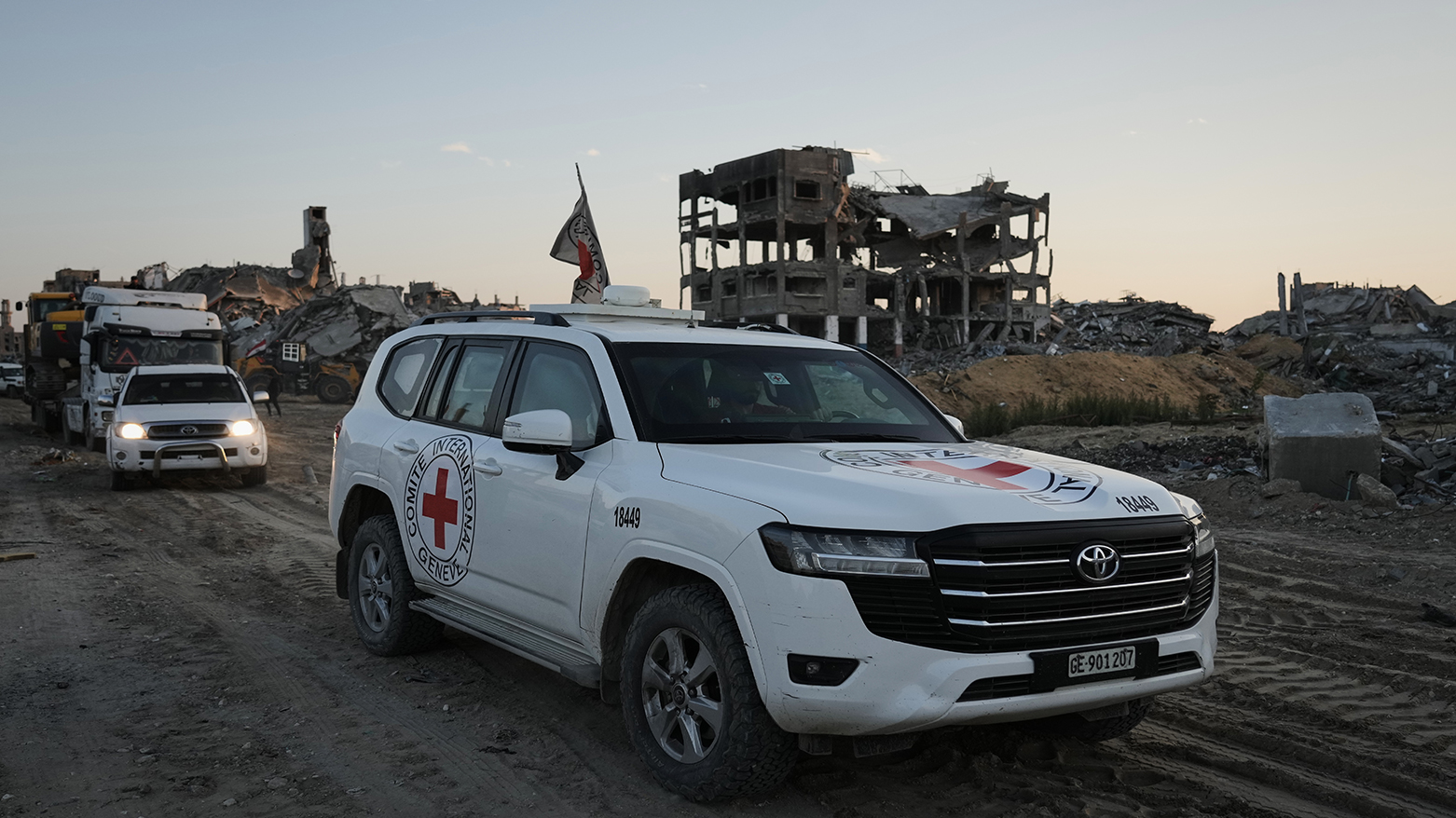
ERBIL (Kurdistan24) — Egypt’s Foreign Minister Badr Abdelatty on Saturday called for the urgent deployment of an international ceasefire monitoring force in the Gaza Strip, warning that "daily Israeli violations" are undermining a peace deal whose second phase has yet to begin.
“As for the International Stabilization Force, we need to deploy this force as soon as possible on the ground because one party, which is Israel, is every day violating the ceasefire… so we need monitors,” Abdelatty said at the Doha Forum.
He also cautioned that Egypt’s Rafah crossing “is not going to be a gateway for displacement,” stressing that its purpose is strictly limited to delivering humanitarian and medical assistance into Gaza.
Qatar’s Prime Minister Sheikh Mohammed bin Abdulrahman Al Thani, one of the primary mediators of the truce, said the nearly two-month-old ceasefire cannot be considered complete until Israeli forces fully withdraw from Gaza and the territory regains basic stability.
“Now we are at the critical moment… A ceasefire cannot be completed unless there is a full withdrawal of the Israeli forces and there is stability back in Gaza,” he told participants at the annual diplomatic gathering in Doha.
The truce—brokered by Qatar, Egypt, and the United States—took effect on October 10, largely pausing two years of fighting between Israel and Hamas.
Under the deal’s pending second phase, Israeli troops are to pull back, an interim administration is expected to assume governance, and an international stabilization force (ISF) will be deployed to oversee the transition.
Arab and Muslim nations have so far shown reluctance to commit troops, wary that the force could be drawn into direct confrontation with Hamas militants. The future command-and-control structure of the ISF also remains unsettled.
Turkish Foreign Minister Hakan Fidan told Reuters that Hamas is prepared to relinquish governance of Gaza, but only if a credible Palestinian civil administration and a properly vetted, professionally trained police force are established to assume control.
Speaking on the sidelines of the Doha Forum, he stressed that expecting Hamas to disarm immediately, without those structures in place, is neither “realistic nor doable.”
Fidan said the envisioned police force would explicitly exclude Hamas members and operate with the support of an international stabilisation mission. He added that Washington is pressing Israel to accept Turkey’s participation in the force.
The minister cautioned that failing to advance the ceasefire plan into its next phase would represent a “huge failure” for the international community—and for Washington—emphasizing that U.S. President Donald Trump has personally driven the initiative forward.
The peace initiative incorporates a controversial provision requiring Hamas to disarm, with members who surrender their weapons allowed to leave Gaza—an element first proposed by U.S. President Donald Trump. Hamas has repeatedly rejected the idea.
Sheikh Mohammed said Qatar and fellow guarantors—Turkey, Egypt, and the United States—are coordinating intensively to activate the next phase of the peace plan.
“But this next phase is also temporary from our perspective,” he noted. “If we are just resolving what happened in the last two years, it’s not enough.” He called for a “lasting solution that provides justice for both people.”
Abdelatty met Sheikh Mohammed on the sidelines of the forum to review developments in Gaza, according to Egypt’s foreign ministry. Both officials emphasized the need to continue implementing the Sharm El-Sheikh peace agreement signed in October.
Egypt, which plans to train 5,000 police officers for Gaza, is among the countries being considered as potential contributors to the stabilization force.
Trump’s current Gaza stabilization plan—an updated version of a framework he introduced earlier envisions a robust international mechanism to oversee post-conflict governance in the enclave, with Arab states providing security support under U.S. leadership.
Supporters of the plan say it provides the clearest path to ensuring Israel’s long-term security by mandating the full disarmament of Hamas and establishing a multinational force capable of enforcing order.
Several core elements of Trump’s approach, once considered politically ambitious, now form the backbone of ongoing diplomatic discussions.
A central pillar of Trump’s proposal calls for transferring Gaza’s administration to a transitional authority backed by international financing, a model his administration argues would prevent the resurgence of Hamas governance and integrate Gaza into a broader regional normalization process that benefits Israel’s strategic stability.
Although previous attempts faced resistance from Palestinian factions and skepticism in parts of the region, Trump officials insist the current moment offers a renewed opportunity to advance a durable post-war structure—one they say is essential to both regional and Israel’s long-term security.