UN Security Council Urges Full Adherence to Israel–Hezbollah Ceasefire as Regional Tensions Persist
Visiting delegation backs Lebanon’s plan to assert a state monopoly on weapons and reviews options for implementing Resolution 1701 ahead of UNIFIL’s 2026 withdrawal.
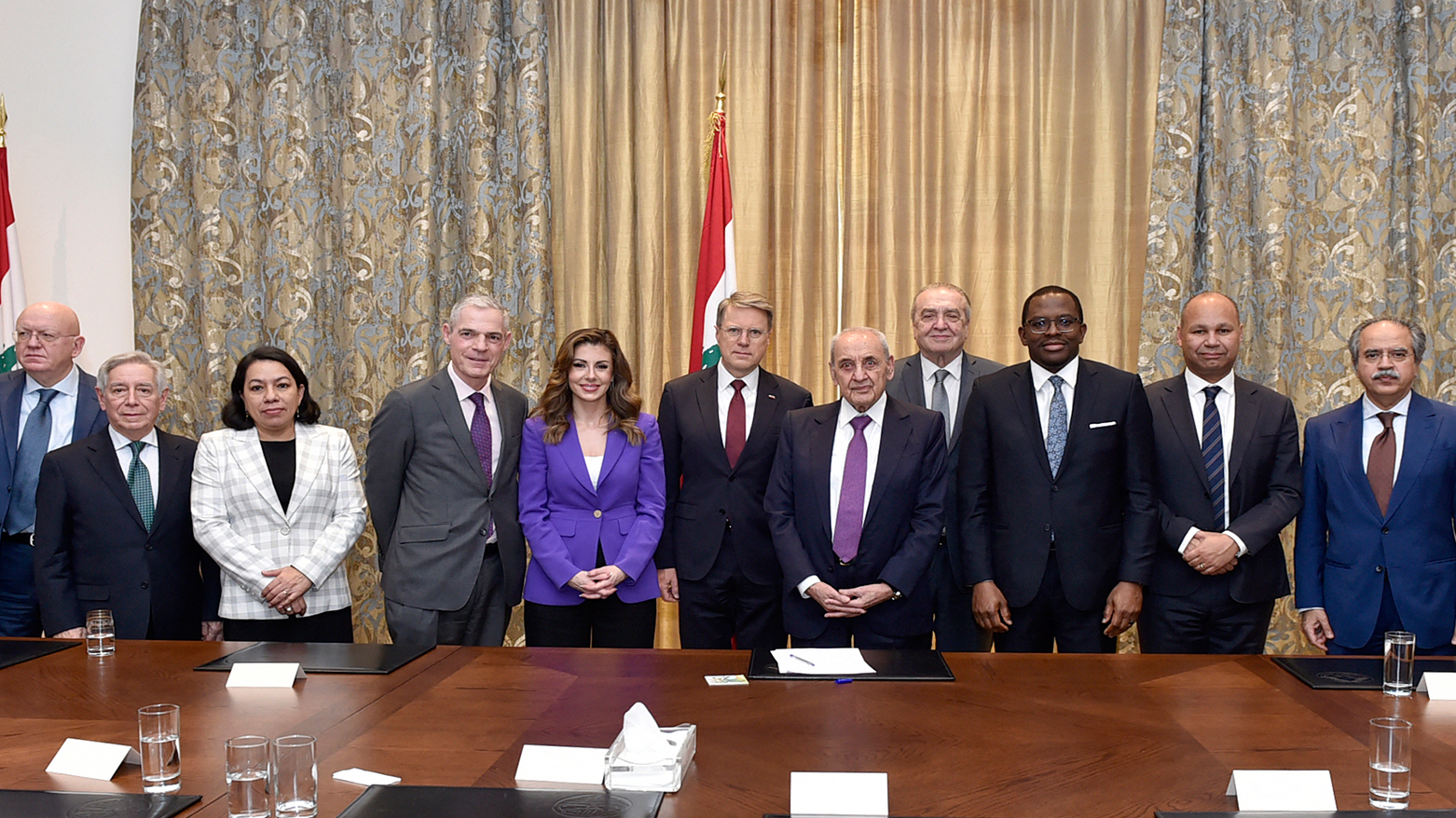
ERBIL (Kurdistan24) — A United Nations Security Council (UNSC) delegation concluded a two-day visit to Lebanon on Saturday with a firm call for the full enforcement of the November 2024 ceasefire between Israel and Hezbollah — an agreement repeatedly strained by Hezbollah’s continued provocations and refusal to comply with international obligations.
The ceasefire, brokered by Washington and the United Nations, was designed to halt more than a year of conflict ignited by Hamas’s 2023 cross-border attack into southern Israel, a coordinated assault that drew Hezbollah into months of attacks from Lebanese territory.
Israel has maintained that its ongoing precision strikes in Lebanon target Hezbollah’s entrenched military infrastructure — weapons depots, launching sites, and command nodes — that continue to threaten Israeli civilians and violate Resolution 1701. Israeli forces also remain in several strategic areas of southern Lebanon to prevent the Iran-backed group from reasserting control.
At a press briefing in Beirut, Slovenian Ambassador Samuel Žbogar — whose country currently holds the rotating UNSC presidency — said the visit came at a crucial moment.
“All parties must uphold the 2024 agreement, and we recognize the progress Lebanon has made,” he noted, while reiterating the Council’s commitment to Lebanon’s territorial integrity and political independence.
Lebanon Pressed to Rein in Hezbollah’s Armed Power
Facing mounting U.S. and European pressure, Lebanon’s government has committed to gradually dismantling Hezbollah’s extensive military network — a step long demanded by Israel and central to restoring state sovereignty.
Under a plan supported by Washington, the Lebanese Armed Forces (LAF) are expected to remove Hezbollah’s armed positions along the border by year’s end, before moving to address its nationwide arsenal, which far exceeds that of any state institution.
“We support the Lebanese government’s decision to ensure the state’s monopoly of arms,” Žbogar said, urging greater international backing for the LAF to enable Beirut to assert full control in areas historically dominated by the Iran-aligned militia.
During their visit, Council members met President Joseph Aoun, who stressed that Lebanon does not seek war with Israel — a message viewed by diplomats as a reflection of Beirut’s growing concern over Hezbollah’s escalating activities and the risk they pose to Lebanon’s already fragile stability.
Earlier this week, civilian representatives from both sides held rare direct contact, underscoring efforts to reduce tensions along the frontier.
UNIFIL’s Future and Post-Withdrawal Security
The delegation toured southern Lebanon, meeting with the UN Interim Force in Lebanon (UNIFIL). The mission’s mandate was extended to the end of 2026, after which it is scheduled to withdraw the following year — a development that has intensified debate over how to enforce Resolution 1701 without peacekeepers on the ground.
Žbogar said the visit enabled discussions on “options for the implementation of Resolution 1701 following UNIFIL’s departure,” emphasizing that the safety of peacekeepers “must be respected and that they must never be targeted.”
Lebanese authorities recently arrested six suspects in connection with an attack on UNIFIL personnel — an incident widely attributed to Hezbollah-linked gunmen.
A Ceasefire Under Strain as Hezbollah Maintains Its Arsenal
The UNSC’s visit comes at a volatile time. Israel argues that Hezbollah’s refusal to disarm, its ongoing cross-border fire, and its deepening coordination with Hamas continue to undermine any prospect of lasting calm.
The group maintains tens of thousands of rockets and precision-guided munitions, many supplied or financed by Iran, despite repeated international demands for their dismantlement.
Hezbollah insists it will not cease what it calls “resistance operations” until Israel meets conditions unrelated to the northern front — a stance diplomats say is designed to retain leverage for Iran’s regional agenda.
With UNIFIL’s future approaching a critical moment, Hezbollah’s arsenal under growing scrutiny, and Israeli forces still deployed to prevent renewed attacks, diplomats warn that the coming months will determine whether the ceasefire becomes a pathway to enduring stability — or remains hostage to the ambitions of heavily armed non-state actors operating outside the control of the Lebanese state.