Armored Vehicles in Wheat Fields: Iraqi Army Blocks Kurdish Harvest in Kirkuk as Land Disputes Intensify
Iraqi Army armor blocks Kurdish farmers in Prde from harvesting crops on 1,400 dunams, enforcing a settler's claim and reviving Arabization fears.
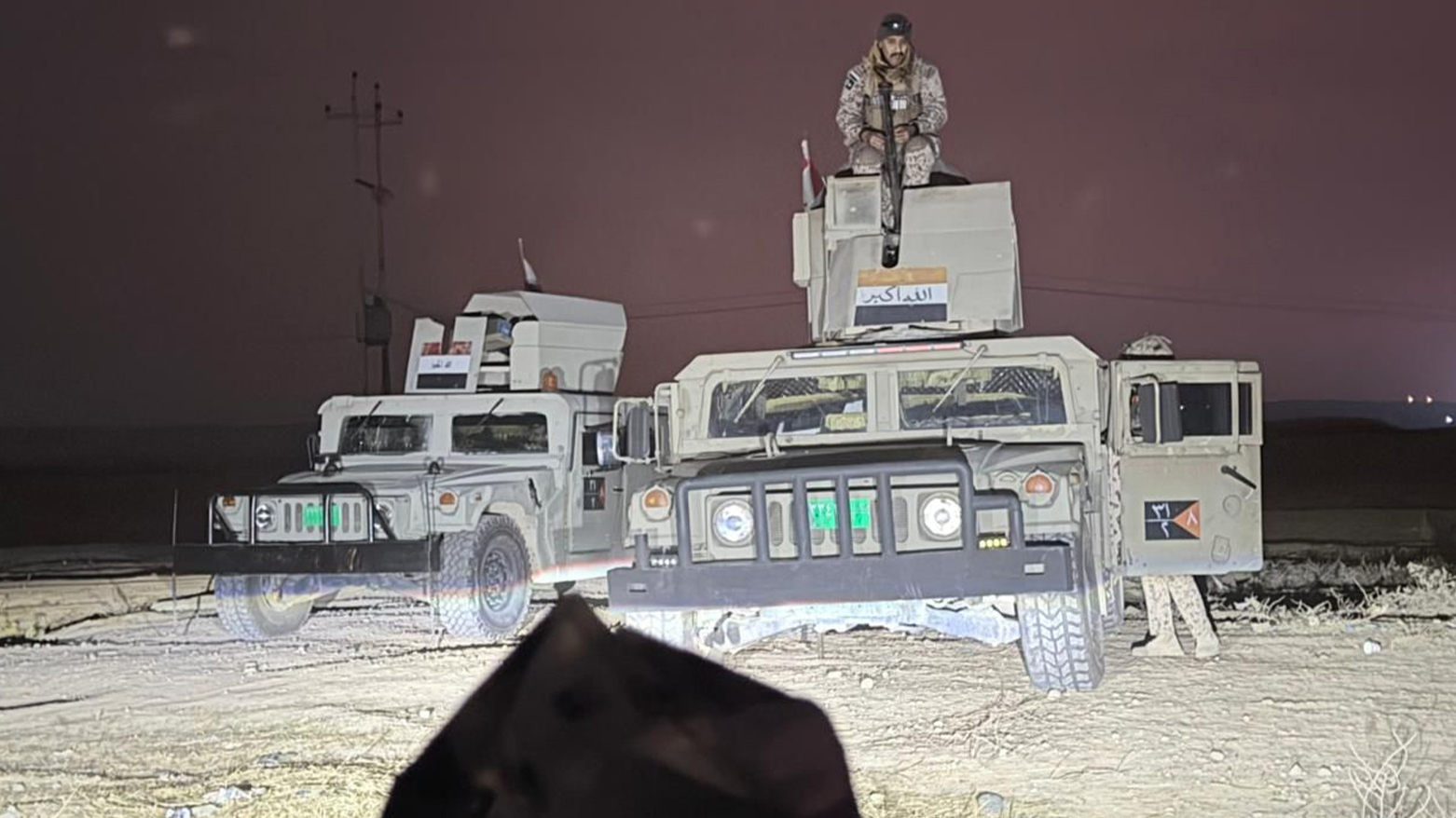
ERBIL (Kurdistan24) – In a jarring display of military force applied to a civil agrarian dispute, units from the Iraqi Army’s 8th Division have deployed armored vehicles and Humvees into the agricultural heartlands of the Kirkuk province, physically barring Kurdish farmers from accessing their crops during the peak of the harvest season.
The confrontation, which unfolded in the Prde (Altun Kupri) district, marks a significant and volatile escalation in the long-standing struggle over land ownership in the Kurdistani territories, raising fears among local residents of a return to the demographic engineering policies reminiscent of the Ba’athist era.
The military maneuver is being utilized as a pressure tactic to force Kurdish families to relinquish their ancestral lands to individuals identified by locals as "imported Arabs," settlers originally brought to the region under previous regimes.
The flashpoint of this latest standoff is the village of Gurzayi, located within the Prde sub-district, where approximately 1,400 dunams of prime agricultural land have become the center of a fierce legal and physical tug-of-war.
Reports from the ground indicate that the Iraqi security forces are not merely acting as observers but have taken an active role in enforcing a contested court decision that favors a settler’s claim over the indigenous Kurdish population.
Hemin Delo, a reporter for Kurdistan24 monitoring the situation, confirmed that the disputed lands are historically owned by Kurdish farmers who possess official title deeds dating back to 1976.
Despite this documentary evidence of long-standing ownership, the farmers now find themselves staring down the barrels of heavy military machinery stationed amidst their ripening wheat and barley fields.
The military operation involved a significant show of force, with the 8th Division positioning armored assets directly on the farmland to create an impenetrable barrier.
The primary objective of this deployment appears to be the prevention of the harvest, a tactic that threatens the farmers with total economic ruin.
By denying access to the crops at the critical moment of maturity, the security forces are effectively holding the farmers' livelihoods hostage, using the threat of crop spoilage as leverage to compel them to vacate the property.
The beneficiary of this military intervention is identified by the local community as an Arab individual who was resettled in the area as part of the "Arabization" process—a systematic campaign by the former Iraqi regime to alter the demographic balance of the oil-rich Kirkuk province by displacing Kurds and replacing them with Arab tribes from central and southern Iraq.
Tensions on the ground have already spilled over into physical violence.
According to witness statements provided to reporters, the heavy-handed approach of the army resulted in an assault on a young Kurdish farmer during the initial standoff.
This incident has only deepened the resentment of the local population, who expressed profound concern regarding the posture of the Iraqi military.
In statements gathered from the village, farmers accused the army of abandoning its mandate to maintain neutral security, alleging instead that the institution has become partisan, acting as a private enforcement arm for the settler seeking to seize the land by force.
One farmer, speaking on condition of anonymity, emphasized that their claim to the land is irrefutable, rooted in deeds passed down through generations of fathers and grandfathers, long before the current legal challenges arose.
The resurgence of these land disputes is not an isolated incident but part of a broader pattern that has intensified following the events of October 16, 2017, when Iraqi federal forces retook control of Kirkuk and other Kurdistani territories from the Kurdistan Peshmerga forces.
Since that geopolitical shift, the tenuous status of agricultural lands in Kurdish-majority areas has been repeatedly challenged.
Residents note that similar pressures have been applied to farmers in the Daquq and Sargaran areas, suggesting a coordinated effort to reverse the post-2003 normalization process and reinstate the demographic realities of the pre-2003 era.
The farmers in Prde view the current military intervention as a terrifying repetition of the scenarios played out under the Ba’ath regime, where the state apparatus was weaponized to disposses Kurds of their territory.
Despite the imposing military presence and the imminent threat to their economic survival, the Kurdish farmers of Gurzayi remain adamant in their refusal to cede the land. The community has adopted a posture of defiance, declaring that they will not relinquish their property under any circumstances.
While the blockade of the harvest represents a severe financial blow, the farmers have framed the issue as an existential struggle for their identity and their homeland.
They have stated unequivocally that even if they are prevented from harvesting a single grain of wheat, they will not vacate the lands to satisfy the demands of what they view as illegitimate encroachment supported by a biased legal and military framework.
In an attempt to de-escalate the situation, a high-stakes meeting has been scheduled involving the administrative authorities of Kirkuk, representatives of the Kurdish farmers, and the opposing party claiming ownership. However, optimism among the Kurdish community is scarce.
The involvement of the 8th Division and the use of armored vehicles to enforce a civil property dispute has eroded trust in the mediation process.
As the harvest season ticks away, the standoff in Prde serves as a microcosm of the unresolved constitutional and demographic issues plaguing Iraq’s Kurdistani territories, where the legacy of past injustices continues to be litigated not just in courtrooms, but in the muddy fields of the countryside.