Netanyahu: Transition to Phase Two of Gaza Agreement Expected “Very Soon”
Israeli PM Netanyahu said Israel will move "very soon" to Phase Two of the Gaza ceasefire, focused on disarming Hamas and removing weapons from Gaza, ahead of his planned meeting with US President Trump.
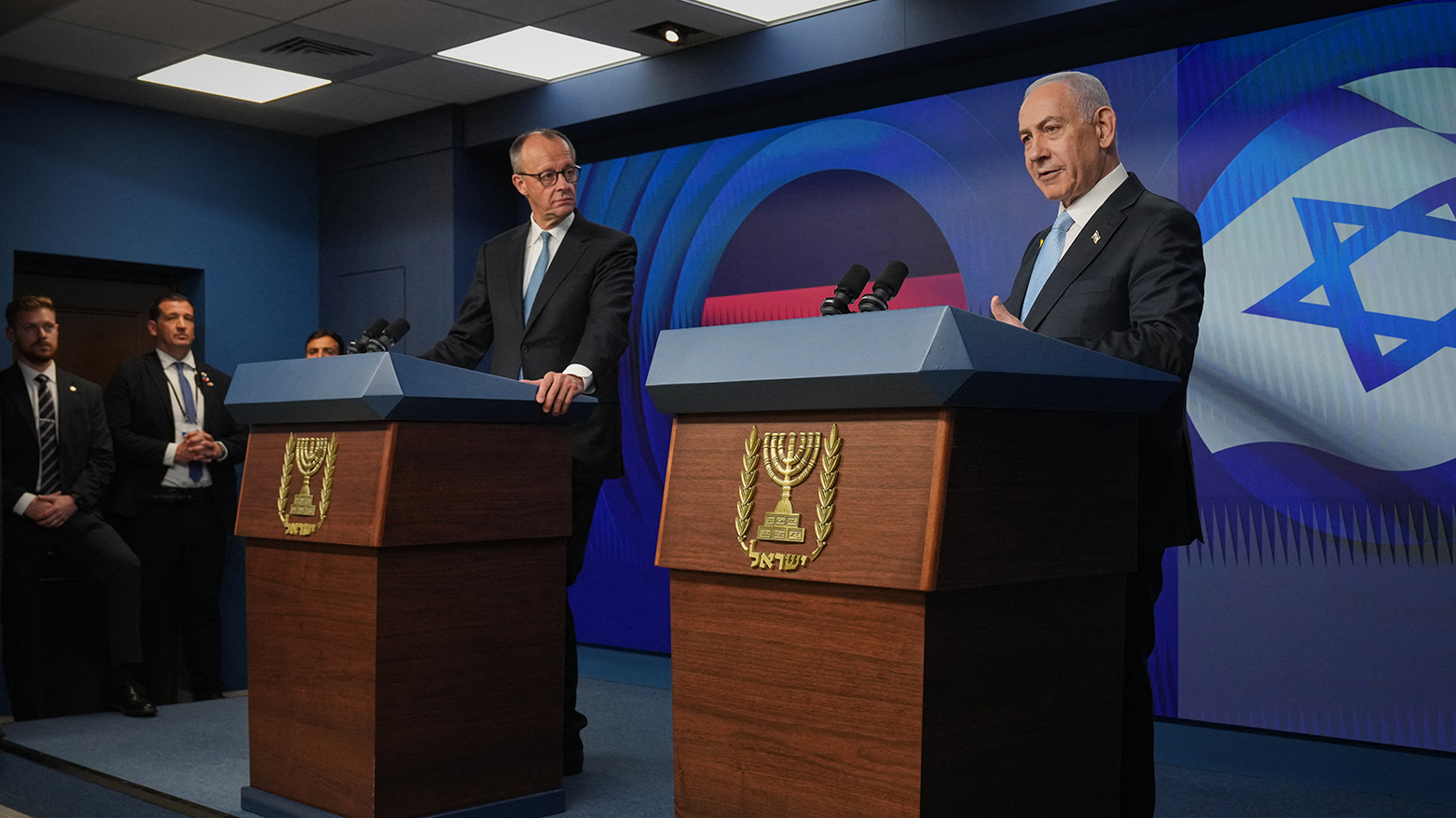
Erbil (Kurdistan24) – Israeli Prime Minister Benjamin Netanyahu announced on Sunday that he expects Israel to move to the second phase of the U.S.-brokered Gaza ceasefire agreement “very soon,” describing the upcoming stage as significantly more challenging and centered on dismantling Hamas’ military capability.
Speaking at a joint press conference with German Chancellor Friedrich Merz following their meeting, Netanyahu said the two leaders discussed “how to bring an end to Hamas’ rule in Gaza,” noting that the first stage of the agreement had been completed.
“We expect to move very soon to the second phase, which is more difficult,” he stated, explaining that the next steps involve “achieving the disarmament of Hamas and stripping Gaza of weapons.”
Netanyahu also confirmed he will meet U.S. President Donald Trump later this month to discuss “opportunities for peace” in the wider region.
The Israeli leader highlighted that a third phase of the plan aims to eliminate extremism in Gaza. “People thought it was impossible,” he said. “But it was done in Germany, it was done in Japan, and it is being done in the Gulf states. It can be done in Gaza as well.”
The ceasefire agreement, which came into effect on October 10, has resulted in Hamas returning all 20 surviving hostages it had held since the October 7, 2023 attack, in addition to 27 bodies out of 28 stipulated in the accord. The deal was negotiated under U.S. pressure.
Two months after the agreement was signed, the ceasefire remains fragile. Both sides continue to accuse each other of violations on an almost daily basis, with no clear mechanism yet in place to secure lasting stability.
Trump’s broader plan outlines stabilizing the ceasefire, the withdrawal of Israeli forces, the establishment of a new governing administration in Gaza, and the reconstruction of the war-ravaged enclave.
Chancellor Merz, who assumed office in May, has been among the most outspoken European critics of Israel’s two-year military campaign in Gaza. In August, Germany imposed a partial halt on arms exports to Israel in response to intensified bombardments, later lifting the restrictions in late November following the declaration of the ceasefire.
At the press conference on Sunday, Merz underscored that German-Israeli relations remain strong despite policy disagreements. He warned against weaponizing criticism of Israel as a pretext for antisemitism.
“You can criticize the Israeli government, and sometimes that may be necessary,” Merz said. “The relationship between Germany and Israel can withstand that. But criticism of government policy must not be misused as a justification for antisemitism.”