Business Tycoon Andrej Babiš Becomes Czech Premier
Andrej Babis returns as Czech PM with a eurosceptic coalition, vowing to cut Ukraine aid while facing fraud allegations and cabinet controversies.
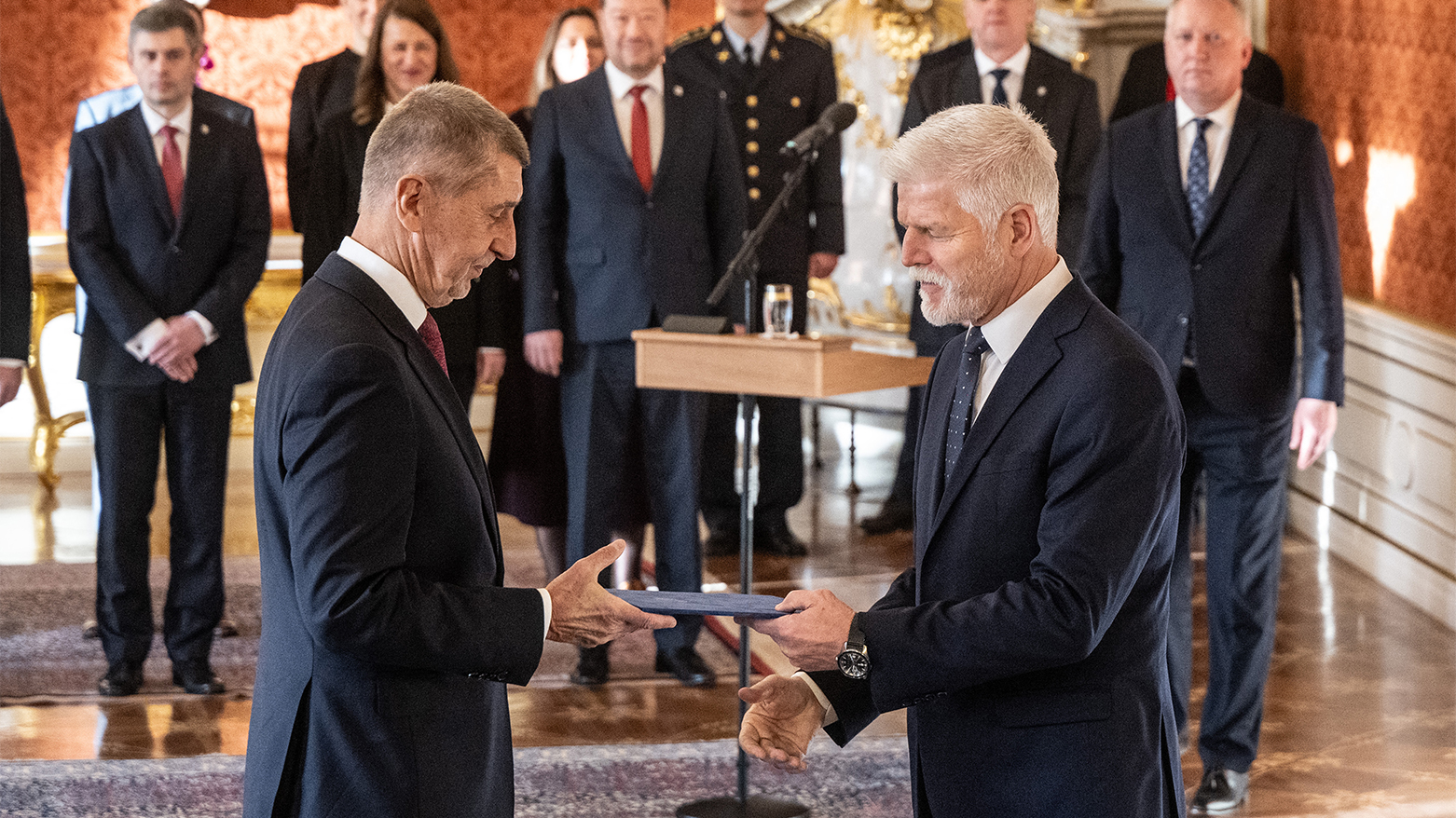
ERBIL (Kurdistan24) – In a geopolitical pivot that threatens to fracture European unity regarding the ongoing war in Ukraine, Andrej Babis, the billionaire tycoon and self-described "Trumpist," reclaimed the prime ministership of the Czech Republic on Tuesday. His return to power, confirmed by President Petr Pavel in a formal appointment ceremony, ushers in a coalition government explicitly skeptical of Brussels’ authority and poised to curtail the military and humanitarian aid that has defined Prague’s foreign policy since the start of the Russian-Ukrainian conflict.
The appointment of the 71-year-old magnate marks a stark departure from the outgoing center-right administration, signaling a potentially volatile new chapter for the European Union and NATO member state of 10.9 million people.
According to a report by Agence France-Presse (AFP), Babis’s return is the culmination of a political resurgence for his ANO movement, which secured a victory in the October parliamentary elections. To solidify a governing majority, ANO has teamed up with two eurosceptic parties, forming a coalition that holds 108 seats in the 200-member Czech parliament.
This alliance has wasted little time in outlining a nationalist agenda that challenges the supranational reach of the European bloc.
In its initial policy statement, the new coalition asserted that the European Union has "its limits" and possesses no right to impose decisions that infringe upon the sovereignty of member states, a rhetorical stance that aligns Prague closer to the illiberal orbit of Hungary’s Viktor Orban than the Western European mainstream.
During the swearing-in ceremony, Babis struck a combative and nationalist tone reminiscent of the American leader he admires.
"I promise all citizens of the Czech Republic to fight for their interests at home and abroad," Babis declared. His reinstatement as prime minister, a role he previously held from 2017 to 2021, comes after a period in opposition during which he vocally criticized the government's support for Kyiv.
Throughout his campaign, Babis vowed to curb aid to Ukraine, a country that has been battling a Russian invasion for nearly four years. This promise stands in sharp contrast to the robust humanitarian and military assistance provided by his predecessors, raising concerns in Western capitals about the durability of the central European front against Moscow.
The path to Tuesday’s appointment was paved with intense negotiations regarding Babis’s vast business empire and potential conflicts of interest. Slovak-born and ranked by Forbes magazine as the seventh wealthiest Czech, Babis amassed his fortune as the owner of Agrofert, a sprawling conglomerate spanning the food and chemicals sectors, along with various other companies.
Throughout his political career, his dual role as a business magnate and a high-ranking politician has been a lightning rod for controversy. President Petr Pavel had publicly urged Babis to resolve these conflicts of interest prior to his appointment. In response, the new premier vowed last week to place Agrofert in the hands of an independent administrator.
While Babis did not disclose the specific details of this arrangement—sparking widespread speculation about the efficacy of the move—President Pavel stated he was satisfied with the explanation and proceeded with the appointment.
However, the specter of legal trouble continues to loom over the new prime minister. AFP reports that Babis is due to stand trial over allegations of a two-million-euro ($2.3 million) fraud involving European Union subsidies.
He is accused of maneuvering to take a farm out of the Agrofert holding in 2007 to make it eligible for a subsidy intended specifically for small companies, a benefit for which his conglomerate would not have qualified.
Beyond financial impropriety, Babis has also battled persistent allegations dating back to the Cold War era, specifically accusations that he served as an agent for the communist secret police in the 1980s. Babis has steadfastly denied any wrongdoing regarding both the fraud charges and the collaboration allegations, dismissing them collectively as a "smear campaign" orchestrated by his political enemies.
The contentious nature of Babis’s return was highlighted last month when thousands of demonstrators rallied against him on the anniversary of the 1989 Velvet Revolution, the historic uprising that toppled communism in the former Czechoslovakia.
These mass protests reflected the deep divisions within Czech society regarding his business dealings and his approach to governance.
Babis, who holds an economics degree and attended elementary school in Paris and high school in Geneva due to his father’s role as a trade representative for communist Czechoslovakia, entered politics with his ANO party in 2011.
His previous tenure in government was also marred by scandal; he served as finance minister from 2014 to 2017 but was ousted after leaked recordings emerged that appeared to show him influencing reporters working for newspapers he owned at the time—media assets he has since sold.
The composition of the new government has also drawn scrutiny due to the inclusion of controversial figures from Babis’s coalition partners. In the European Parliament, ANO and its new partner, the Motorists, are aligned with the far-right Patriots for Europe bloc, which Babis co-founded with Hungarian Prime Minister Viktor Orban.
Domestically, the coalition includes the far-right SPD. President Pavel has indicated that he will reveal the full list of government ministers once Babis submits his candidates, but he has already expressed significant reservations about one specific nomination.
The Motorists' candidate for environment minister, Filip Turek, has become a focal point of controversy due to his past conduct.
AFP reports that Turek is currently under police investigation for alleged rape and domestic violence following a complaint filed by a former girlfriend.
Furthermore, police had previously probed Turek for allegedly giving Nazi salutes in public, though that specific case was eventually shelved. Czech media have also published racist and homophobic social media posts attributed to Turek, complicating his potential confirmation and casting a shadow over the moral standing of the incoming cabinet.
Despite losing a presidential run-off vote to Pavel in 2023, Babis has managed to leverage voter dissatisfaction to return to the pinnacle of Czech executive power.
As he takes the reins of government once more, the billionaire politician faces the dual challenge of navigating his own legal battles while steering the country toward a more isolationist and eurosceptic future.
With pledges to prioritize national interests over European consensus and to rethink the country’s involvement in the Ukraine war, Babis’s second term promises to be as turbulent and transformative as his first, fundamentally altering Prague’s relationship with Brussels and its allies.