Seized Tanker Exposes Cuba’s Secret Financial Lifeline in Shadowy Venezuelan Oil Trade
U.S. seized the tanker Skipper carrying Venezuelan oil meant for Cuba, revealing a scheme to resell crude to China to fund Havana's regime.
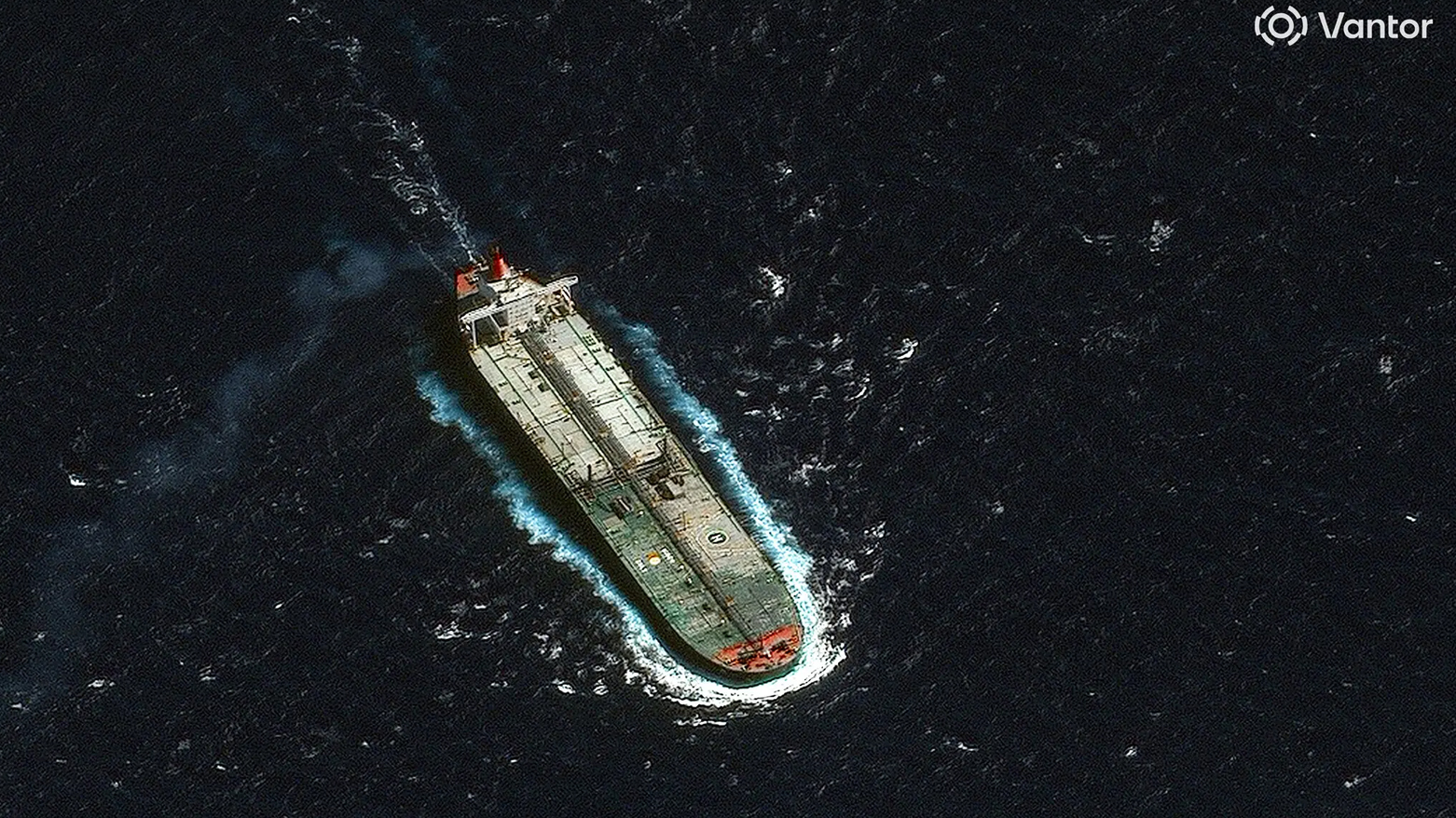
ERBIL (Kurdistan24) – The dramatic high-seas seizure of an oil tanker off the coast of Venezuela by United States law enforcement this week has exposed the intricate and covert mechanisms utilized by the government of President Nicolás Maduro to sustain its most critical regional ally, Cuba.
According to a detailed investigation by The New York Times (NYT), the intercepted vessel, identified as the Skipper, was not merely transporting crude but was a central component in a complex financial and logistical web designed to bypass international sanctions and provide hard currency to the economically besieged island nation.
The operation, which involved armed U.S. agents rappelling from helicopters, underscores the Trump administration’s intensified efforts to dismantle the alliances bolstering the Maduro regime.
The tanker in question departed from Venezuela on December 4, loaded with nearly two million barrels of heavy crude, as per internal data from Venezuela’s state oil company, PDVSA, cited by the NYT.
While its manifested destination was the Cuban port of Matanzas, the voyage’s true purpose was far more layered.
Two days into its journey, the Skipper conducted a ship-to-ship transfer, offloading a relatively small parcel of approximately 50,000 barrels to another vessel, the Neptune 6, which then proceeded north toward Cuba. Following this transaction, the Skipper, still carrying the vast majority of its valuable cargo, altered course toward Asia.
This diversion reveals a critical shift in the oil-for-security arrangement between Caracas and Havana: much of the oil allocated for Cuba is now being resold on the global market, primarily to China, to generate the cash Cuba desperately needs to purchase basic goods and maintain its own stability.
This financial lifeline is crucial for the Cuban government, which has long relied on Venezuelan oil subsidies initiated under Hugo Chávez and continued by Maduro. In exchange for these resources, Havana has provided Caracas with tens of thousands of medics, sports instructors, and, increasingly, security professionals.
As President Maduro faces mounting external pressure and internal threats, he has leaned heavily on Cuban bodyguards and counterintelligence officers for his personal protection, making the financial solvency of his Cuban patrons a matter of his own survival.
The logistical architect behind these maneuvers appears to be Ramón Carretero, a Panamanian businessman identified by the NYT as a key intermediary managing the flow of oil.
Carretero’s trading companies have reportedly handled a staggering quarter of the oil allocated by PDVSA for export this year.
His central role was highlighted on Thursday when the U.S. Treasury Department imposed sanctions on him for facilitating petroleum shipments on behalf of the Venezuelan government.
The seized cargo on the Skipper was jointly contracted by Cubametales, Cuba’s state-run oil trading firm, and an entity tied to Carretero, further cementing the link between the regime's survival strategies and illicit global finance.
The seizure itself was a kinetic display of American enforcement power. On Wednesday, as the Skipper navigated international waters between Grenada and Trinidad, U.S. law enforcement agents in camouflaged combat gear boarded the vessel from the air.
The operation faced no resistance from the crew, which U.S. officials noted was comprised mostly of Russian nationals. The vessel is now being escorted under Coast Guard supervision to a U.S. port, likely Galveston, Texas, where authorities intend to seek a warrant to seize the oil, valued at tens of millions of dollars.
Reaction from the affected governments was swift and condemnatory.
Cuban officials denounced the seizure as an "act of piracy and maritime terrorism," framing it as part of a U.S. escalation aimed at strangling Venezuela’s legitimate trade rights.
Similarly, Venezuela’s communications minister, Freddy Ñáñez, decried the action as "piracy, kidnapping, theft of private property," and "extrajudicial executions in international waters."
Iran’s foreign ministry also weighed in, with spokesman Esmail Baghaei calling it "state-sponsored piracy," reflecting the broader alignment of sanctioned nations.
Indeed, the Skipper’s history points to a "looser network" connecting the energy sectors of Venezuela, Cuba, Iran, and Russia—four nations systematically targeted by U.S. sanctions. Before entering the Venezuelan trade, the Skipper spent four years operating within Iran’s covert fleet, transporting oil to Syria and China.
This interconnectivity is driven less by ideological solidarity than by commercial necessity, as these isolated economies learn from one another how to navigate the shadow market.
Russian state-run oil company Rosneft produces nearly 100,000 barrels a day in Venezuela, while Iranian contractors have been deployed to repair the country's dilapidated refineries, El Palito and Amuay.
However, despite their cooperation, these nations remain competitors in the race for the Chinese market, the primary consumer willing to absorb sanctioned crude.
Francisco J. Monaldi, an oil expert at Rice University, described the dynamic to the NYT as "the OPEC of sanctions," where common interests in evading U.S. pressure coexist with opposing commercial goals. "Most of the time, it’s just about business," Monaldi noted.
As the Skipper makes its way to Texas, the seizure stands as a potent symbol of the high-stakes game being played in the Caribbean.
By interdicting the vessel, the U.S. has not only cut off a revenue stream but has pierced the veil of a sophisticated financial mechanism that converts Venezuelan oil into Cuban stability, striking at the heart of the symbiotic relationship between two of the hemisphere's most enduring adversaries of Washington.