President Masoud Barzani Marks Kurdistan Flag Day, Hailing the Flag as a Sacred Symbol of Kurdistan People's Aspirations
Veteran Kurdish leader links the flag to decades of struggle, sacrifice, and the enduring quest for Kurdish rights and self-determination
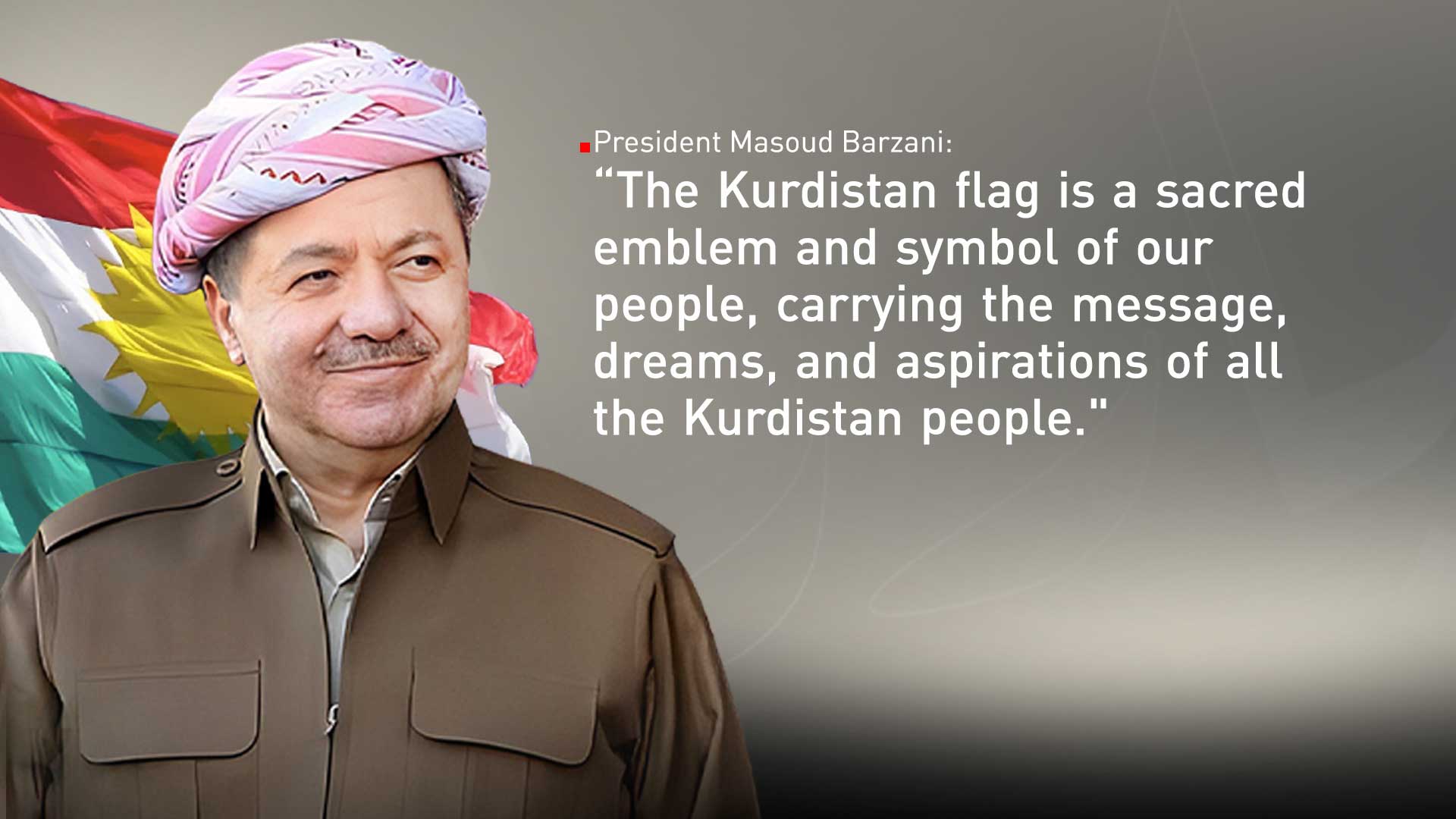
ERBIL (Kurdistan24) — President Masoud Barzani on Wednesday marked Kurdistan Flag Day with a congratulatory message, describing the Kurdish flag as a sacred symbol that embodies the dreams, hopes, and collective will of the Kurdish people.
In a post published on X to commemorate the occasion, Barzani wrote: “The Kurdistan flag is a sacred emblem of our people and carries the message, dreams, and aspirations of all Kurdistan's people. Happy Flag Day to all dear Kurdistanis.” The message coincided with the annual observance of Dec. 17, a date officially recognized as Kurdistan Flag Day across the Kurdistan Region.
Kurdistan Flag Day commemorates the long and often painful journey of the Kurdish national movement. The date traces back to Dec. 17, 1945, when the Kurdish flag was lowered from official buildings of the Republic of Kurdistan in Mahabad following its collapse. That moment, once a symbol of defeat, later became a marker of resilience and continuity, reflecting the Kurdish people’s refusal to abandon their national aspirations despite repeated setbacks.
The Kurdish flag itself predates modern political institutions in the Kurdistan Region. First presented internationally in 1919 by Dr. Kamuran Bedir Khan, the flag gradually emerged as a unifying symbol for Kurds across different parts of the region.
It was later raised by Kurdish student movements in Europe during the 1960s, adopted more widely after the 1970 autonomy agreement in Iraq, and became firmly entrenched as a national emblem following the 1991 uprising in the Kurdistan Region of Iraq.
President Masoud Barzani’s political and military life has been inseparable from the flag he referenced in his message. As a leading figure in the Kurdish liberation movement for decades, Barzani spent years in armed struggle, political negotiations, and exile, during which the Kurdish flag served as a constant symbol of resistance and legitimacy.
Under this flag, Kurdish forces confronted successive regimes in Baghdad, defended Kurdish areas, and later played a decisive role in the fight against terrorism, particularly during the war against the Islamic State group (ISIS).
Following the establishment of the Kurdistan Region’s institutions after 1991, the flag became a visible expression of self-rule and political identity. In 1999, the Kurdistan Parliament formally recognized the flag through legislation, and in 2009, officially designated Dec. 17 as Kurdistan Flag Day, embedding the symbol within the Region’s legal and institutional framework.
For President Barzani and many Kurds, the flag is not merely a national banner but a record of sacrifice and perseverance. It has been raised on battlefields by Peshmerga fighters, displayed at political negotiations, and flown over schools and public institutions as a reminder of shared history and responsibility toward future generations.
As Kurdistan Flag Day is observed across the Kurdistan Region, Barzani’s message underscores a broader narrative: that the Kurdish flag represents not only past struggles, but also an ongoing commitment to unity, dignity, and the pursuit of Kurdish rights under a symbol forged through decades of resistance and hope.