171 Projects Left Incomplete in Dhi Qar Amid Service Crisis
Residents of Dhi Qar’s Shatra industrial zone face severe service failures threatening livelihoods, with 171 planned projects remaining incomplete. Council member Abdulbaqi Amri criticized the current administration for stalling progress and financial mismanagement despite previous surpluses.
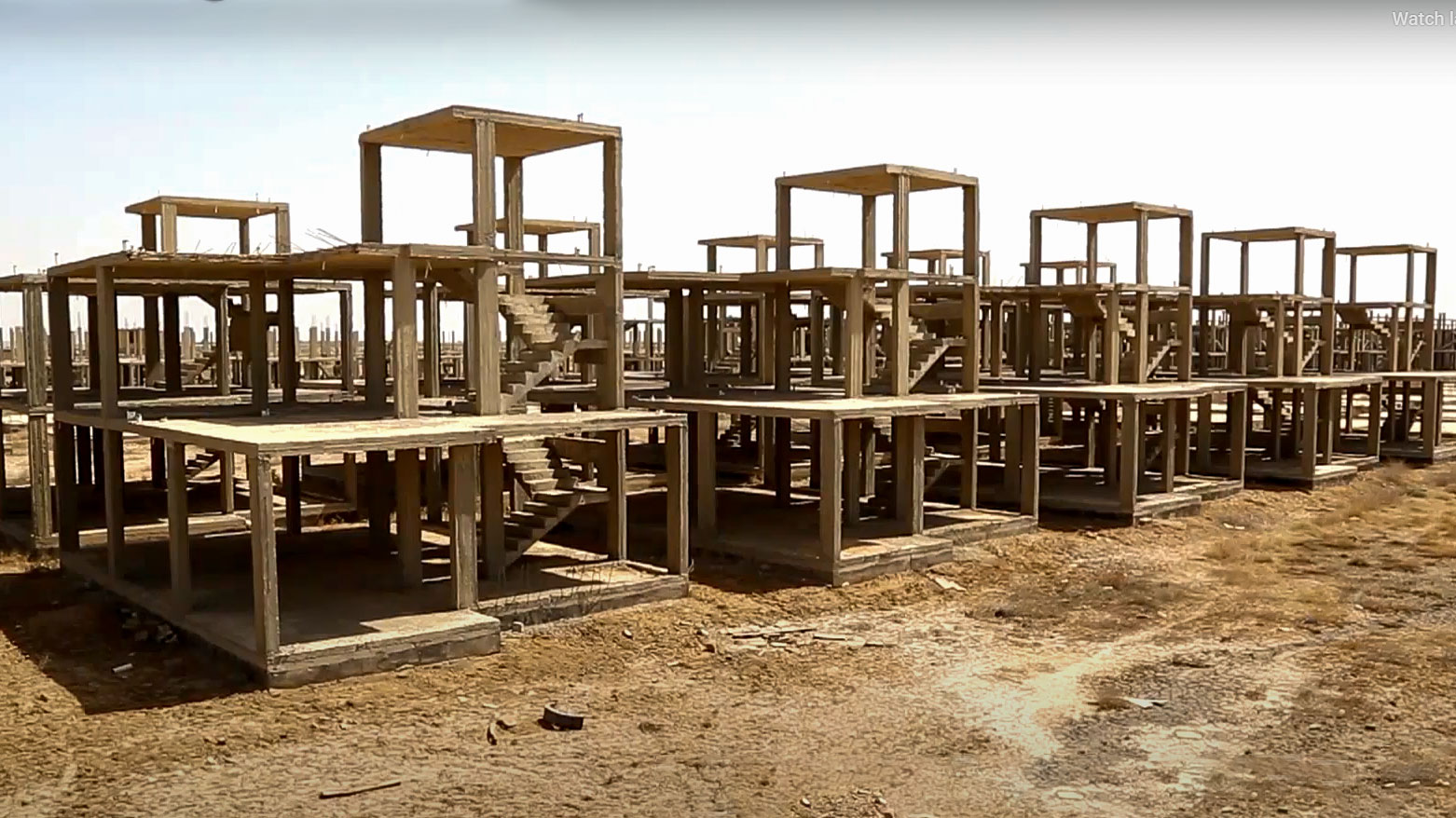
ERBIL (Kurdistan24) - At least 171 planned projects in Iraq’s Dhi Qar province remain incomplete, as residents and business owners in the Shatra industrial zone say decades of neglect and poor services have crippled livelihoods, particularly during the rainy season.
With every rainfall, the industrial zone of Shatra district turns into a stretch of mud and stagnant water, creating major transportation obstacles and forcing vehicles to move with difficulty. Local shop owners say the conditions have severely disrupted daily work and discouraged customers from accessing the area.
Business owners told Kurdistan24 that the accumulation of mud and dirt has reached a level where people avoid bringing their vehicles for repairs, leading to a sharp decline in activity across the industrial zone.
One craftsman said the area has been completely neglected, adding that residents suffer year-round from dust in summer and mud in winter. He said no official had responded to their complaints for four years, forcing many shops to close repeatedly due to impassable conditions.
Another worker said the situation has persisted for 20 years, stressing that residents continue to pay electricity, water, and sanitation fees without receiving services. He added that electricity and water are often unavailable despite regular payments, noting that each shop supports at least five people.
Residents warned that the continued deterioration of services poses a direct threat to their income and livelihoods, particularly during winter rains. They stressed that industrial zones are a vital source of income for thousands of families and that prolonged neglect could force many to abandon their businesses.
A Shatra resident said four families depend on his shop alone, adding that the same applies to neighboring businesses, yet no municipal worker has visited the area to provide basic cleaning or maintenance.
Another craftsman said municipal authorities only implement temporary solutions, such as removing mud with heavy machinery, but conditions return to the same state after the next rainfall. He called on the local government to implement a permanent solution, warning that the lack of access has halted business entirely.
Abdulbaqi Amri, a member of the Dhi Qar Provincial Council, revealed what he described as the most notable achievements of the previous local government, while sharply criticizing the performance of the current administration.
Amri said the former government had handed over 171 fully planned and implementation-ready projects to the incoming administration. He added that this was in addition to accumulated social monitoring funds over four years and the existence of a comprehensive plan to revive marshland areas.
He said the financial situation of Dhi Qar’s municipality during the previous term was stable, with no budget deficit or debt, and that the municipality had recorded a financial surplus. According to Amri, these factors demonstrate the success of the former administration.
Amri argued that the government should have been handed over in a unified and orderly manner, rather than the current situation, which he said is characterized by a loss of financial control and the inability of many departments to repay debts due to excessive spending.
He questioned the fate of stalled ministerial projects, warning that hundreds of projects remain frozen and face the risk of deterioration.
Regarding administrative performance, Amri said that administrative disputes over authority during the past two years—particularly disagreements between the governor and deputies over the distribution of powers—have had a negative impact on the overall condition of the province. He called for applying the principle of evaluating the governor by the provincial council in the same manner used to assess administrative units, describing the current provincial government as a “government of empty talk.”
Dhi Qar Deputy Governor for Technical Affairs Hassan Dadoosh confirmed earlier this month that the local government has intensified coordination with the Ministries of Planning and Finance to ensure the proper spending of financial allocations for companies operating in the province.
He also noted that in April last year, Iraqi Prime Minister Mohammed Shia al-Sudani laid the foundation stone for three major strategic projects in Dhi Qar, with a total cost of 2.195 trillion Iraqi dinars.
Despite these announcements, residents of Shatra’s industrial zone continue to demand urgent intervention, warning that continued neglect threatens not only daily business activity but the economic survival of thousands of families dependent on the sector.