Kurdish-Led SDF Praises U.S. Operation as Key to Containing ISIS
SDF praises US strikes on 70+ ISIS targets as vital for security. Operation retaliated for 3 US deaths. Strikes coincided with Syria declaring end to sanctions.
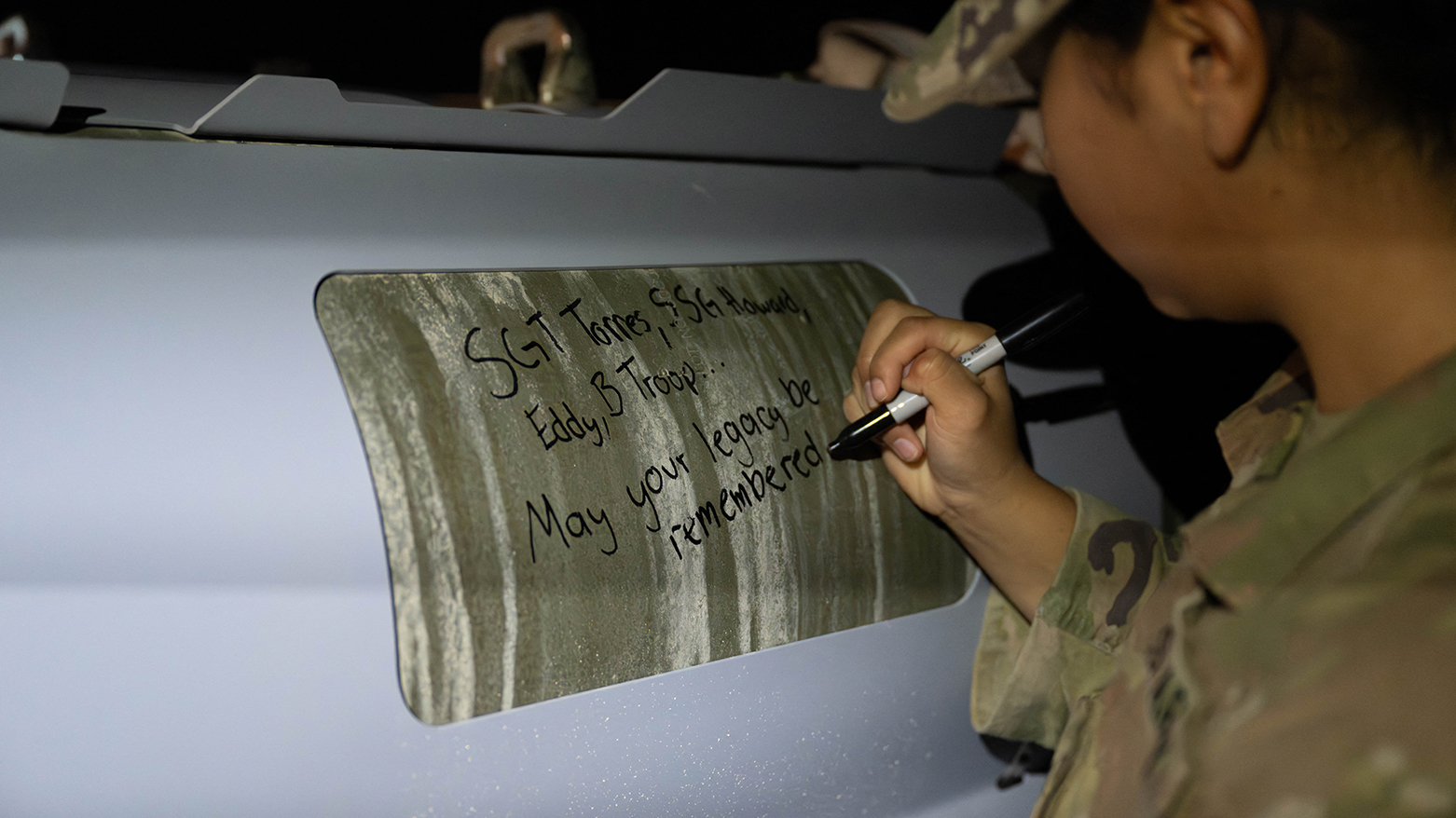
ERBIL (Kurdistan24) — The Syrian Democratic Forces (SDF) issued a statement on Saturday expressing strong support for a wave of American airstrikes targeting the Islamic State, describing the U.S. military operation as a "decisive factor" in preventing the extremist group from reconstituting its insurgency.
The statement from the Kurdish-led partner forces came hours after the United States launched a massive retaliatory bombardment across central Syria in response to an attack that killed three American personnel earlier this month.
The General Command of the SDF, which has worked closely with the U.S.-led coalition for years, praised the "precise air and missile strikes" conducted over the preceding hours.
In their assessment, the continued application of American air power remains essential to stop the Islamic State from exploiting security vacuums or regaining the ability to conduct subversive activities.
The SDF emphasized that "experience has proven that the war on terror cannot stop or slow down," characterizing the jihadist group as a persistent and direct threat to regional stability despite the territorial defeat of its so-called caliphate years ago.
The American military response, code-named Operation Hawkeye Strike, was substantial in scale and intensity.
According to U.S. Central Command (CENTCOM), American forces utilized a combination of fighter jets, attack helicopters, and artillery to strike more than 70 targets associated with the Islamic State. The operation employed over 100 precision-guided munitions aimed at the group’s infrastructure and weapons caches.
The strikes were ordered by President Donald Trump as a direct retaliation for a December 13 incident in the ancient city of Palmyra.
In that attack, a lone gunman described by Syrian officials as a member of the security forces harboring "extremist Islamist ideas" killed two U.S. soldiers and a civilian interpreter.
The victims were identified as Iowa National Guard Sergeants William Howard and Edgar Torres Tovar, and Ayad Mansoor Sakat, a civilian interpreter from Michigan.
President Trump, who attended a ceremony marking the return of the victims' remains to the United States on Wednesday, utilized his Truth Social platform to frame the military operation as the fulfillment of a promise.
He stated that the U.S. was inflicting "very serious retaliation" on those responsible, warning that assailants targeting Americans would be "hit harder than you have ever been hit before."
This sentiment was echoed by U.S. Secretary of War Pete Hegseth, who characterized the operation in stark, punitive terms. Mr. Hegseth described the campaign not merely as a military maneuver but as a "declaration of vengeance."
He issued a stern warning to potential adversaries, stating that targeting Americans would result in the United States hunting them down to "ruthlessly kill you."
For the SDF, the U.S. operation served as a validation of their ongoing security partnership.
In its Saturday statement, the SDF General Command noted that during the current year, their forces had conducted hundreds of security and military operations against Islamic State cells.
These operations, they stated, resulted in the arrest of dangerous leaders and the dismantling of active militant groups. The SDF attributed these successes to the "direct support" of the International Coalition, which provided critical intelligence and air cover.
The command argued that such coordination has proven its effectiveness, asserting that "effective partnership is the only way to remove the threat."
The security situation in Syria remains complex one year after the overthrow of former President Bashar al-Assad in December 2024.
The Palmyra attack was the first lethal incident involving U.S. forces since the political transition in Damascus.
While the new Syrian government in Damascus did not issue a direct commentary on the specific American strikes, the Foreign Ministry released a statement on the social media platform X pledging to ensure that the Islamic State finds "no safe havens on Syrian territory."
Damascus promised to intensify its own military operations wherever the group poses a threat.
The timing of the U.S. strikes coincided with a significant political development for the post-Assad government.
On Friday, Syrian Interim President Ahmad al-Sharaa delivered a broadcast address from Mount Qasioun, overlooking the capital, to declare the formal end of the Caesar Act sanctions.
Describing the day as "the first day of a Syria without sanctions," Mr. al-Sharaa framed the moment as a historic turning point for the nation’s recovery. He expressed explicit gratitude to President Trump and the U.S. Congress for the decision to repeal the sanctions, as well as to leaders in Türkiye, Saudi Arabia, and Qatar for their support during the transition.
However, the juxtaposition of the "first day without sanctions" and the heavy bombardment of central Syria underscores the fragile duality of the current landscape: a political push for reconstruction and normalization coexisting with a persistent low-level insurgency that continues to draw foreign military intervention.
According to CENTCOM, U.S. and allied forces have conducted ten operations in Syria and Iraq in the days following the Palmyra attack, resulting in the death or detention of 23 militant operatives. The U.S. military maintains a presence in the Kurdish-controlled northeast, where it coordinates with the SDF, and at the Al-Tanf garrison near the Jordanian border.
The long-term posture of American forces remains a subject of policy debate.
The Pentagon had announced in April that troop numbers would be reduced in the coming months, and U.S. Special Envoy for Syria Tom Barrack indicated in June that Washington plans to eventually consolidate its presence to a single base.
Nevertheless, the SDF statement on Saturday reiterated a commitment to "continuing the war against ISIS" and developing cooperation with all parties fighting terrorism, signaling their view that a precipitous American withdrawal could jeopardize the gains made against the extremist group.
The SDF concluded its statement by affirming its dedication to defending stability and protecting civilians, positioning itself as a continued bulwark against the resurgence of the Islamic State.
The events of the past 24 hours—ranging from the celebration of sanction relief in Damascus to the detonation of precision munitions in the central desert—highlight the multifaceted challenges facing Syria as it attempts to move past decades of dictatorship and war while managing the lingering threat of transnational terrorism.