Ahead of Mandate’s End, UNAMI Hands Over its Main Baghdad Compound to Iraqi Government
UNAMI has signed documents transferring its main Baghdad compound to the Iraqi government on Dec. 14, 2025, ahead of the mission’s mandate ending on Dec. 31, marking the transition to a UN Country Team partnership.
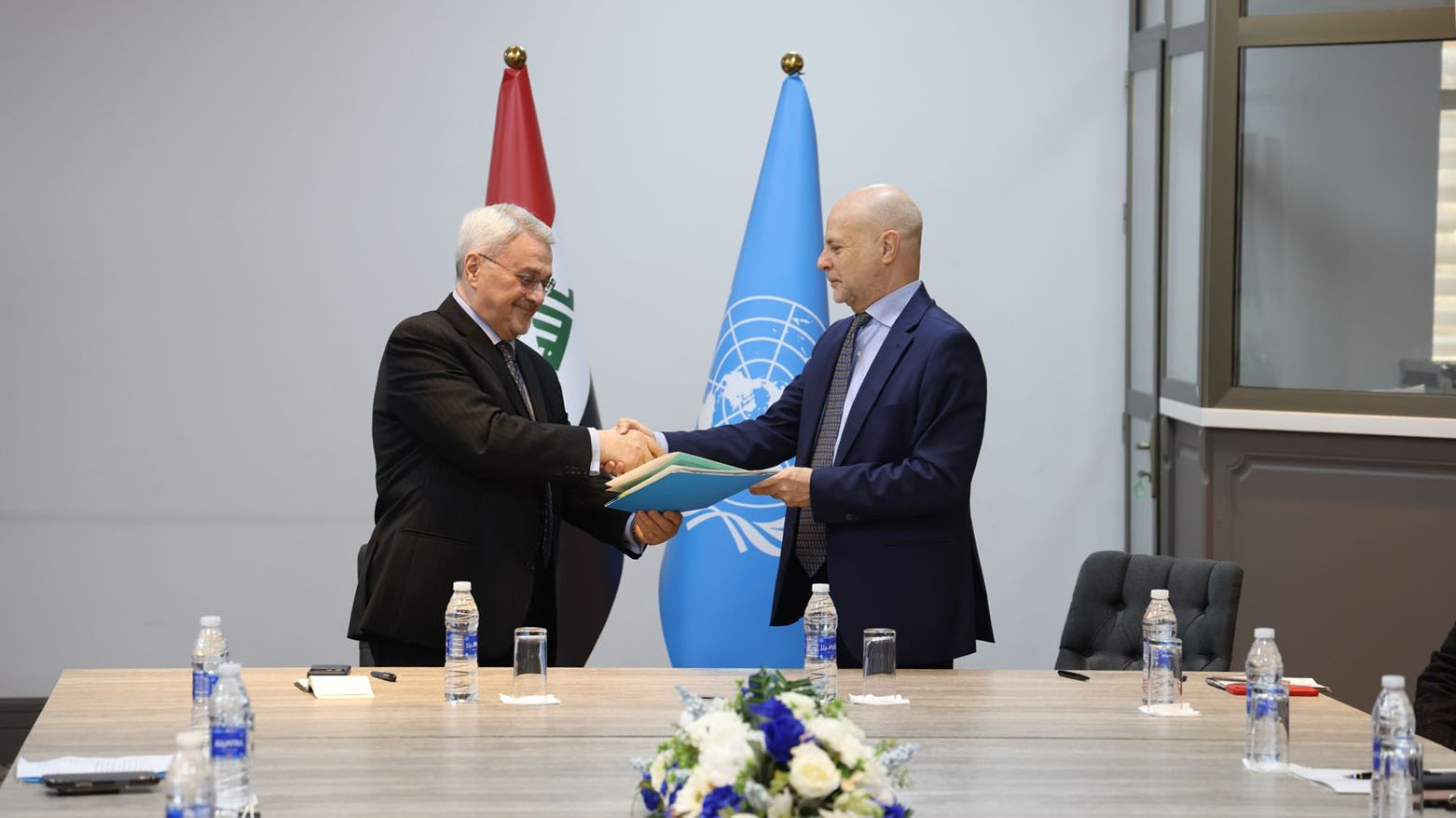
ERBIL (Kurdistan24) - In a symbolic step closing more than two decades of UN political engagement in Iraq, the United Nations Assistance Mission for Iraq has formally handed over its main compound in Baghdad to the Iraqi government, signaling the approach of the mission’s end and the opening of a new phase in UN–Iraq relations.
UNAMI announced on Saturday, that the official documents for the handover of its principal Baghdad complex were signed on Dec. 14. According to a statement posted on the mission’s official X account, the documents were signed on behalf of UNAMI by Claudio Cordone, Deputy Special Representative for Iraq for Political Affairs and Electoral Assistance, while Ambassador Mohammad Bahr Al Uloom, Undersecretary for Bilateral Affairs, signed for the Government of Iraq.
The statement described the event as the culmination of months of close cooperation between the two sides, underscoring a carefully managed transition as UNAMI approaches the conclusion of its mandate on Dec. 31, 2025. It added that the handover marks the shift from UNAMI’s political role to the work of the UN Country Team, framing the move as a new chapter in the partnership between Iraq and the United Nations.
On 14 December 2025, the United Nations Assistance Mission for Iraq (UNAMI) signed the documents for the handing over to the Government of Iraq of its main compound in Baghdad, ahead of the end of the Mission’s mandate on 31 December. Claudio Cordone, Deputy Special… pic.twitter.com/fdSowyLgAc
— UNAMI (@UNIraq) December 20, 2025
The handover comes one week after United Nations Secretary-General António Guterres arrived in Baghdad to take part in the official ceremony marking the conclusion of UNAMI’s mission. Guterres was received at Baghdad International Airport by senior Iraqi officials, including Deputy Prime Minister and Foreign Minister Fuad Hussein, in a visit that highlighted the end of a mission established in 2003 to support Iraq’s political transition and post-war development.
The Iraqi government requested the termination of UNAMI, citing improved security conditions and political stability and signaling its readiness to assume full responsibility for national affairs. During his visit, the Secretary-General was expected to meet senior Iraqi leaders to discuss the future framework of cooperation between Iraq and the United Nations.
Earlier, UN Special Representative for Iraq Mohamed Al-Hassan confirmed that UNAMI will officially conclude its mandate on Dec. 31, with all mission members departing the country after that date. He stressed that while the political mission is ending, the UN’s presence in Iraq will continue and may expand in technical fields such as climate, health, education, and technology.
Reflecting on more than twenty years of UNAMI operations, Al-Hassan said the mission was established at the request of the Iraqi people and is ending at their request, adding that it was now time for Iraq to manage its own affairs like other sovereign states. He also noted unresolved files that remain priorities for international cooperation, including missing persons from Kuwait and third-country nationals, Kuwaiti property, and the return of Kuwait’s national archives.
With the handover of its main compound complete and its mandate set to expire at the end of December, UNAMI’s departure closes a long political chapter, as Iraq and the United Nations recalibrate their relationship toward a future defined by technical cooperation and national ownership.