KDP Reaffirms Lead Role in KRG Formation After Major Election Victory
Vote Results, Not Old Agreements, Should Decide Next KRG Cabinet, says Zaim Ali, a member of the KDP Politburo.
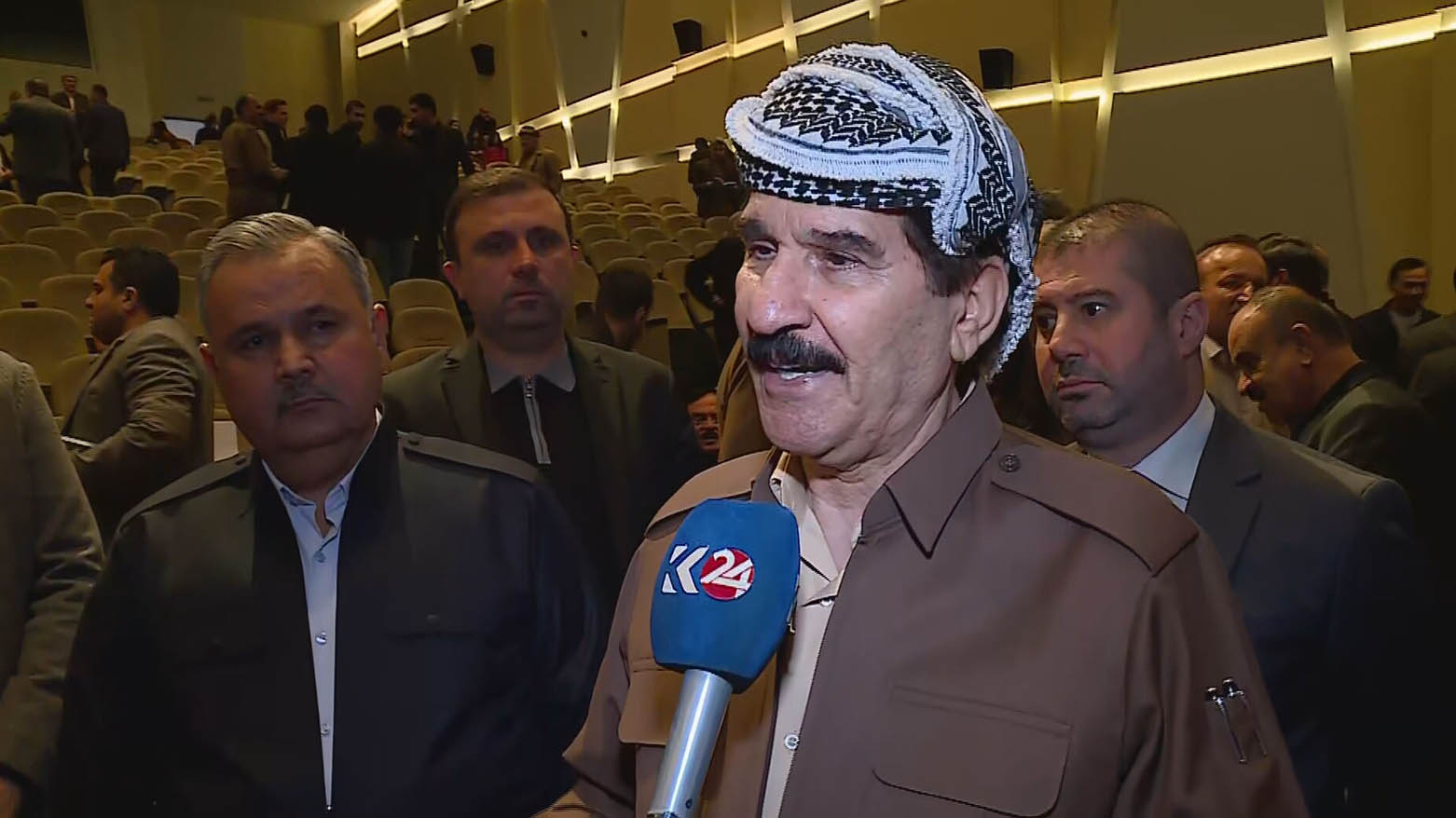
ERBIL (Kurdistan24) — The Kurdistan Democratic Party (KDP) has reaffirmed its call for a fundamental recalibration of political understandings in the Kurdistan Region, stressing that the results of the recent elections and the number of seats won should serve as the primary basis for forming the next Kurdistan Regional Government (KRG) cabinet.
Zaim Ali, a member of the KDP Politburo, told Kurdistan24 on Saturday that despite the continuation of talks between senior negotiating committees of the KDP and the Patriotic Union of Kurdistan (PUK), the new balance of power created by the elections requires updated political arrangements that reflect current realities.
He said the KDP’s significant electoral victory makes it the principal stakeholder in determining government posts and shaping the next cabinet’s agenda.
“The Kurdistan Democratic Party, having secured the majority of votes and holding twice as many seats as the PUK, considers itself entitled to the primary role in distributing positions and defining the government’s program,” Zaim Ali said.
He explained that understandings reached before the elections can no longer be applied unchanged, arguing that political and popular realities have shifted. According to Ali, demands based on pre-election equations cannot be accepted at a time when voter preferences and parliamentary representation have clearly changed.
Ali emphasized that the winning party must receive the largest share of government posts and warned against allowing the ambitions of other parties to override the outcome of the ballot boxes.
He also underlined that the process of forming the KRG cabinet must remain independent from federal-level negotiations in Baghdad.
On relations between Erbil and Baghdad, the senior KDP official said that forming the Kurdistan Region government and distributing federal posts in Iraq are two entirely separate dossiers. He stressed that the KDP will not allow political complexities in Baghdad to affect the functioning of Kurdistan Region institutions.
“Our current priority is to finalize the formation of the new KRG cabinet so institutions can resume full operation and services can be delivered. Only then will discussions on federal posts begin,” he said.
The KDP’s insistence on separating the two tracks comes amid repeated instances in the past where competition over sovereign positions in Baghdad directly impacted relations between the KDP and PUK.
The party now seeks to expedite the government formation process in the Kurdistan Region without waiting for the conclusion of negotiations over Iraq’s federal cabinet.
In a related statement, Dr. Ashwaq Jaf, a member of the KDP Central Committee, said on Friday that her party has not closed the door to dialogue with the PUK. However, she reiterated that the formation of the new KRG cabinet must be based on “electoral entitlement,” firmly rejecting any attempt to merge negotiations over the Kurdistan Region government with talks on Baghdad.
In a televised interview with Kurdistan24, Jaf said the KDP initially sought to form a broad-based government after the elections, but some parties later chose to position themselves in opposition. She noted that while there was early understanding on the government’s program, disagreements emerged during discussions over posts, with the PUK retreating from earlier positions.
Jaf attributed this shift to what she described as “miscalculations” by some Iraqi and Kurdish actors who expected the KDP to suffer electoral losses. “The election results proved otherwise, and the KDP remained the leading force,” she said.
Regarding Erbil–Baghdad relations, Jaf stressed that the KDP’s priority is addressing internal conditions in the Kurdistan Region, reactivating parliament, and forming the government. She said this would allow Kurdish parties to later approach Baghdad with a unified position to defend constitutional rights.
On the Iraqi presidency, Jaf reiterated that the post belongs to the Kurdish people as a whole rather than to a specific party. She emphasized that the Kurdish nominee should be agreed upon through a “Kurdish mechanism,” without interference from Iraqi political forces.
She concluded by confirming that the KDP’s negotiating committee will continue its work, with future meetings to be scheduled on the condition that talks are conducted on the basis of election results and the actual weight of each party.
The KDP’s position aligns with remarks made earlier this week by Hemin Hawrami, a member of the party’s Politburo, following a KDP Central Committee meeting chaired by President Masoud Barzani on Thursday. Hawrami said the meeting focused extensively on post-election political developments and reaffirmed the party’s stance on continuing negotiations for forming the KRG cabinet strictly based on electoral gains, while keeping those talks separate from negotiations over the formation of Iraq’s federal government.
He noted that pre-election circumstances and political equations no longer apply in the post-election phase, a position the KDP has repeatedly conveyed to the PUK during previous rounds of dialogue.
Hawrami also said the meeting reviewed the party’s election results in detail, praising KDP cadres for what he described as a “magnificent win,” which consolidated the party’s position as the leading political force in the Kurdistan Region.