Iraq Requires Over 100 Billion Cubic Meters of Water to Restore Normalcy, Environmental Monitor Warns
Iraq needs 100 billion cubic meters of water to normalize, as drought threatens drinking supplies and agriculture, urging deals with neighbors.
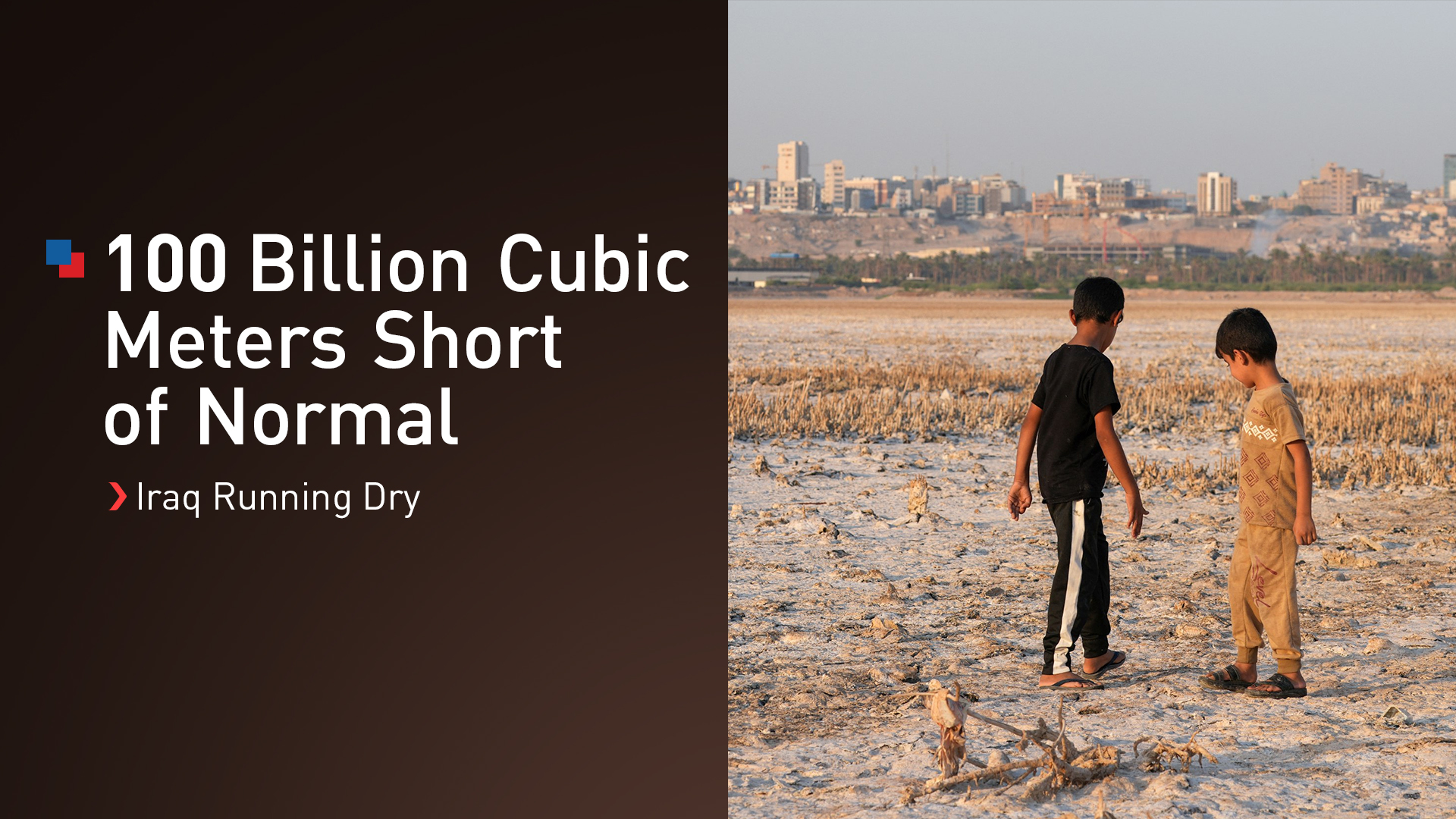
ERBIL (Kurdistan24) — Iraq is currently facing a staggering water deficit, requiring more than 100 billion cubic meters of water to return to a state of environmental and hydrological normalcy, according to a stark new assessment released by the Iraqi Green Observatory.
The announcement highlights the deepening severity of a crisis that has ravaged the country’s agricultural output, degraded water quality in major population centers, and now threatens the drinking water supply for millions of citizens.
In a detailed statement regarding the nation's water security, the Iraqi Green Observatory warned that recent precipitation has been wholly insufficient to reverse the damage caused by prolonged drought.
The organization emphasized that the current levels of rainfall across Iraq have not reached the necessary thresholds to replenish depleted reserves.
To begin addressing the deficit, the Observatory estimated that the country would need double the amount of rain in the coming periods compared to what has been recorded recently.
The deficit is most visibly manifested in the Tigris and Euphrates rivers, the twin lifelines that have historically sustained civilization in the region.
The Observatory reported a significant drop in water levels in both rivers, a decline that has triggered a cascade of environmental degradation.
As the flow of fresh water has weakened, the quality of the water has deteriorated, leading to a dangerous rise in salinity levels, particularly in the southern governorate of Basra.
This intrusion of saline water represents a critical threat to both human consumption and agriculture in an area already struggling with environmental stress.
The impact of this scarcity is being felt most acutely in the southern and central regions of the country, as well as in the historic marshes, which are ecologically vulnerable to fluctuations in water flow.
The data provided by the Observatory indicates that the drought has forced government planners to take drastic measures regarding food production. Consequently, the winter agricultural plan has been reduced to its lowest level, a move that suggests a significant contraction in the cultivation of strategic crops and a potential blow to the rural economy.
While recent weather patterns have brought some rain to the region, the Iraqi Green Observatory cautioned against optimism, clarifying that the amount of rain that has fallen recently is "not significant" when measured against the scale of the drought that has persisted throughout the year.
The accumulated deficit is so large that minor fluctuations in weather are failing to alter the overall trajectory of the crisis.
Looking ahead, the outlook provided by the monitoring group is grim.
The Observatory explained that without a fundamental shift in water availability, the crisis is expected to worsen by next summer. The projection is not limited to economic losses; the group explicitly warned that the situation could deteriorate to the extent that it impacts drinking water supplies. This escalation would mark a shift from an agricultural and environmental challenge to a direct humanitarian emergency.
Environment and water experts cited in the report linked the future severity of the crisis to the geopolitical dimension of water management.
They predicted that the water shortage next summer will be "much more severe than in previous years" if the Iraqi government fails to reach a concrete agreement with neighboring countries.
The primary objective of such an agreement would be to secure water releases to bolster the flow of the rivers. Without a diplomatic breakthrough to ensure these external flows, the domestic measures to manage scarcity appear insufficient to prevent a deepening emergency.
The human toll of this environmental shift is already becoming evident.
According to the report, the segments of society that have sustained the "most damage" are fishermen and farmers. These communities, whose livelihoods are inextricably linked to the volume and quality of river water, are facing an existential threat as levels drop and salinity rises.
As the winter season progresses, the disparity between the water Iraq possesses and the 100 billion cubic meters it requires serves as a quantifying metric for the scale of the disaster.
With the winter agricultural plan already slashed and the specter of drinking water shortages looming for the summer, the findings of the Iraqi Green Observatory underscore an urgent need for both increased precipitation and decisive diplomatic action to secure the country’s hydrological future.