U.S. Coast Guard Boards Second Tanker Carrying Venezuelan Oil as Trump Ramps Up Pressure
U.S. forces seized the unsanctioned tanker Centuries carrying Venezuelan oil, escalating pressure on Maduro under Trump's new blockade strategy targeting "ghost fleets."
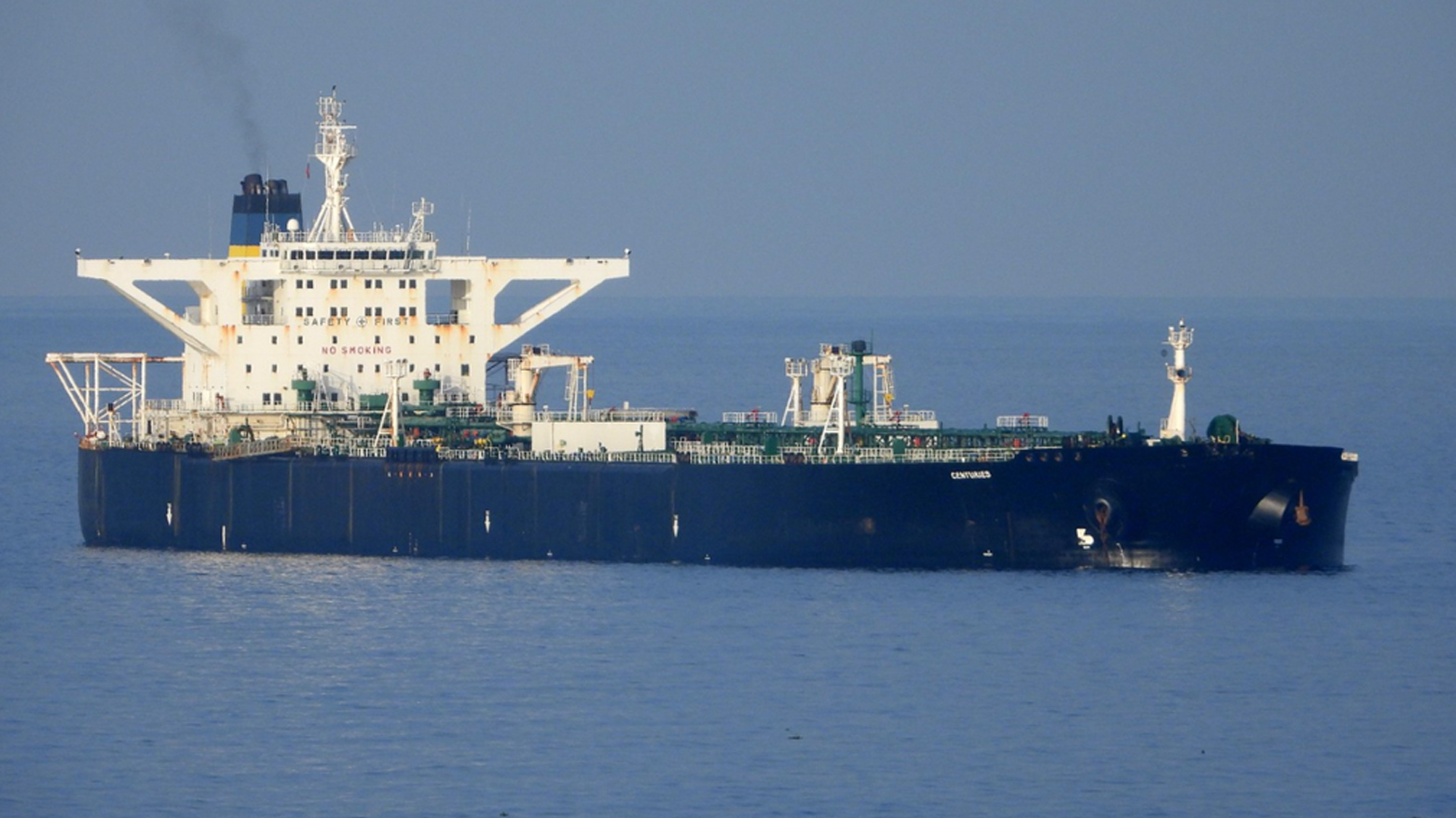
ERBIL (Kurdistan24) — U.S. authorities boarded a Panamanian-flagged tanker carrying nearly two million barrels of Venezuelan crude oil on Saturday, signaling a dramatic escalation in the Trump administration's campaign to choke off the revenue lifeline of President Nicolás Maduro’s government.
The operation against the vessel, identified as the Centuries, marks the second time this month that American forces have interdicted a tanker transporting Venezuelan oil.
The action follows President Trump's declaration on Tuesday of a "total and complete blockade" of sanctioned oil tankers operating in Venezuelan waters, a move that legal experts and U.S. officials suggest is being interpreted broadly to target the so-called "ghost fleet" of vessels that evade international scrutiny.
Homeland Security Secretary Kristi Noem confirmed the operation in a post on the social media platform X, stating that the U.S. Coast Guard, supported by the Department of War, had "apprehended" the tanker in a predawn action.
"The United States will continue to pursue the illicit movement of sanctioned oil that is used to fund narco terrorism in the region," Ms. Noem wrote. "We will find you, and we will stop you."
Accompanied by a video showing personnel rappelling from a helicopter onto the ship's deck, the announcement underscores a shift in U.S. strategy from merely sanctioning the oil to physically seizing the vessels responsible for its transport.
A Broad Interpretation of Enforcement
The seizure of the Centuries raises significant legal and geopolitical questions because, unlike the Skipper—a tanker seized by U.S. forces on December 10—the Centuries is not listed on any public sanctions registry maintained by the U.S. Treasury Department, the United Nations, or the European Union.
According to The New York Times, U.S. authorities did not have a seizure warrant for the Centuries at the time of boarding, a stark contrast to the legal framework used for the Skipper, which had verifiable ties to Iranian shipments.
A U.S. official told the Times that the Coast Guard was attempting to determine the validity of the vessel's Panamanian registration, invoking international laws that permit boarding if a ship's flag status is in doubt.
"Saturday’s boarding of a ship not under U.S. sanctions suggests a very broad interpretation of President Trump’s enforcement strategy, which means a significant revenue squeeze for Maduro," Ryan Berg, director of the Americas Program at the Center for Strategic and International Studies, told The Wall Street Journal.
The vessel had loaded between 1.8 million and two million barrels of Merey-16 crude at Venezuela’s José Terminal earlier in December.
Data analyzed by TankerTrackers.com and Kpler indicates the Centuries has been a regular exporter of Venezuelan oil since 2020, often engaging in ship-to-ship transfers off Malaysia to obscure the origin of its cargo before final delivery to China.
Escalating Tensions at Sea
The boarding occurred in international waters after the vessel had left Venezuela’s exclusive economic zone.
Satellite imagery reviewed by The New York Times showed that prior to the interdiction, the Centuries had been escorted by a flotilla of three Venezuelan naval vessels, a protective measure recently ordered by Maduro. The naval escorts reportedly turned back before the U.S. intervention took place.
The Venezuelan government reacted with fury, issuing a statement that "categorically rejects the theft and hijacking of another private vessel."
Vice President Delcy Rodríguez described the operation as a "serious act of piracy" and a violation of international maritime law, vowing to file a complaint with the United Nations Security Council.
The Trump administration, however, frames these actions as necessary law enforcement measures against a "narco-terrorist" regime.
A senior U.S. official told The Wall Street Journal that the strategy is to seize more tankers, explicitly targeting the shadowy network of ships that transport 70% of Venezuela’s oil exports. The only exceptions, the official noted, would be vessels chartered by Chevron, which operates under a specific U.S. license.
The "Ghost Fleet" and Future Actions
The Centuries is emblematic of the deceptive shipping practices used to circumvent sanctions.
The New York Times reported that during its recent voyage, the tanker engaged in "spoofing"—broadcasting false location data to appear hundreds of miles away from its actual position at the Venezuelan port.
Senior Justice Department officials told The Wall Street Journal that the U.S. is preparing warrants for additional ships, aiming to permanently disable the fleet serving sanctioned nations.
While Trump has used the term "blockade," some officials prefer the term "quarantine," arguing that the operations target specific illegal shipments rather than halting all commerce, a distinction that seeks to avoid the legal classification of an act of war.
Nevertheless, the U.S. has significantly bolstered its military presence in the Caribbean, deploying new aircraft and maintaining a flotilla of 11 Navy warships in the region. These assets provide the administration with the capability to enforce its embargo aggressively.
As the Centuries remains under U.S. control, the lack of a pre-existing warrant and the vessel's unsanctioned status suggest that Washington is now operating under a new, more aggressive rules of engagement.
With the White House yet to comment officially on the legal basis for the seizure, the incident marks a volatile new phase in the standoff between Washington and Caracas.