KRG Advocacy Coordinator and U.S. CG Review Strategic Reforms, Security Challenges, and Human Rights in Erbil Talks
KRG and US officials reviewed security, media reforms, and human rights in Erbil, with the US Consul praising the KRG’s advocacy coordination.
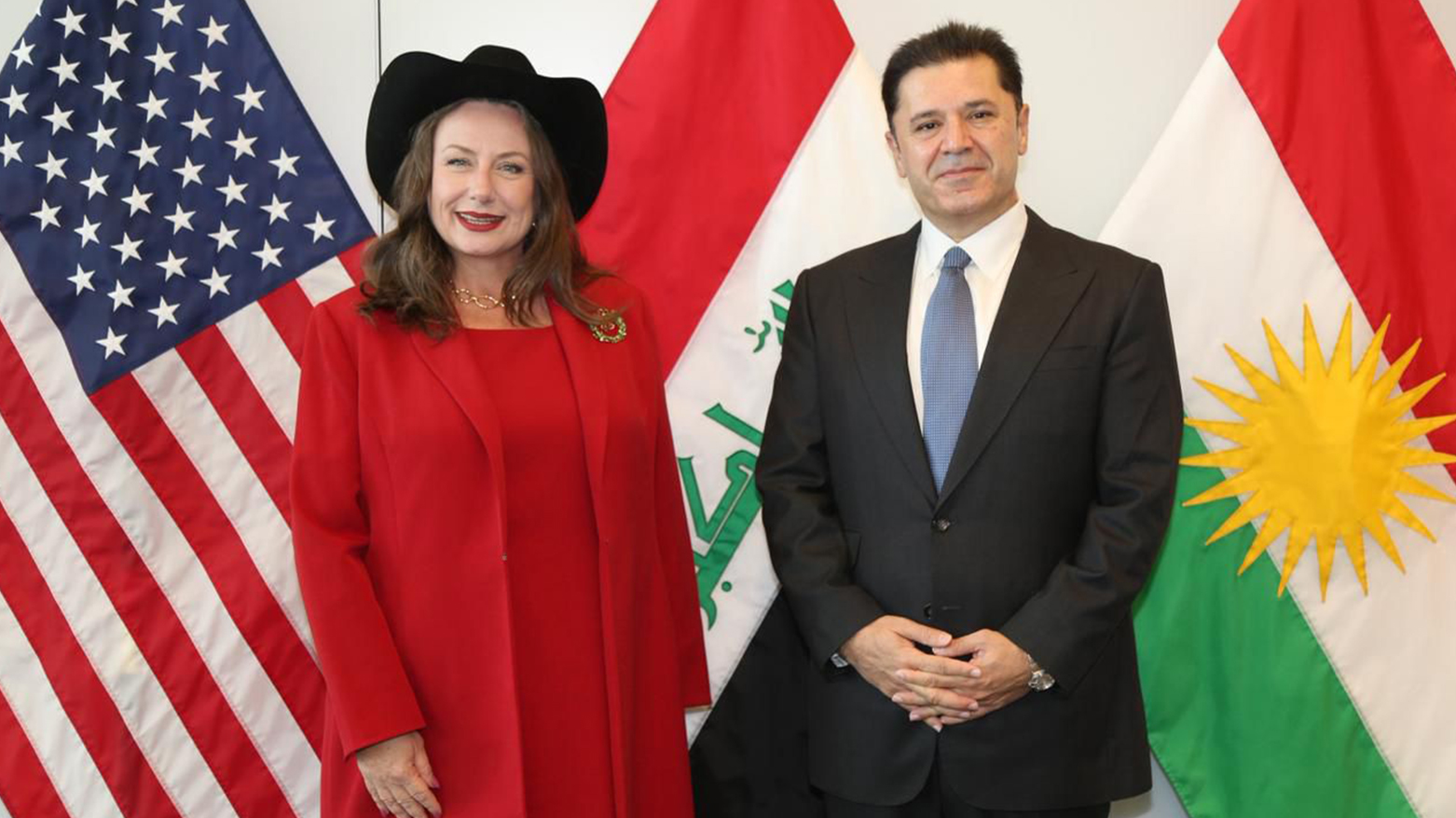
ERBIL (Kurdistan24) — The Kurdistan Regional Government’s Coordinator for International Advocacy and the United States Consul General in Erbil convened on Monday for a wide-ranging diplomatic engagement, conducting an intensive review of the region’s institutional reforms, the integrity of its media landscape, and pressing security threats involving narcotics and non-state actors.
The meeting, held on Monday, at the Consulate General of the United States of America in Erbil, brought together Dr. Dindar Zebari, the KRG’s Coordinator for International Advocacy, and Wendy Green, the U.S. Consul General.
According to an official readout of the proceedings, the discussion was characterized as both "analytical and intensive," covering a set of priority issues ranging from the current political situation to the technicalities of law enforcement and judicial independence.
Strengthening International Advocacy Mechanisms
A central theme of the talks was the evolving relationship between the Kurdistan Regional Government (KRG) and international diplomatic missions regarding the reporting of human rights and governance issues.
During the meeting, Consul General Green offered a distinct commendation of the professional performance exhibited by the Office of the Coordinator for International Advocacy (OCIA).
Green described the OCIA as a "trustworthy and accurate party" in the critical task of presenting the situation within the Kurdistan Region to the international community.
The Consul General noted that the ongoing coordination with Dr. Zebari’s office has yielded tangible results in how the region is perceived and analyzed abroad. Specifically, she indicated that this cooperation has led to "raising the quality and balance of international reports regarding human rights."
Furthermore, the U.S. diplomat highlighted a shift in information gathering, noting that the robust channel established with the OCIA has contributed to "reducing reliance on unverified sources."
This development marks a significant step in ensuring that international assessments of the region are grounded in verified data rather than speculation or uncorroborated claims.
Media Reform and Information Integrity
Dr. Zebari utilized the meeting to present the latest administrative data regarding reforms in the region's media sector, a topic closely linked to the broader discussion on information integrity.
The Coordinator provided specific figures regarding the journalistic landscape, revealing that there are currently 3,400 active journalists operating within the Kurdistan Region.
In an effort to modernize the sector and ensure professional standards, Dr. Zebari detailed the renewal of journalists' identification cards by the Journalists Syndicate.
He explained that these new credentials now incorporate Near Field Communication (NFC) technology.
Both parties evaluated these technological and administrative steps as critical factors in the fight against disinformation. The modernization of the press registry was described as a mechanism for "reducing misleading information and increasing the credibility of sources," thereby strengthening the overall information environment in the region.
Security Threats: Narcotics and Borders
The agenda also addressed severe security challenges facing the Kurdistan Region, with a particular focus on transnational threats.
Both Dr. Zebari and Ms. Green discussed the dangers posed by narcotics trafficking, identifying the illicit trade flowing through "regional corridors" as a major threat to both security and the social fabric of society.
The conversation extended to the protection of the region’s borders and the maintenance of sovereignty.
The officials discussed the destabilizing activity of "non-official armed actors," underscoring the necessity for robust security coordination to mitigate these risks. The preservation of the Kurdistan Region’s sovereignty against these internal and external pressures was emphasized as a mutual priority.
Rule of Law and Post-Conflict Reconstruction
Discussions on governance focused heavily on the judicial system. The officials examined the issue of the rule of law and judicial independence, framing these elements not merely as legal concepts but as the essential basis for "accountability and public trust."
Additionally, the meeting addressed the humanitarian and legal legacy of the conflict with the Islamic State (ISIS). The Coordinator for International Advocacy pointed to the KRG’s institutional efforts to document ISIS crimes and the preparation of analytical reports regarding the atrocities committed by the group.
A specific and sensitive focus was placed on the issue of children associated with ISIS. The officials discussed the necessity of reintegrating these minors into society, emphasizing that such processes must adhere strictly to "international standards."
Finally, the dialogue touched upon gender inclusion within the region’s legal framework. Both sides emphasized the importance of greater women's participation in the judicial sector and law enforcement agencies, categorizing this inclusion as a vital part of ongoing humanitarian reforms.
The meeting on Monday underscores the continued close cooperation between Erbil and Washington on matters of governance and security, with the U.S. Consulate signaling strong support for the KRG’s efforts to professionalize its advocacy and reform its institutions.