Tehran Says Iraqi Armed Groups Act Independently as U.S. Pushes Disarmament
Iran’s ambassador denies controlling Iraqi militias, claiming they act independently, while U.S. pressure mounts for disarmament amid threats of airstrikes.
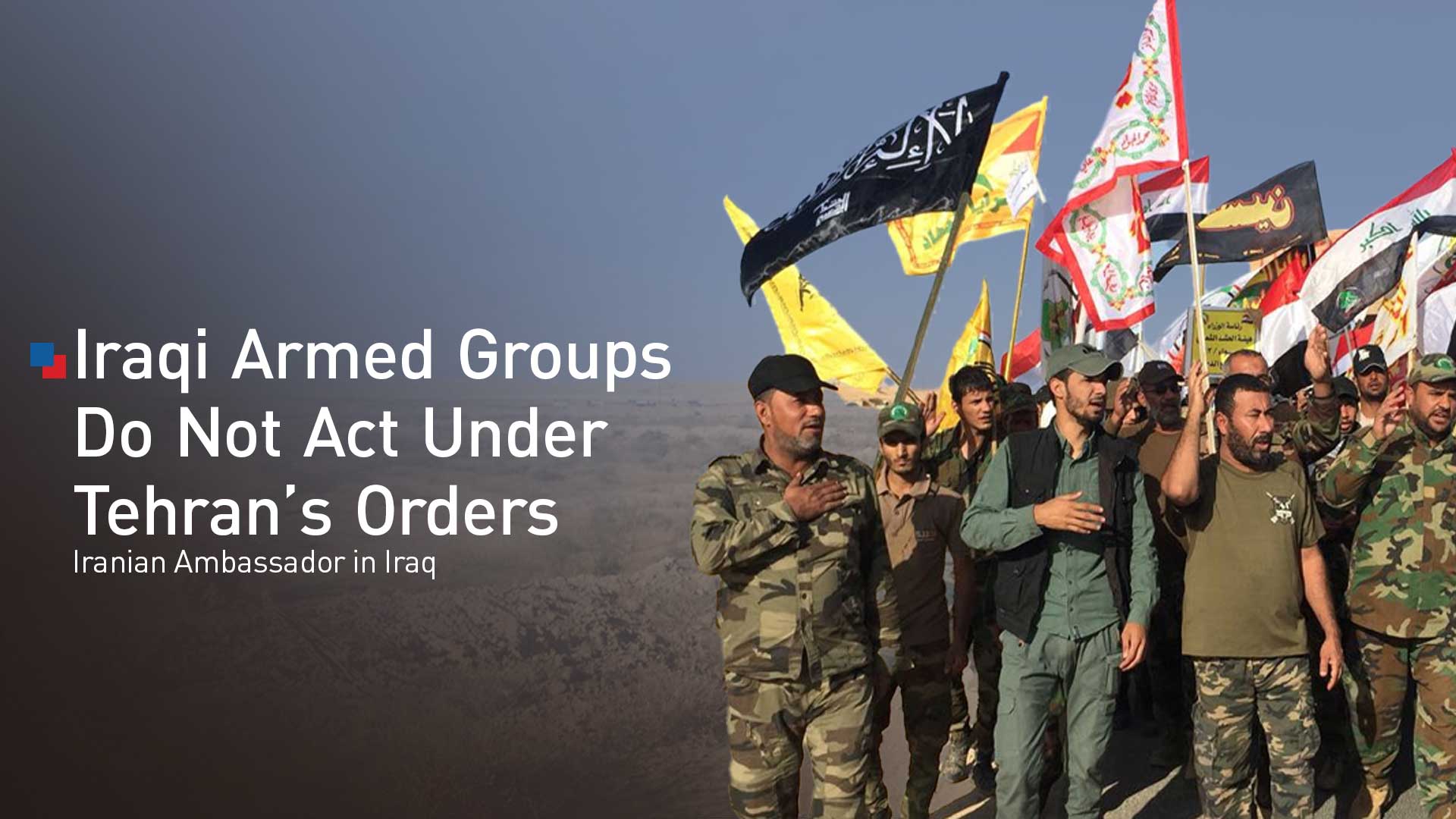
ERBIL (Kurdistan24) – Iran’s Ambassador to Baghdad asserted on Saturday that Iraqi armed factions operate with complete independence and are not subject to Tehran’s instruction, a diplomatic maneuver that comes as the United States intensifies pressure on the Iraqi government to dismantle paramilitary organizations accused of undermining state sovereignty.
Mohammad Kazem Al Sadeq, the Ambassador of the Islamic Republic of Iran to Iraq, stated in remarks broadcast by Al-Dijlah TV that the various political parties and armed groups within Iraq “do not work under our instruction and conduct.”
The ambassador characterized the relationship between Tehran and these factions as one of alliance rather than subordination, clarifying his view that “Iraqi forces have reached a level of political maturity that allows them to make decisions independently and deal with developments.”
These comments from Tehran’s top diplomat in Baghdad appear designed to distance the Islamic Republic from the potential fallout of an escalating confrontation over the weapons status of the Popular Mobilization Forces (PMF) and other militia groups.
However, Al Sadeq acknowledged the rising tensions, noting the “existence of concern” among these factions regarding their future.
“The groups in Iraq are concerned about the possible reaction to the process of their disarmament,” the ambassador said, referring to the contentious government initiatives to assert a state monopoly on the use of force.
The ambassador’s remarks follow fresh revelations regarding direct American pressure on the highest levels of the Iraqi government.
Tommy Pigott, Deputy Spokesperson for the U.S. Department of State, disclosed that U.S. Secretary of State Marco Rubio spoke by telephone with Prime Minister Mohammed Shia al-Sudani on October 21 to deliver a stark message regarding the status of these groups.
According to Pigott, Secretary Rubio emphasized that the continued existence of independent armed groups “undermine Iraq’s sovereignty” and poses a direct threat to American and Iraqi lives, as well as the business community.
The U.S. message stipulated that the role of these groups must be ended and that they must be precluded from participating in the new government.
The diplomatic assertions of independence made by Al Sadeq on Saturday stand in sharp contrast to the events of the preceding day, which highlighted the deep entrenchment and defiance of the factions in question.
On Friday, thousands of gunmen and supporters of the PMF (also known as Hashd al-Shaabi) poured into central Baghdad’s Tahrir Square for a rally that effectively shut down parts of the capital. The demonstration, characterized by anti-American and anti-Israeli slogans, served as a forceful rejection of Washington’s demands for disarmament.
Participants in the Friday rally carried symbolic coffins to commemorate fighters killed in American airstrikes over the past decade, specifically focusing on the 2019 U.S. strike on Kataeb Hezbollah positions in Qaim.
The gathering was utilized by militia leadership to signal that their arsenal would remain intact and under their command, regardless of external diplomatic pressure or the “political maturity” cited by the Iranian ambassador.
Speakers at the rally addressed the ultimatums issued by Western officials with a unified message: “We will not hand them over to any party.”
This standoff is unfolding against a backdrop of credible intelligence warnings regarding potential military action.
Reports indicate that Iraqi government officials have received messages from both an Arab state and a Western intelligence service warning that the country could face a swift military campaign aimed at dismantling the infrastructure of Iran-backed militias.
These warnings, described as “extremely serious,” suggested that Israel, potentially with tacit U.S. approval, had prepared a target list.
According to sources briefed on the matter, a Western intelligence service provided Iraqi officials with a “massive file” containing detailed data on the factions’ operational networks, financial fronts, and depot locations for drones and ballistic missiles.
The precision of this intelligence reportedly stunned officials in Baghdad, accelerating the urgency of the political debate over weapons control.
Despite the ambassador’s claims of independence, the United States continues to view the disarmament of these groups as a prerequisite for stability.
U.S. Special Envoy to Iraq Mark Savaya publicly welcomed reported steps by armed groups toward disarmament earlier in the week but issued a caveat that now appears prescient in light of the Tahrir Square demonstration.
Savaya warned that “verbal commitments alone are insufficient” and demanded that disarmament be “comprehensive, irreversible, and implemented through a clear and binding national framework.”
The internal political struggle in Iraq has also drawn in the judiciary.
Faiq Zidan, the head of the Supreme Judicial Council, announced on December 21 that faction leaders had agreed to coordinate on weapons control, a move that drew sharp criticism from U.S. Representative Joe Wilson.
The lawmaker accused Zidan of undermining judicial independence by treating armed militias as legitimate partners rather than entities subject to the law.
The situation is further complicated by the ongoing government formation process following the November parliamentary elections.
Prime Minister al-Sudani is seeking a second term but faces challenges from former Prime Minister Nouri al-Maliki.
The armed factions, many of which secured parliamentary seats, are leveraging their military capabilities as bargaining chips in these negotiations, wary of submitting to disarmament protocols that might diminish their political influence or leave them vulnerable to the strikes threatened in the intelligence reports.
While Al Sadeq suggests a hands-off approach from Tehran, the reality on the ground in Baghdad reflects a volatile mix of defiant local actors, looming international military threats, and a fragile government attempting to navigate between its Iranian-aligned partners and American security requirements.