Saudi Arabia Threatens Military Action in Yemen as Separatists Reject Withdrawal Demands
Saudi Arabia warned it will back Yemen's government militarily if separatists do not withdraw from seized provinces, following reported Saudi airstrikes and U.S. calls for restraint.
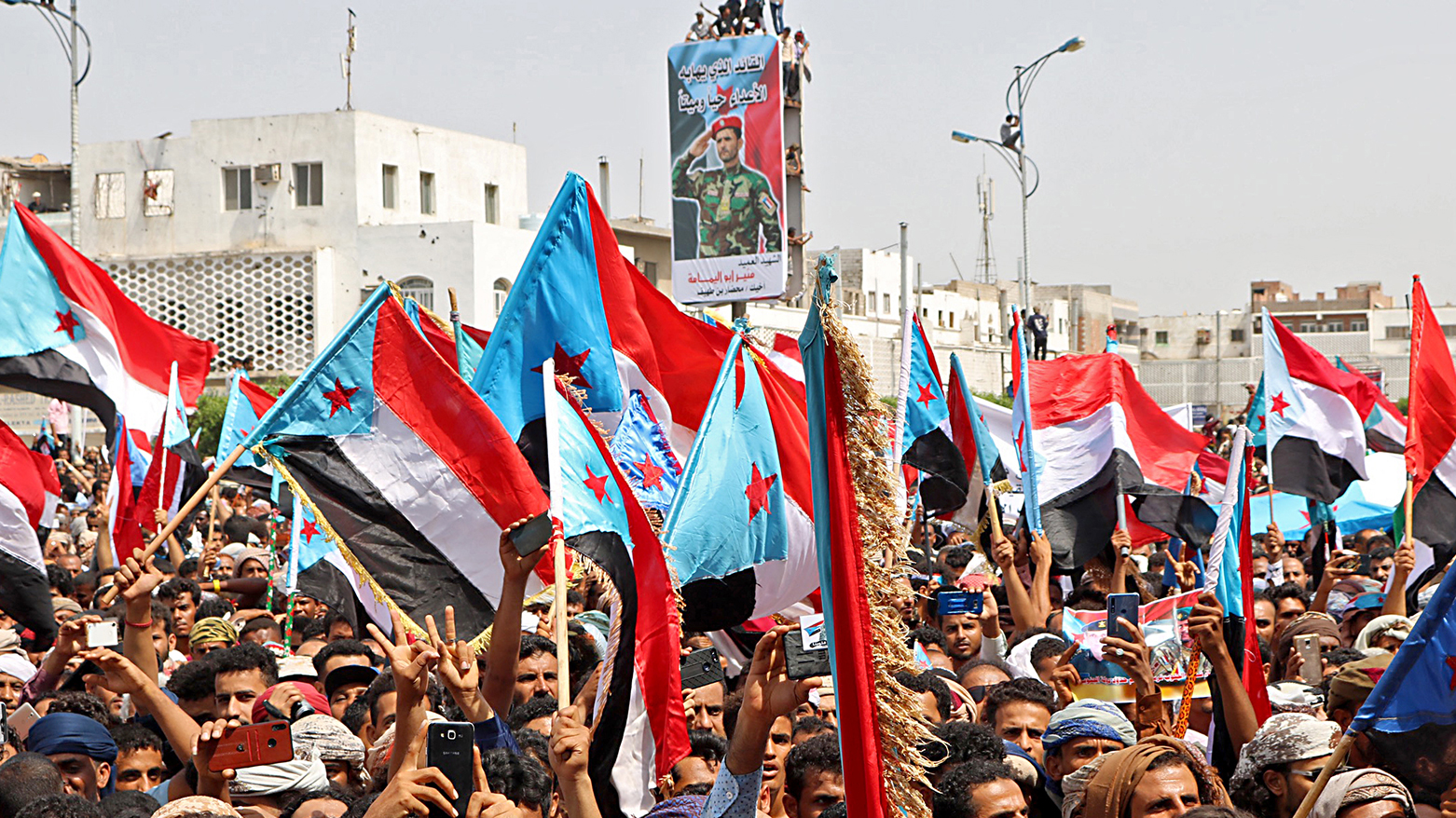
ERBIL (Kurdistan24) – Saudi Arabia warned on Saturday that it would support Yemen's internationally recognized government in any military confrontation with separatist forces, issuing a direct demand for the withdrawal of Southern Transitional Council (STC) troops from recently seized provinces. This escalation follows reported Saudi airstrikes on separatist positions in Hadramawt province and comes amid urgent calls from the United States for restraint.
In a statement posted on the social media platform X, Saudi Defense Minister Khalid bin Salman declared that troops from the separatist STC, which is backed by the United Arab Emirates, must "peacefully hand over" two regional governorates to government control.
The minister's ultimatum arrived just a day after airstrikes blamed on Riyadh targeted separatist positions, marking a significant intensification of the infighting within the anti-Houthi coalition.
General Turki al-Malki, the spokesman for the Riyadh-led coalition forces, reinforced the Kingdom's stance, stating that the coalition would act "directly and at the appropriate moment ... to protect civilian life," according to the Saudi Press Agency (SPA).
The STC, which seeks to revive the formerly independent state of South Yemen, remained defiant in the face of Saudi pressure.
On Friday, the group stated that the strikes would "not serve any path of understanding and will not deter the people of the South from continuing to move forward toward restoring their full rights."
The separatists confirmed to Agence France-Presse (AFP) that Saudi Arabia had conducted two strikes, while separatist-affiliated media aired footage showing smoke rising from the desert. There were no immediate reports of casualties from the aerial bombardment, though the STC claimed two of its fighters were killed in clashes with a Saudi-aligned tribal leader on Thursday.
The conflict has drawn immediate concern from Washington. U.S. Secretary of State Marco Rubio issued a press statement on Friday urging "restraint and continued diplomacy, with a view to reaching a lasting solution."
Secretary Rubio emphasized that the United States was "concerned by recent events in southeastern Yemen" but avoided taking sides, stating instead that Washington was "grateful for the diplomatic leadership" of both Saudi Arabia and the UAE.
Yemen's government has formally requested military intervention from its Saudi patrons. Following the airstrikes, the government urged the coalition to "take all necessary military measures to protect innocent Yemeni civilians in Hadramawt province and support the armed forces," according to the official Yemeni news agency Saba.
A Yemeni government official in Riyadh told AFP that Saudi Arabia had signaled it could launch airstrikes and deploy the "Nation Shield" forces—a Salafist group backed by Riyadh—if diplomatic efforts to return the seized provinces collapsed.
On the ground, military movements suggest preparation for a broader confrontation.
A Yemeni military official told AFP that approximately 15,000 Saudi-backed Yemeni troops have massed in a border area near the edges of territory seized by the STC in recent weeks. However, these forces have not yet received orders to engage.
"We have not received military instructions to move towards the two provinces," the official said, speaking on condition of anonymity.
The recent territorial gains by the STC in Hadramawt and Mahra provinces have strained the complex alliance between Saudi Arabia and the UAE.
While both nations are key pillars of the coalition fighting the Iran-backed Houthis, they support rival factions within the Yemeni government. Experts suggest the separatists' advances have embarrassed Riyadh. Farea al-Muslimi of the Chatham House think tank told AFP that the STC had crossed Saudi "red lines."
"It is one bad thing to humiliate Saudi Arabia. And it is another much worse thing to humiliate Saudi Arabia publicly. And that's exactly what they did," al-Muslimi said.
Despite the underlying tensions, both Gulf allies attempted to project a unified diplomatic front on Friday. The UAE issued a statement welcoming Saudi efforts to support security in Yemen. Meanwhile, mediator Oman called for "engaging in a comprehensive political dialogue."
The infighting threatens to destabilize a fragile relative peace in Yemen, where fighting had decreased following a UN-negotiated truce in 2022. The Yemen conflict, which began when the Houthis seized the capital Sanaa in 2014, has killed hundreds of thousands and created a severe humanitarian crisis.