Mass Grave Linked to 1991 Uprising Discovered in Iraq’s Karbala During Infrastructure Excavations
A mass grave linked to the 1991 Sha'baniyya Uprising was accidentally discovered Saturday during sewage work in Karbala's Bab Tuwairij area. Security forces secured the site for forensic exhumation.
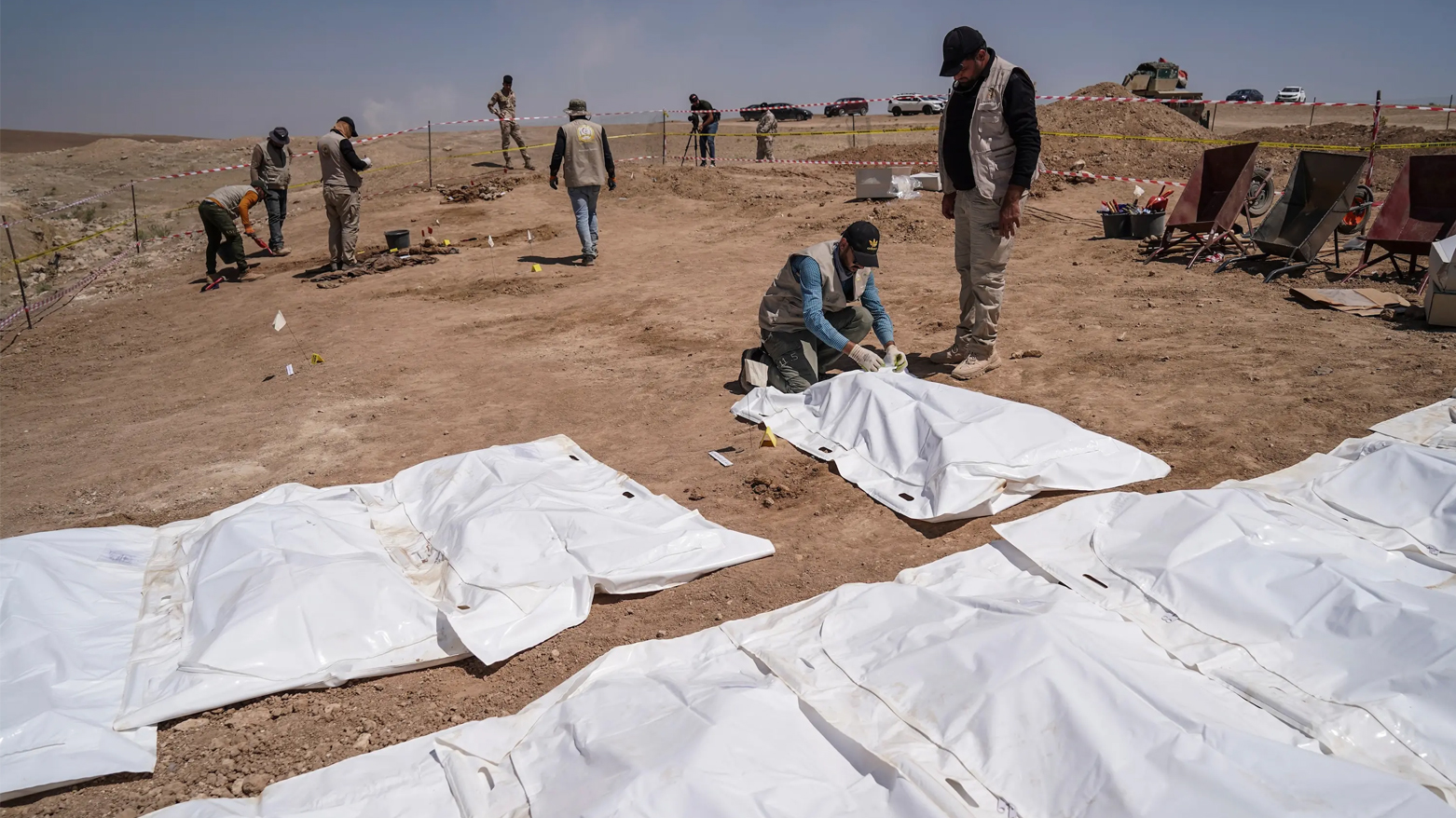
ERBIL (Kurdistan24) – Maintenance crews working on municipal infrastructure in the central Iraqi city of Karbala uncovered a mass grave on Saturday containing the remains of multiple individuals, a discovery that local authorities believe dates back to the "Sha'baniyya Uprising" of 1991.
The site was identified in the Bab Tuwairij area, a district located in the city center of the Karbala Governorate, prompting an immediate cessation of construction activities and the deployment of security and forensic teams to the location.
The discovery occurred by sheer chance during routine excavation operations intended for a sewage maintenance project.
According to local sources familiar with the incident, workers engaged in the digging process for the infrastructure upgrades inadvertently exposed the remains, leading to an immediate alert to provincial authorities.
The site, which was not previously designated as a known burial location, has now become the center of a legal and forensic investigation aimed at identifying the victims and documenting the circumstances of their interment.
Upon the initial exposure of the remains, security forces were dispatched to the Bab Tuwairij district to secure the perimeter.
Specialized teams joined the security personnel to cordon off the site, ensuring the preservation of evidence and preventing unauthorized access to the area. The swift imposition of a security cordon was described as a necessary measure to protect the integrity of the site while relevant authorities initiated the formal protocols required for such discoveries.
Preliminary estimates provided by officials at the scene indicate that the grave likely dates to the events of 1991, specifically the period known as the "Sha'baniyya Uprising."
While the number of individuals buried at the site has not yet been confirmed, the presence of multiple sets of remains has led authorities to classify the location as a mass grave.
The infrastructure project, which was initially focused on the maintenance of the city's sewage system, has effectively been transformed into a crime scene investigation, halting the civil engineering work in the immediate vicinity.
Following the securing of the area, the relevant government authorities began the process of opening a preliminary investigation. This phase involves the legal documentation of the site as it was found, a critical step before any physical disturbance of the remains occurs.
The documentation process is being conducted in coordination with judicial authorities, who have been notified of the discovery to oversee the legal aspects of the investigation. The involvement of the judiciary ensures that the exhumation and subsequent analysis adhere to the standard procedures required by Iraqi law for handling mass graves.
In conjunction with the judicial oversight, the Department of Forensic Medicine has been alerted to the situation. The text of the report from the scene indicates that forensic experts are preparing to undertake the exhumation of the remains.
Once exhumed, the remains will undergo necessary scientific tests aimed at identifying the victims. This forensic analysis is expected to be a complex process, given the estimated age of the grave, and will be central to confirming the preliminary assessment connecting the site to the events of 1991.
The discovery in Bab Tuwairij highlights the ongoing challenges regarding unmapped burial sites in major Iraqi population centers.
The fact that this grave was located in the city center of Karbala, rather than in a remote desert location, and was only revealed during modern maintenance works, underscores the accidental nature of the find.
The reliance on "sheer chance" for the discovery suggests that the site had remained undocumented and undisturbed beneath the urban landscape for decades prior to the excavation work on Saturday.
Local sources have described the remains as belonging to "martyrs," a term reflecting the local perspective on the victims of the 1991 uprising. The transition of the site from a construction zone to a protected area involves a multi-agency response, bringing together the security apparatus, the judiciary, and medical examiners.
As the standard procedures for exhumation move forward, the focus of the investigation will shift toward the scientific identification of the individuals found, a process that authorities have indicated is the immediate priority following the securing of the location.
The preliminary investigation is currently ongoing, with specialized teams remaining on-site in the Bab Tuwairij area. No timeline has been publicly released for the completion of the exhumation or the conclusion of the forensic testing. For now, the area remains cordoned off as officials proceed with the delicate task of recovering the remains found beneath the city’s infrastructure.