Bulgaria Set to Adopt the Euro as Public Fears of Price Rises and Political Instability Persist
Supporters cite growth and stability, while poorer communities fear rising costs and declining purchasing power.
ERBIL (Kurdistan24) — Bulgaria will officially adopt the euro on Thursday, becoming the 21st member of the single-currency area, a milestone long pursued by successive governments but one that continues to divide public opinion in the European Union’s poorest member state.
The transition comes against a backdrop of economic anxiety, political instability, and public concern that joining the eurozone could drive up prices in a country where many households already struggle to make ends meet.
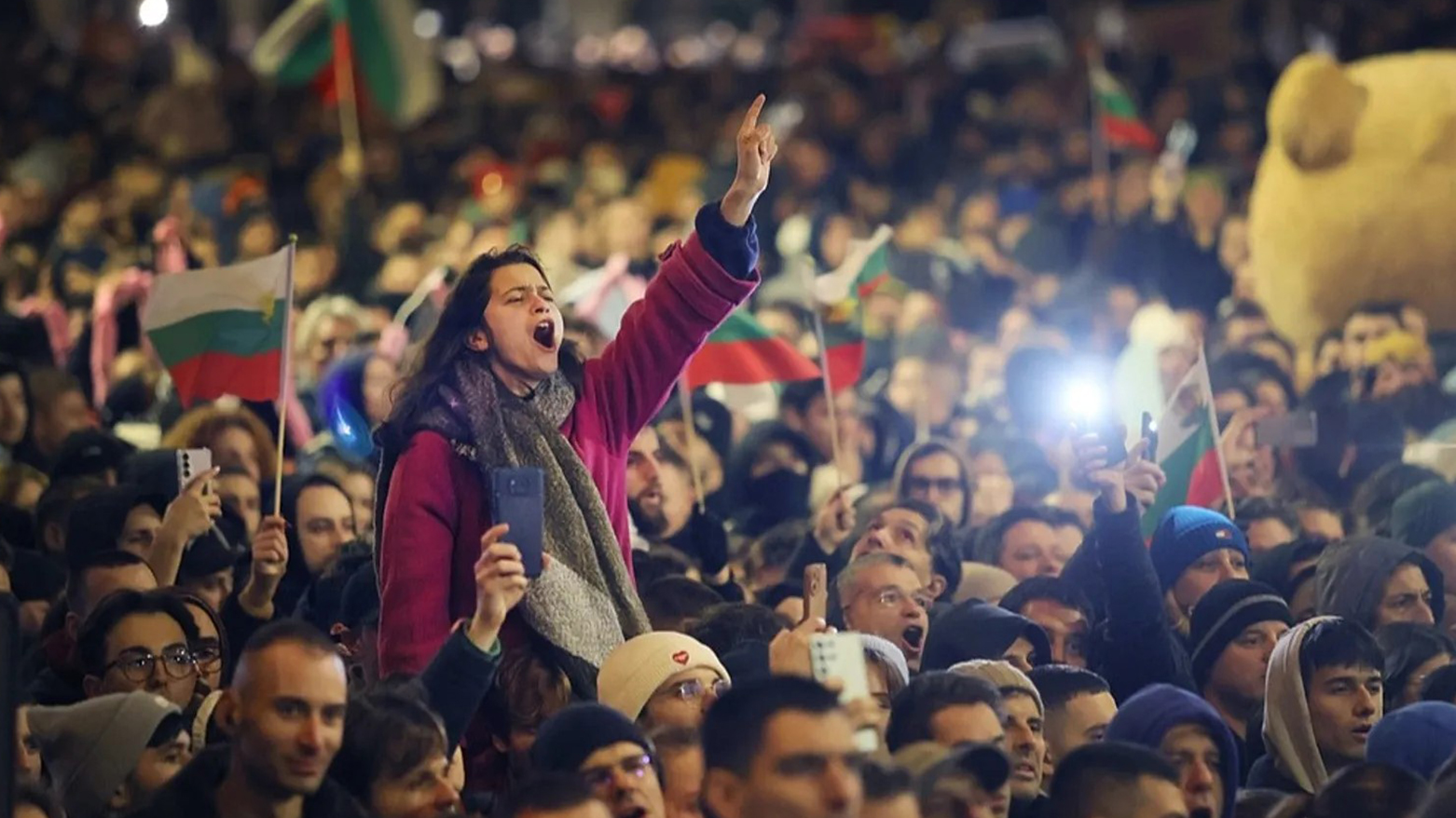
A protest campaign under the slogan “Keep the Bulgarian lev” has gained momentum this year, tapping into widespread fears of inflation and a generally skeptical view of the euro among large segments of the population.
Supporters of the move argue that euro adoption will strengthen Bulgaria’s economy, deepen its integration with Western institutions, and reduce vulnerability to Russian influence. The euro was first introduced in 12 countries on Jan. 1, 2002, and has steadily expanded since, with Croatia joining most recently in 2023.
Bulgaria’s path, however, has been marked by unique challenges. Anti-corruption protests recently forced a conservative-led government from office, pushing the country toward what could be its eighth parliamentary election in five years. Observers warn that any difficulties during the currency transition could be exploited by anti-EU political forces.
“Any problem will become part of the political campaign, which creates a basis for rhetoric directed against the EU,” said Boryana Dimitrova of the Alpha Research polling institute, which has tracked public attitudes toward the euro over the past year.
While far-right and pro-Russian parties have spearheaded several anti-EU protests, concerns extend well beyond these political groups, particularly in poorer rural areas. “Prices will go up. That’s what friends of mine who live in Western Europe told me,” said Bilyana Nikolova, 53, who runs a grocery store in the northwestern village of Chuprene.
Economic promises and public doubts
According to the EU’s latest Eurobarometer survey, 49 percent of Bulgarians oppose adopting the single currency. Memories of hyperinflation in the 1990s remain fresh, even though Bulgaria has long pegged its lev to the euro, effectively tying its monetary policy to the European Central Bank (ECB).
“It will now finally be able to take part in decision-making within this monetary union,” said Georgi Angelov, a senior economist at the Open Society Institute in Sofia.
An EU member since 2007, Bulgaria entered the eurozone’s “waiting room” in 2020 alongside Croatia. ECB President Christine Lagarde said last month that the benefits of euro adoption would be “substantial,” citing smoother trade, lower financing costs, and more stable prices.
She added that small and medium-sized enterprises could save around 500 million euros annually in exchange fees, while sectors such as tourism—accounting for about eight percent of GDP—are expected to gain.
Lagarde predicted that the impact on consumer prices would be “modest and short-lived,” noting that previous euro changeovers led to increases of just 0.2 to 0.4 percentage points. Yet consumers remain unconvinced, particularly as food prices rose five percent year-on-year in November, more than double the eurozone average.
To address concerns, parliament has empowered oversight bodies to investigate sharp price hikes and curb what it calls “unjustified” increases linked to the currency switch. Still, analysts caution that prolonged political uncertainty could delay essential anti-corruption reforms and undermine economic gains.
“The challenge will be to have a stable government for at least one to two years, so we can fully reap the benefits of joining the euro area,” Angelov said.
National symbols on new coins
As Bulgaria bids farewell to the lev—introduced in 1881 and named after an archaic word meaning “lion”—its national identity will be carried onto euro coins. Ancient rock art, a patron saint, and a key figure of the national revival will feature prominently.
The Madara Rider, an eighth-century rock relief depicting a knight triumphing over a lion and listed as a UNESCO World Heritage site, will appear on coins from one to 50 cents. The one-euro coin will feature Saint John of Rila, Bulgaria’s patron saint and founder of the country’s largest monastery, while the two-euro coin will bear the image of Paisius of Hilandar, a monk whose writings helped inspire Bulgaria’s national awakening. Its edge is inscribed with the words: “God protect Bulgaria.”
Rural unease and economic vulnerability
In Chuprene, where prices are now displayed in both levs and euros, shopkeeper Bilyana Nikolova said confusion is already causing tensions. “People see the lower price in euros, get confused, and think I’m lying to them,” she said, adding that she has considered closing her shop temporarily once the euro is introduced.
The village of 400 people lies in one of Bulgaria’s most economically depressed regions, where unemployment stands at 18.7 percent, far above the national average of 4.2 percent. Similar concerns are echoed across rural Bulgaria, where older populations, lower financial literacy, and cash-based transactions dominate.
Despite notable economic progress—Bulgaria’s GDP has risen from about one-third of the eurozone average a decade ago to nearly two-thirds today—the country still has the highest share of people at risk of poverty or social exclusion in the EU, according to Eurostat.
“These are the main concerns we encounter in small municipalities: the fear of becoming poorer, because people have very little in reserve,” Dimitrova said.
For January, the lev and the euro will circulate side by side, though change must be given in euros. Demand for coin “starter kits” has been high, according to Bulgarian National Bank Governor Dimitar Radev, who acknowledged localized concerns about shortages despite adequate supplies.
“This episode shows that we need to maintain close coordination and be ready to react quickly,” Radev said.
As Bulgaria prepares to complete its long-awaited transition on Jan. 1—nearly 19 years after joining the EU—the adoption of the euro marks both a symbolic step toward deeper European integration and a test of public trust in a country still grappling with economic vulnerability and political flux.