Iraqi PM Al-Sudani and US Envoy Discuss Shielding Iraq from Regional Tensions Amid Government Formation Talks
In a meeting with US envoy Tom Barrack, Iraqi PM Sudani stressed shielding Iraq from regional conflicts, affirming its stability as a pillar of regional balance and prioritizing dialogue and diplomacy.
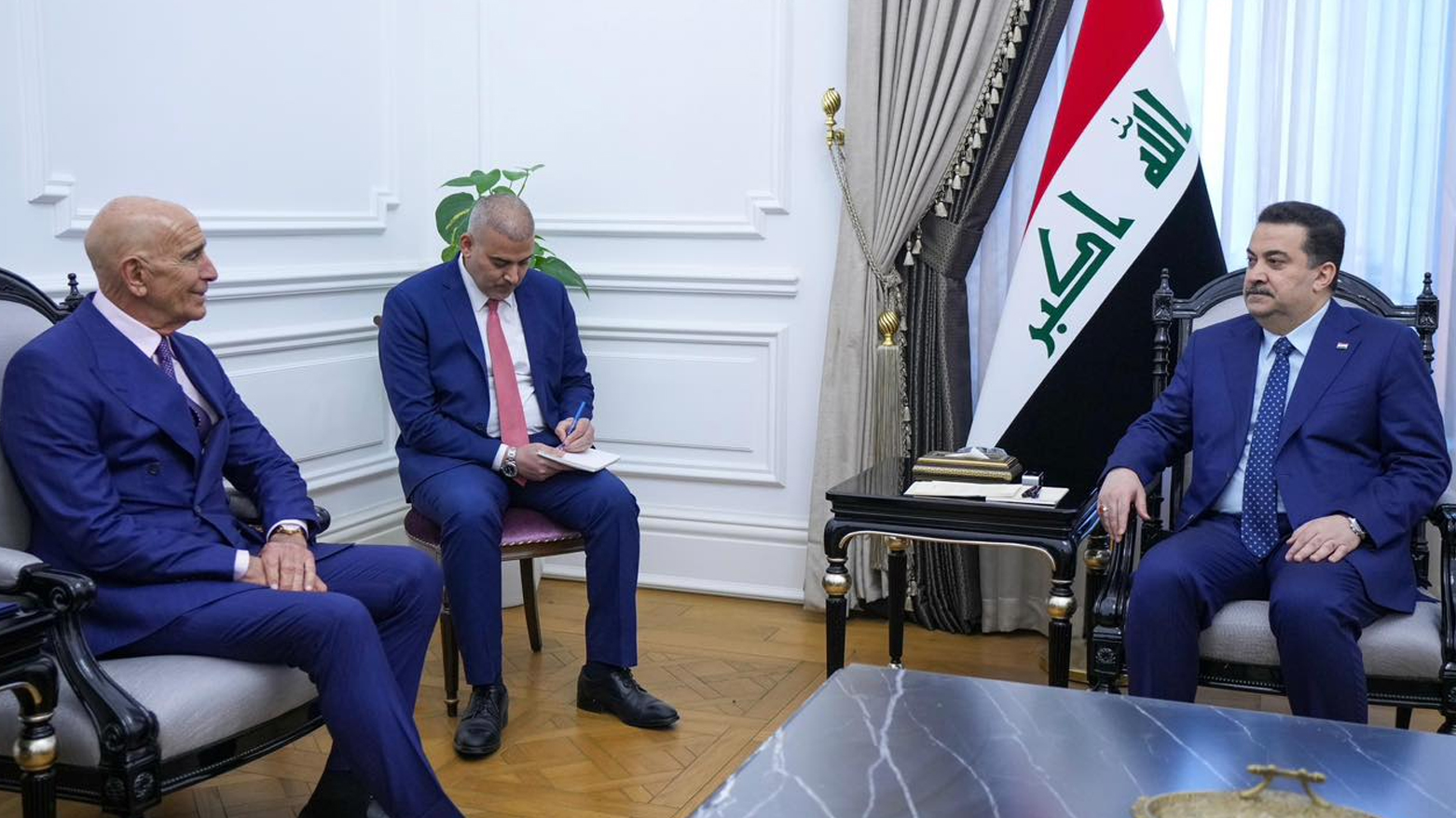
ERBIL (Kurdistan24) - In a meeting framed by regional tensions and ongoing political deliberations in Baghdad, Iraqi Prime Minister Mohammed Shia al-Sudani held talks with US Presidential Special Envoy for Syria Tom Barrack, underscoring the need to shield Iraq from the repercussions of regional conflicts and reaffirming that the country’s stability remains a pillar of broader regional balance.
On Friday, the Iraqi Prime Minister’s media office announced that Prime Minister Mohammed Shia al-Sudani received the US special envoy for Syria, Tom Barrack. The meeting addressed bilateral relations between Iraq and the United States, general developments and evolving conditions in the region, and the importance of sparing Iraq from their consequences.
During the talks, Barrack conveyed to Sudani the perspective of US President Donald Trump and his vision regarding the current regional situation, as well as Iraq’s pivotal role in building stability and promoting regional development.
Sudani stated that Iraq’s national leaderships are proceeding with prioritizing national interests and exerting efforts to protect the interests of the Iraqi people and the supreme strategic interests for which Iraqis have made the greatest sacrifices. He noted that Iraq’s sovereignty and stability across various fields are not merely domestic considerations, but fundamental pillars of regional balance.
The meeting also included an exchange of views on resolving regional problems, emphasizing the importance of resorting to dialogue and diplomatic channels and abandoning escalation. Both sides highlighted the importance of economic development as a pathway to reducing tensions and reinforcing sustainable stability in the region.
Barrack’s visit to Baghdad formed part of a broader series of engagements with senior Iraqi officials. He also met with Foreign Minister Fuad Hussein, where discussions addressed Iraq’s role in promoting regional stability, supporting dialogue and diplomacy, counter-terrorism cooperation, and adherence to signed agreements in Syria, alongside ongoing regional diplomatic efforts.
In parallel, the head of the State of Law Coalition, Nouri al-Maliki, received Barrack in Baghdad, according to a statement issued by Maliki’s media office on Friday. Discussions focused on developments in Iraq’s political landscape and upcoming national entitlements amid continuing political deliberations over government formation.
Maliki stressed “the necessity of respecting Iraq’s sovereignty and the choices of its people,” emphasizing support for the democratic path and the strengthening of political stability. The statement noted that both sides affirmed the continuation of communication and coordination on issues of mutual interest.
For his part, Barrack pointed to the importance of Iraq’s role in advancing solutions to regional challenges, reducing the intensity of conflicts, supporting dialogue, and combating terrorism.
The visit comes amid ongoing internal political deliberations within the Shiite Coordination Framework over the nomination of candidates for prime minister. Maliki remains the sole officially confirmed candidate of the Coordination Framework for the premiership, as discussions continue regarding the designation of leadership positions.
Barrack also met with Faiq Zidan, President of Iraq’s Supreme Judicial Council. Their discussions focused on the judiciary’s role in safeguarding constitutional mandates and ensuring that constitutional processes remain insulated from political disputes.
The series of meetings underscores Iraq’s engagement with international partners as it navigates government formation negotiations and broader regional security challenges, while reiterating emphasis on constitutional procedures, national sovereignty, and the country’s role in reinforcing regional stability.