Broad Arab and Islamic Coalition Rejects Israel’s Recognition of Somaliland, Warns of Regional Fallout
The ministers said the decision reflects “expansionist” policies and sets a dangerous precedent by legitimizing the recognition of parts of sovereign states, warning that it risks fueling instability far beyond Somalia’s borders.
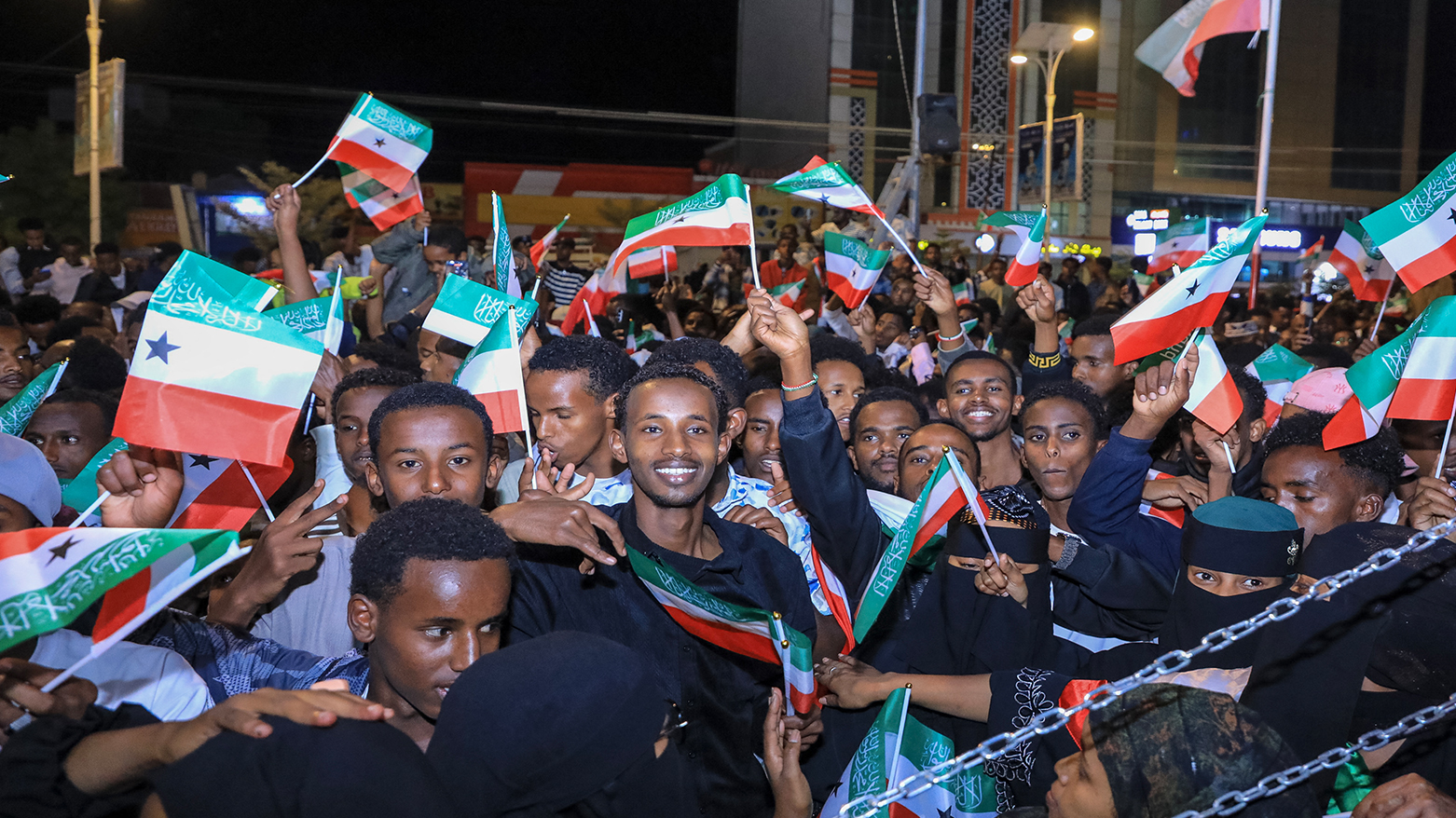
ERBIL (Kurdistan24) — A broad coalition of Arab and Islamic countries has issued a strong joint condemnation of Israel’s decision to recognize the “Somaliland” region of Somalia, warning that the move poses serious risks to regional and international stability and represents a clear breach of international law.
In a statement published on X by Jordan’s Ministry of Foreign Affairs and Expatriates, the foreign ministers of more than 20 countries—along with the Organization of Islamic Cooperation (OIC)—said they “unequivocally reject” Israel’s recognition of Somaliland, announced on Dec. 26, 2025.
The signatories include Jordan, Egypt, Algeria, Iran, Iraq, Saudi Arabia, Türkiye, Qatar, Kuwait, Pakistan, Nigeria, Somalia, Sudan, Yemen, Libya, Oman, Djibouti, The Gambia, the Maldives, Comoros, and Palestine.
The ministers said the decision carries “serious repercussions” for peace and security in the Horn of Africa and the Red Sea, with broader implications for international peace and security.
They described the move as reflecting Israel’s “full and blatant disregard for international law.”
In unusually direct language, the joint statement condemned the recognition as a “grave violation” of the principles of international law and the United Nations Charter, which enshrine the protection of state sovereignty and territorial integrity.
The ministers said the decision reflects “expansionist” policies and sets a dangerous precedent by legitimizing the recognition of parts of sovereign states.
The group reaffirmed its full support for the sovereignty of the Federal Republic of Somalia, rejecting “any measures that undermine the unity of Somalia, its territorial integrity, or its sovereignty over its entire territory.”
They warned that recognizing breakaway regions threatens the foundations of the international system and risks fueling instability far beyond Somalia’s borders.
Regional sensitivities
Somaliland, located in northern Somalia, declared independence in 1991 following the collapse of Somalia’s central government. Despite maintaining relative stability and its own governing institutions for more than three decades, Somaliland has not been internationally recognized as a sovereign state.
The African Union and the United Nations have consistently upheld Somalia’s territorial integrity, arguing that recognition of secessionist regions could trigger fragmentation across the continent.
The Horn of Africa remains one of the world’s most fragile regions, grappling with conflict, humanitarian crises, piracy risks in the Red Sea and Gulf of Aden, and intensifying geopolitical competition.
Regional and international actors have repeatedly warned that unilateral steps affecting borders or sovereignty could inflame existing tensions.
Against this backdrop, the joint statement said Israel’s move risks opening the door to similar actions elsewhere, undermining the global consensus on the inviolability of borders.
Palestine link rejected
The ministers also explicitly rejected “any potential link” between Israel’s recognition of Somaliland and efforts to forcibly displace Palestinians from their land. Such attempts, the statement said, are “unequivocally rejected in any form as a matter of principle.”
This reference reflects long-standing concerns among Arab and Islamic states that broader regional moves could be tied to efforts to reshape political realities connected to the Palestinian issue, which remains a central and deeply sensitive concern across the Middle East and the wider Islamic world.
The statement concluded by reaffirming adherence to international law and the UN Charter, signaling that the issue is likely to be raised in international forums as Somalia and its allies seek to counter Israel’s decision diplomatically.
So far, Somalia’s federal government has not announced concrete retaliatory steps, but officials have repeatedly stressed that any recognition of Somaliland is “null and void” under international law.
Netanyahu Cites Abraham Accords Spirit in Somaliland Recognition
Israeli Prime Minister Benjamin Netanyahu announced on Friday that Israel has officially recognized the Republic of Somaliland as an independent and sovereign state, marking a major diplomatic breakthrough for the self-declared republic that has sought international recognition for more than three decades.
In a statement published on X, Netanyahu said the decision was formalized through a joint declaration signed with Israeli Foreign Minister Gideon Sa’ar and Somaliland President Abdirahman Mohamed Abdullahi.
He described the declaration as being “in the spirit of the Abraham Accords,” the U.S.-brokered normalization agreements initiated under U.S. President Donald Trump.
“I announced today the official recognition of the Republic of Somaliland as an independent and sovereign state,” Netanyahu wrote, adding that Israel plans to immediately expand relations with Somaliland through cooperation in agriculture, health, technology, and the economy.
He also invited President Abdullahi to pay an official visit to Israel.
Netanyahu praised the Somaliland leader’s “commitment to promoting stability and peace,” while noting that the president, in turn, thanked him for Israel’s efforts in combating terrorism and advancing regional peace.