Planned SDF-Damascus Talks on Military Integration Postponed
SDF Commander Mazloum Abdi's visit to Damascus to meet President Ahmed al-Sharaa and finalize integrating 90,000 SDF fighters into the Syrian army was postponed due to technical reasons.
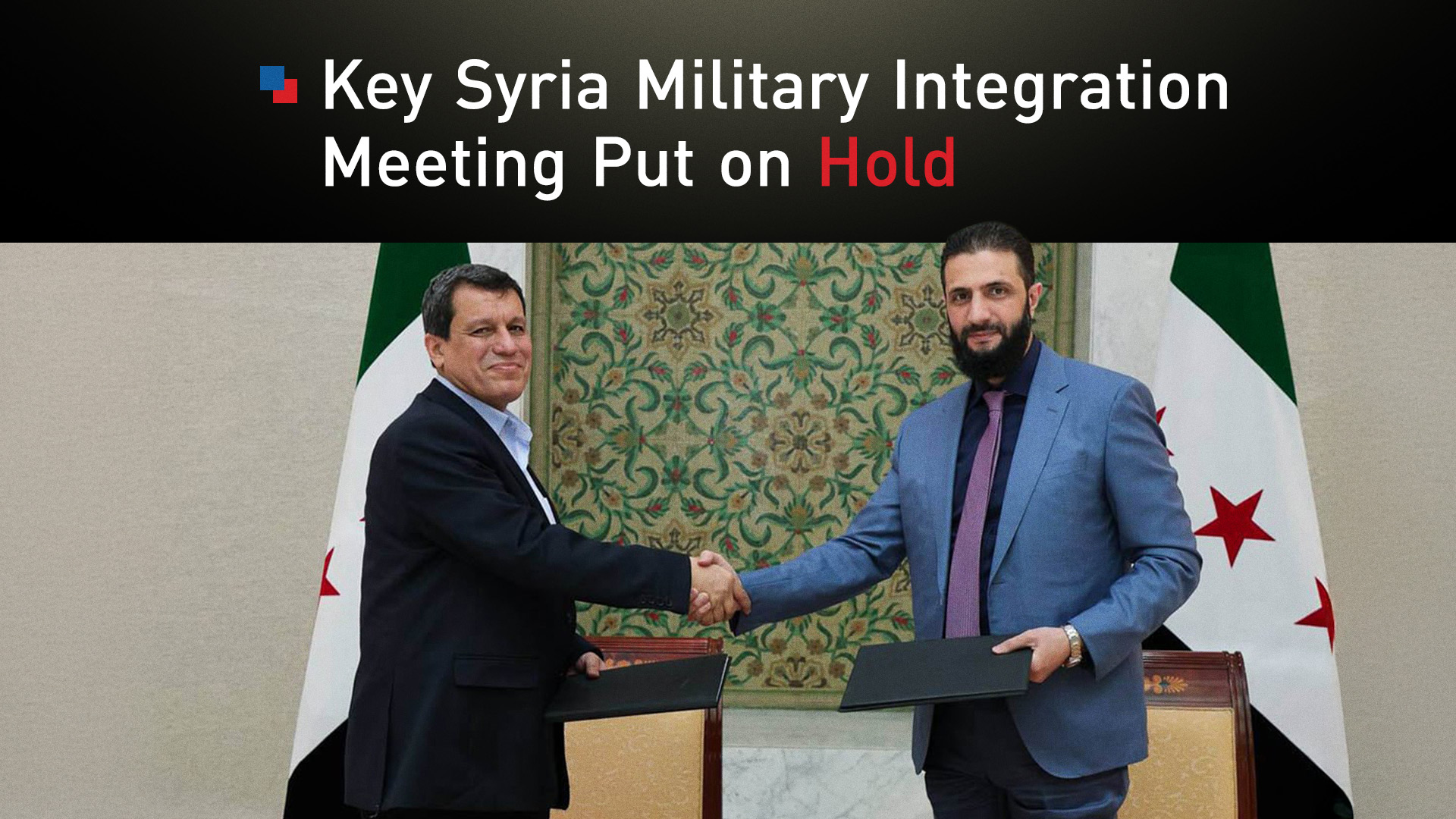
ERBIL (Kurdistan24) – The Syrian Democratic Forces (SDF) announced on Monday that the highly anticipated visit of General Commander Mazloum Abdi to Damascus, where he was scheduled to finalize a landmark military integration agreement with Syrian President Ahmed al-Sharaa, has been postponed.
The delay, attributed to technical and logistical factors, pauses a critical diplomatic process aimed at unifying the country’s fragmented military structures before the year’s end.
The Media Center of the Syrian Democratic Forces released a formal statement on Monday, confirming that the SDF delegation led by General Abdi would not proceed with the trip as originally planned for Sunday.
The notice issued by the SDF emphasized that the postponement was necessitated by ongoing "logistical and technical arrangements linked to the visit," rather than any fundamental political disagreement or rupture in the negotiations.
The statement clarified that a new date for the summit would be determined later through consensus between the concerned parties, signaling that the diplomatic channel remains open and active.
Crucially, the SDF leadership sought to reassure stakeholders that the delay does not represent a shift in strategy.
The Media Center confirmed that the postponement "does not entail any change to the path of communication or the proposed goals" regarding the discussions surrounding the "March 10 Agreement," a foundational accord reached earlier in the year to reconcile the autonomous administration in northeast Syria with the central government in Damascus.
The postponement follows days of heightening expectations regarding a breakthrough in the Syrian conflict.
On Thursday, informed Syrian government sources had disclosed to Kurdistan24 that General Abdi was expected in the capital before the end of the current year. These sources characterized the prospective meeting with President Ahmed al-Sharaa as "historic," anticipating that it would address the final and most complex steps of implementing the March 10 Agreement.
At the heart of these negotiations is a transformative proposal to reshape the security architecture of the nation.
According to reporting by the Kurdistan24 correspondent in Damascus, Anwar Abdullatif, the primary agenda of the meeting was to finalize the clause related to integrating military forces into the structure of the Syrian state.
Information obtained by Kurdistan24 indicates that the two parties are on the verge of a final agreement that would see the integration of more than 90,000 fighters and cadres of the SDF into the Syrian Ministry of Defense and the Ministry of Interior.
This massive transfer of personnel and command authority represents one of the most significant military realignments in the region since the onset of the Syrian crisis. Sources familiar with the negotiations indicate that this integration process is not occurring in a vacuum but is taking place under the "pressure and direct supervision" of Western powers, specifically the United States, Britain, and France.
The involvement of these international actors is intended to ensure a smooth transition and achieve sustainable stability in the regions of North and East Syria, which have long operated under a separate security umbrella.
The urgency of the talks is driven by the timeline established in the March 10, 2025 agreement concluded between Mazloum Abdi and Ahmed al-Sharaa.
That accord laid the foundation stone for unifying civil and military institutions between the Autonomous Administration and the new Damascus government. Among its eight basic clauses, the agreement stipulated the "integration of military forces before the end of the year 2025," a deadline that corresponds with the current diplomatic push.
The March 10 Agreement outlines a comprehensive framework for the country's future, including provisions for preserving the unity and territorial integrity of Syria and guaranteeing constitutional rights for all components of Syrian society, foremost among them the Kurds.
Additionally, the agreement mandates the final cessation of hostilities, a prerequisite for the merging of the armed forces. Washington, London, and Paris are serving as the guarantors for the implementation of this agreement, underscoring the international community's investment in the success of the unification process.
The United States Central Command (CENTCOM) has previously expressed support for the initiative.
On several occasions, CENTCOM officials have backed the concept of building a unified Syrian national army, viewing it as a mechanism that contributes to enhancing the security of the region and ensuring the continuity of the fight against terrorism.
The integration of SDF forces into the central state apparatus has also been a priority for the new Syrian leadership. Interim Syrian President Ahmed al-Sharaa issued a call last November demanding that the United States directly supervise the process of integrating SDF forces into central security institutions.
President al-Sharaa’s insistence on American oversight was framed as a necessary measure to "ensure transparency in implementation" and to block any attempt by the ISIS organization to exploit security vacuums or side tensions that might arise during the delicate restructuring of the armed forces.
The current diplomatic maneuvering in Damascus is viewed by observers as the final stage of settling the military file in Syria. Successfully integrating the 90,000 SDF personnel would effectively end the dual-military structure that has defined the country's geography for years.
The resolution of this file is expected to open the door to a new phase focused on reconstruction and could facilitate full international recognition of the new administrative and political structure of the country.
While the logistical delays have momentarily stalled the physical meeting between General Abdi and President al-Sharaa, the trajectory of the negotiations appears set. The explicit confirmation from the SDF that the path of communication remains unchanged suggests that the technical hurdles are temporary.
As the end-of-year deadline for military integration approaches, the focus remains on the capacity of the SDF and the Syrian government, under Western supervision, to merge their command structures and operational forces into a single entity capable of securing the nation's borders and internal stability.