Netanyahu to Meet Trump in Florida as U.S. Presses for Second Phase of Gaza Truce
Washington seeks momentum on demilitarization and interim governance as Israel shifts focus toward Iran.
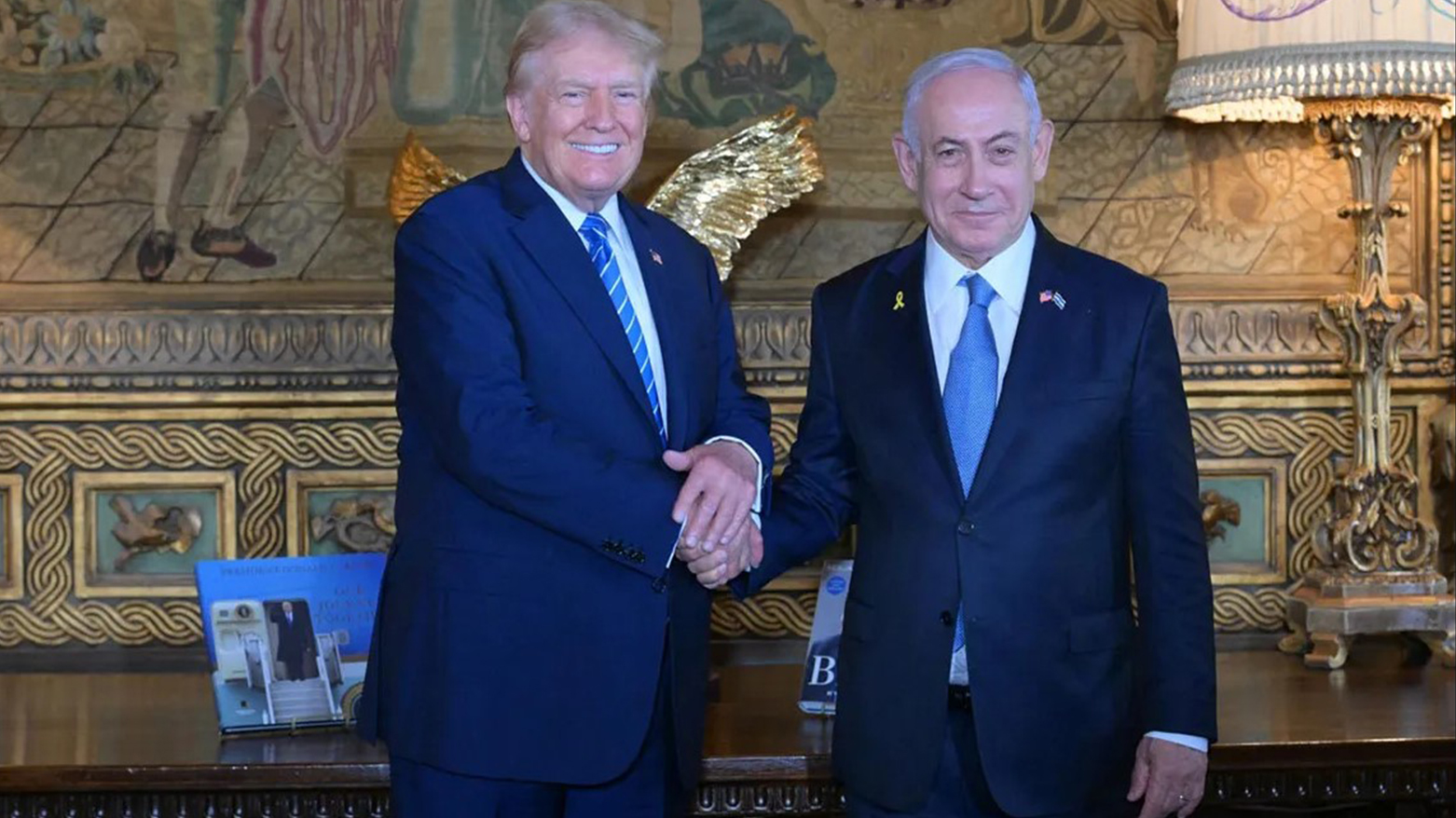
ERBIL (Kurdistan24) — Israeli Prime Minister Benjamin Netanyahu is set to meet U.S. President Donald Trump in Florida on Monday, with Washington pushing to advance the fragile Gaza ceasefire into its second phase amid growing concern that both Israel and Hamas are delaying implementation.
The talks, scheduled for 1 p.m. (1800 GMT) at Trump’s Mar-a-Lago resort, come as senior White House officials privately warn that progress on the next stage of the truce has stalled.
Trump, who said the meeting was requested by Netanyahu, is reportedly eager to announce—possibly as early as January—the formation of a Palestinian technocratic administration for Gaza alongside the deployment of an international stabilization force.
Israeli government spokeswoman Shosh Bedrosian said Netanyahu would address the second phase of the ceasefire, which centers on ensuring that “Hamas is disarmed” and that Gaza is demilitarized—conditions that remain a core sticking point.
Hamas has repeatedly rejected laying down its weapons, arguing they are essential for resistance.
While Gaza is expected to dominate the agenda, Netanyahu is also likely to push Iran to the forefront, urging stronger American action against Tehran’s nuclear program.
Bedrosian said the premier would raise “the danger Iran poses not only to the Middle East, but the United States as well,” amid reports Israel wants expanded U.S. strikes following joint attacks in June that targeted Iranian nuclear sites.
Netanyahu’s visit caps a busy stretch of diplomacy in Palm Beach, where Trump hosted Ukrainian President Volodymyr Zelensky on Sunday for discussions on ending Russia’s invasion of Ukraine. Gaza, however, remains one of the Trump administration’s signature foreign policy files during his first year back in office.
The ceasefire reached in October marked a significant breakthrough after months of intense fighting triggered by Hamas’s October 7, 2023 attack on Israel. Under the first phase, Hamas released the remaining hostages—both living and deceased—except for one body yet to be returned.
Despite frequent allegations of violations by both sides, the truce largely held and opened space for negotiations on a more durable arrangement.
Phase two is designed to be far more consequential. It requires Israel to withdraw from its remaining positions in Gaza, Hamas to disarm, and an interim authority to govern the territory, supported by an international stabilization force.
Regional mediators—including Qatar and Egypt—along with Turkey and the United States have been working to bridge gaps, but progress has been slow.
Trump’s global envoy Steve Witkoff and son-in-law Jared Kushner hosted senior officials from Qatar, Egypt, and Turkey in Miami earlier this month in an effort to sustain momentum. Axios reported that Trump wants to convene the inaugural meeting of a new Gaza “Board of Peace,” which he would chair, on the sidelines of the Davos forum in January.
Still, frustration appears to be mounting in Washington. According to the report, senior White House officials believe Netanyahu is deliberately stalling. “There are more and more signs that the American administration is getting frustrated with Netanyahu,” said Yossi Mekelberg, a Middle East expert at London-based think tank Chatham House, adding that “phase two is right now going nowhere.”
Gershon Baskin, co-head of the Alliance for Two States and a veteran of back-channel talks with Hamas, said the timing of the Florida meeting was critical. “Phase two has to begin,” he told AFP, warning that delays have allowed Hamas time to re-establish its presence.
Beyond Gaza and Iran, the leaders are also expected to discuss Israel’s continued strikes on Hamas targets in Gaza and Hezbollah positions in Lebanon, despite a ceasefire there, as well as the evolving situation in Syria.