At Mar-a-Lago, Trump and Netanyahu Present United Front on Iran
Trump and Netanyahu projected unity, threatening military action against Iran and demanding Hamas disarm, though private rifts persist over Gaza's future.
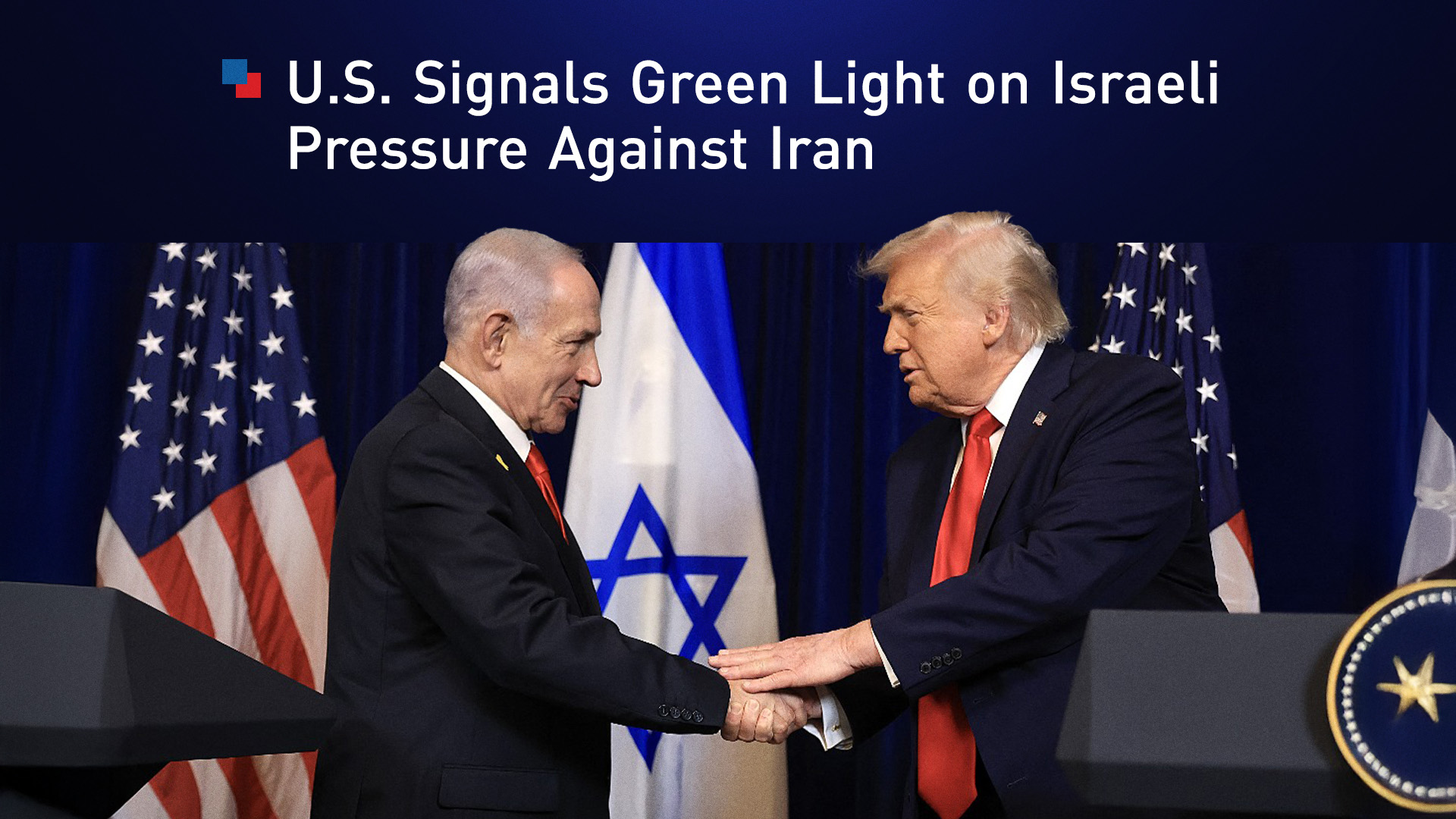
ERBIL (Kurdistan24) – President Trump declared on Monday that he would support new Israeli military attacks to prevent Iran from restocking its missile arsenal and vowed that the United States would take immediate action if Tehran attempts to rebuild its nuclear program.
Speaking at the start of a high-stakes meeting with Israeli Prime Minister Benjamin Netanyahu at his Mar-a-Lago club, Trump presented a unified front with the Israeli leader regarding the Iranian threat, while issuing a stark ultimatum to Hamas to disarm or face severe consequences in the ongoing Gaza conflict.
The meeting, which brought the two leaders together for the fifth time this year, underscored a public alignment on security issues even as private divergences persist regarding the implementation of the U.S.-brokered Gaza ceasefire and the broader geopolitical landscape of the Middle East.
"If they will continue with the missiles, yes," Trump said when asked if he supported Israeli preemptive strikes, The Wall Street Journal reported. He adopted an even more emphatic tone regarding Iran’s nuclear ambitions, asserting that the U.S. would intervene "immediately" if necessary.
"I hear that Iran is trying to build up again, and if they are, we’re going to have to knock them down," Trump told reporters, standing alongside Netanyahu. "We’ll knock the hell out of them. But hopefully that is not happening."
The aggressive rhetoric comes amid reports from Israeli officials and independent analysts that Tehran is actively reconstituting its ballistic missile program following a 12-day war in June, during which Israel destroyed significant portions of Iran’s manufacturing capabilities and launchers. According to The Wall Street Journal, Israel is intent on dismantling these rebuilding efforts before Iran can bolster its air defenses, which were also battered in the previous conflict.
The tension between Washington and Tehran escalated further following Trump's comments.
AFP reported that a top political adviser to Iran's supreme leader, Ali Shamkhani, warned on Monday that any aggression against the country would be met with an "immediate harsh response" beyond the imagination of military planners. However, this geopolitical posturing coincides with severe internal instability within Iran.
Iranian President Masoud Pezeshkian is currently grappling with significant economic unrest, as shopkeepers in Tehran have launched protests over the collapse of the national currency.
The rial has depreciated sharply, with the U.S. dollar trading at approximately 1.42 million rials on the unofficial market, down from 820,000 a year earlier. While Tehran projects military defiance, the Iranian government has been forced to appoint a new Central Bank governor and call for dialogue with protesters to manage the domestic crisis.
While the threat of a renewed clash with Iran dominated the public remarks, the immediate focus of the Mar-a-Lago summit was the fragile status of the Gaza cease-fire plan.
The agreement, which went into effect on October 10, 2025, has stalled at the implementation of its second phase. This next stage requires Hamas to disarm and relinquish its governing role in the enclave, transferring security control to an international stabilization force overseen by a "Board of Peace" chaired by Trump.
Trump expressed frustration with the pace of the process but directed his ire squarely at Hamas. "If they don't disarm as they agreed to do, then there will be hell to pay for them," Trump said, according to AFP. He added that the group would be given a "very short period of time" to comply.
This demand for disarmament comes at a time when the militant group's command structure has been severely degraded.
Fox News reported on Monday that Hamas has officially confirmed the deaths of five of its senior leaders, including Mohammed al-Sinwar, the brother of former leader Yahya al-Sinwar, and Abu Obeida, the longtime masked spokesman of the al-Qassam Brigades.
The confirmation of these deaths, some of which occurred earlier in the year during Israeli strikes, underscores the significant attrition Hamas has suffered, yet the group’s armed wing reiterated on Monday that it would not surrender its weapons as long as the occupation remains.
Despite the public show of solidarity between Trump and Netanyahu, The New York Times reported that the two leaders essentially "papered over" their differences regarding the execution of the Gaza plan.
While Trump claimed that Israel had "lived up to the plan 100 percent," U.S. officials have privately expressed concern that Netanyahu may be slow-walking the process.
The Times noted that the leaders shared few details on how to resolve the deadlock over the "international stabilization force," which has struggled to gain traction as potential contributing nations backpedal on offering troops.
Furthermore, The Washington Post highlighted the dire humanitarian backdrop against which these diplomatic maneuvers are taking place. A harsh winter storm in Gaza recently destroyed or damaged 42,000 tents, exacerbating the misery of the displaced population.
The United Nations has reported significant impediments to humanitarian operations, and the Gaza Health Ministry announced on Monday that a 2-month-old infant had died from exposure to the cold. While Trump touted the ceasefire as a major achievement of his administration, the reality on the ground remains precarious, with both Israel and Hamas accusing the other of violations.
Beyond Gaza and Iran, the meeting revealed subtle but significant divergences in how Trump and Netanyahu view the reshaping of the Middle East. The New York Times reported that while the two appeared united, cracks are showing in their approaches to Syria, Türkiye, and the West Bank.
Trump praised the new leader of Syria, Ahmed al-Shara, expressing hope for better relations, whereas Israel remains deeply distrustful of the new leadership in Damascus and has continued military actions along the border to shape the post-Assad landscape.
Similarly, Trump expressed full support for Turkish President Recep Tayyip Erdogan, saying, "I’m with him all the way," a sentiment not shared by Netanyahu, given the bitter relationship between Israel and Türkiye. On the issue of the West Bank, where Netanyahu faces pressure from his right-wing base to annex territory, Trump acknowledged that they did not agree "100 percent," though he declined to elaborate on the specifics of the disagreement.
Domestic political considerations for both leaders were also prominent during the visit.
Trump told reporters he was actively pressing for a pardon for Netanyahu, who is facing an ongoing corruption trial in Israel.
The Wall Street Journal reported that Trump claimed Israeli President Isaac Herzog told him a pardon was "on its way." However, Herzog’s office quickly issued a statement clarifying that no decision had been made and that any action would follow established procedures, contradicting the President's assertion.
In a reciprocal gesture of political affirmation, Netanyahu announced that Israel would award Trump the "Israel Prize," the state's highest civilian honor, marking the first time it has been bestowed upon a non-Israeli citizen.
The meeting also touched upon the unresolved issue of hostages. Prior to his sit-down with Trump, Netanyahu met with the parents of Ran Gvili, the last remaining deceased hostage in Gaza.
The Prime Minister’s office stated that he reassured them that every effort was being made to return their son’s remains for burial. According to The Wall Street Journal, Netanyahu has insisted that the next phase of the ceasefire cannot commence until this issue is resolved.
Trump, who met the parents at Mar-a-Lago, expressed his sympathy, noting that the parents still held onto hope that their son might be alive.
Regional security discussions extended to Lebanon, where tensions with Hezbollah remain high. The Wall Street Journal noted that Israeli officials have been threatening a new operation aimed at the militant group.
While Lebanese officials claim they are on pace to demilitarize southern Lebanon as part of a late-2024 agreement, Israeli military officials contend that the Lebanese Armed Forces are not strong enough to disarm Hezbollah effectively. Analysts suggest that any new Israeli operation would likely be an air campaign designed to weaken Hezbollah further, rather than a ground invasion.
The convergence of these military and diplomatic tracks illustrates the complexity of the current U.S.-Israel relationship. As The Washington Post observed, Netanyahu hailed Trump as the "greatest friend Israel has ever had," yet the two must navigate substantial rifts over strategy.
Trump is eager to advance his "dealmaking" narrative by finalizing the Gaza peace process and establishing the reconstruction phase, aiming for announcements as early as January regarding the interim government. In contrast, Netanyahu appears focused on maintaining operational freedom to strike Iran and its proxies, while managing a coalition government that is skeptical of the U.S. plan for Gaza’s governance.
As the meeting concluded, the message to the region was clear: Washington and Jerusalem are lockstep in their willingness to use force against Tehran and are increasing pressure on Hamas to capitulate on disarmament. However, the path to a sustainable resolution in Gaza remains obstructed by the conflicting timelines and strategic priorities of the two allies, as well as the harsh realities on the ground.
Trump remains optimistic, stating, "I don’t think it can be better," regarding his relationship with the Israeli leader, but the coming weeks will test whether this personal rapport can translate into the stabilizing breakthroughs the administration seeks.