Heavy Snowfall Boosts New Year Tourism in Soran as Kele Border Crossing Reopens for Travelers
Soran welcomes tourists with New Year events and snow, while the Kele border crossing reopens for travelers after a three-day closure due to heavy snowfall.
ERBIL (Kurdistan24) — Heavy snowfall across the mountainous districts of the Kurdistan Region has created a dual dynamic as the year draws to a close, simultaneously driving a surge in winter tourism in the Soran Independent Administration while posing significant logistical challenges that temporarily severed cross-border travel with Iran.
As preparations for New Year’s Eve celebrations reached their peak on Wednesday, officials in Soran reported extensive coordination between public and private sectors to accommodate an influx of visitors, while authorities in the Pishdar District announced the partial reopening of the Kele border crossing after a three-day suspension caused by severe winter weather.
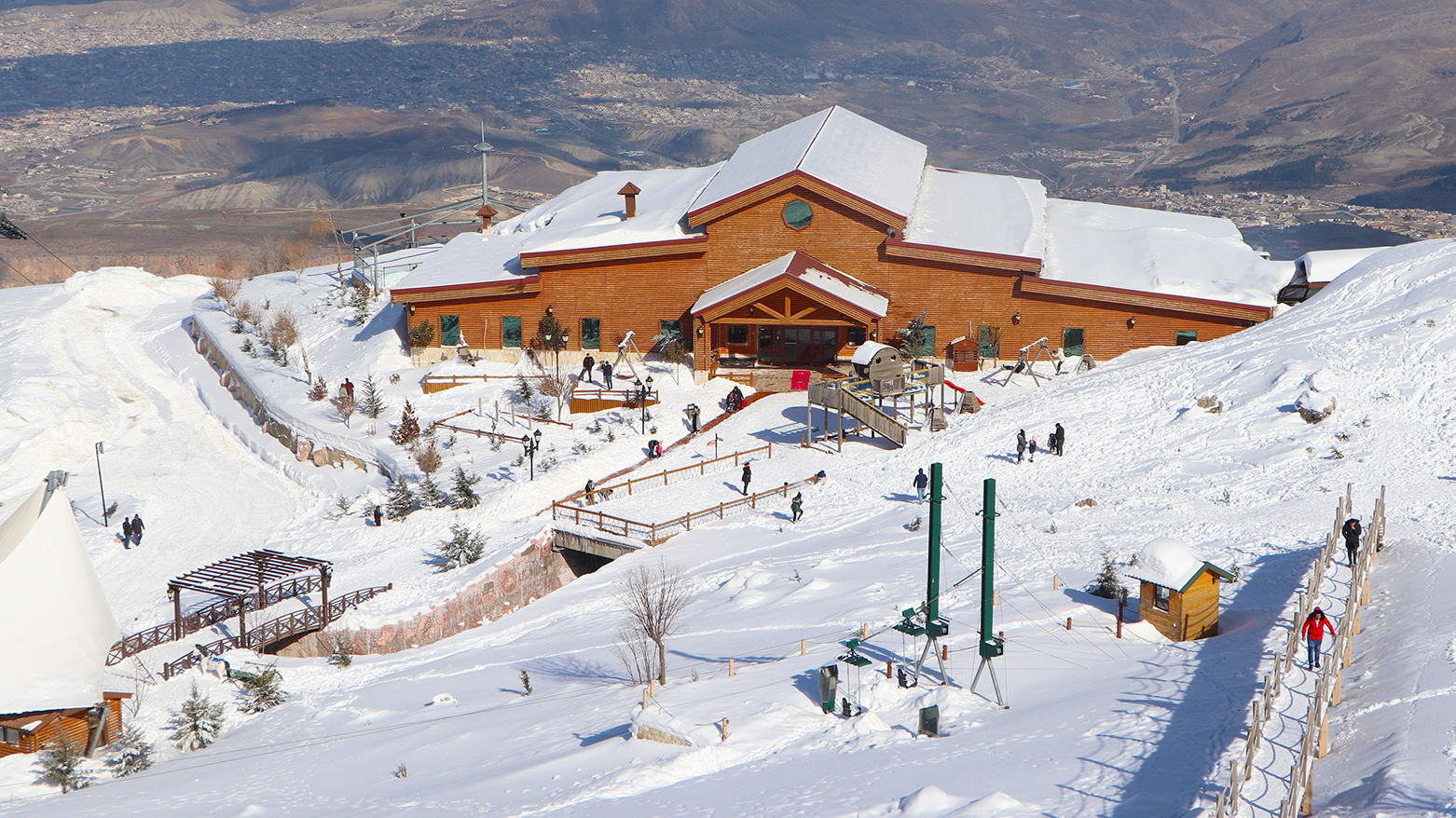
In the Soran Independent Administration, the heavy accumulation of snow has transformed the landscape, serving as a primary attraction for domestic travelers, visitors from federal Iraq, and foreign tourists.
Local authorities have characterized the weather conditions as a boon for the tourism sector, noting that the snowfall has rendered the scenery particularly attractive for holiday revelers. Despite the freezing temperatures, reports from the ground indicate that tourists are engaging in active winter sports and leisure activities, taking advantage of the white-covered terrain.
To manage the holiday influx, the administration has implemented a comprehensive strategy involving close cooperation between government agencies and private businesses. Hussein Ali, the Director of Tourism Administration for Mount Korek, a premier destination in the area, told Kurdistan24 that the site is fully operational for the holiday.
"Complete preparations have been made to welcome those tourists visiting Mount Korek, and we have prepared places for warming up and resting," Ali said. He confirmed that the location would host New Year’s celebrations spanning both the daylight hours and the night of New Year's Eve, catering to visitors looking to ring in 2026 at high altitude.
While the scenery has driven visitor numbers, the local government has prioritized safety and security infrastructure to manage the crowds. Dr. Faisal Sadiq, the General Director of Tourism in Soran, outlined the administration's security posture in a statement to Kurdistan24.
"The main goal of our plan was to ensure the safety of citizens and tourists from a security perspective," Dr. Sadiq said. He detailed a robust coordination mechanism involving security forces, Civil Defense teams, and health services. According to Dr. Sadiq, these agencies have been placed in a "good state of readiness" to respond rapidly to any untoward incidents that may arise during the festivities.
Beyond the mountain resorts, the urban centers of the Soran Independent Administration have also been prepared for the occasion.
The public sector has spearheaded efforts to decorate the main streets of Soran, creating a festive atmosphere throughout the city. The administration has scheduled a large-scale public celebration to take place in the center of Soran at the Kawa Intersection on New Year’s Eve, a focal point for the night's events.
Simultaneously, to the southeast in the Raparin Administration, authorities have been working to restore connectivity with neighboring Iran following severe weather disruptions.
The Kele border crossing, a vital transit point located between the Pishdar District in the Kurdistan Region and the city of Sardasht in Eastern Kurdistan (Iran), had been closed for three consecutive days due to the intensity of the winter storm.
Bakr Bayiz, the Mayor of Pishdar District, announced on Wednesday that tourist traffic across the border would resume that afternoon.
Speaking to Kurdistan24, Bayiz explained that the suspension of movement was necessitated by a wave of snowfall that blanketed the mountainous areas of the Raparin Administration. The Kurdistan Region Meteorology Department had reported in preceding days that nearly one meter of snow had fallen in the area, rendering the mountain passes impassable.
While the reopening of the crossing for tourists marks a return to normalcy for travelers, commercial operations remain halted.
Bayiz clarified that trade traffic would not resume immediately due to persistent road obstacles and the accumulation of snow and frost, which continue to make the route hazardous for heavy cargo vehicles. The Mayor emphasized that municipal teams are currently stationed at the crossing to ensure that citizens passing through do not encounter problems or obstacles.
The closure highlights the geographic challenges inherent to the Kele crossing, which holds significant commercial importance as a corridor for trade exchange with Iran. Due to its rugged, high-altitude location, the crossing frequently faces heavy snowfall during the winter season, often leading to temporary suspensions of both tourist and trade traffic.
Operational discrepancies between the two sides of the border contributed to the duration of the recent closure. According to information provided by local officials, heavy snowfall on the Iranian side was the primary factor prolonging the halt in traffic.
Snow removal teams on the Kurdistan Region side had successfully cleared the roads up to the zero point of the border earlier in the week. However, clearing operations on the Iranian side required additional time to make the route safe for travel, delaying the resumption of cross-border movement until Wednesday afternoon.
As 2025 concludes, the Kurdistan Region’s mountainous areas are balancing the economic benefits of winter tourism with the operational necessities of maintaining critical infrastructure.
While families and tourists gather at the Kawa Intersection and atop Mount Korek to celebrate the New Year amidst the snow, municipal crews in Pishdar remain engaged in the arduous work of clearing frost and ice to fully restore the trade lifelines that connect the region to its neighbors.
Kurdistan24 correspondent Tayfour Mohammed contributed to this report.