Cardinal Sako Reports Threats and Criticizes State Silence
Cardinal Sako reports threats over misconstrued normalization comments, citing lack of state support amid ongoing Christian migration and property seizures.
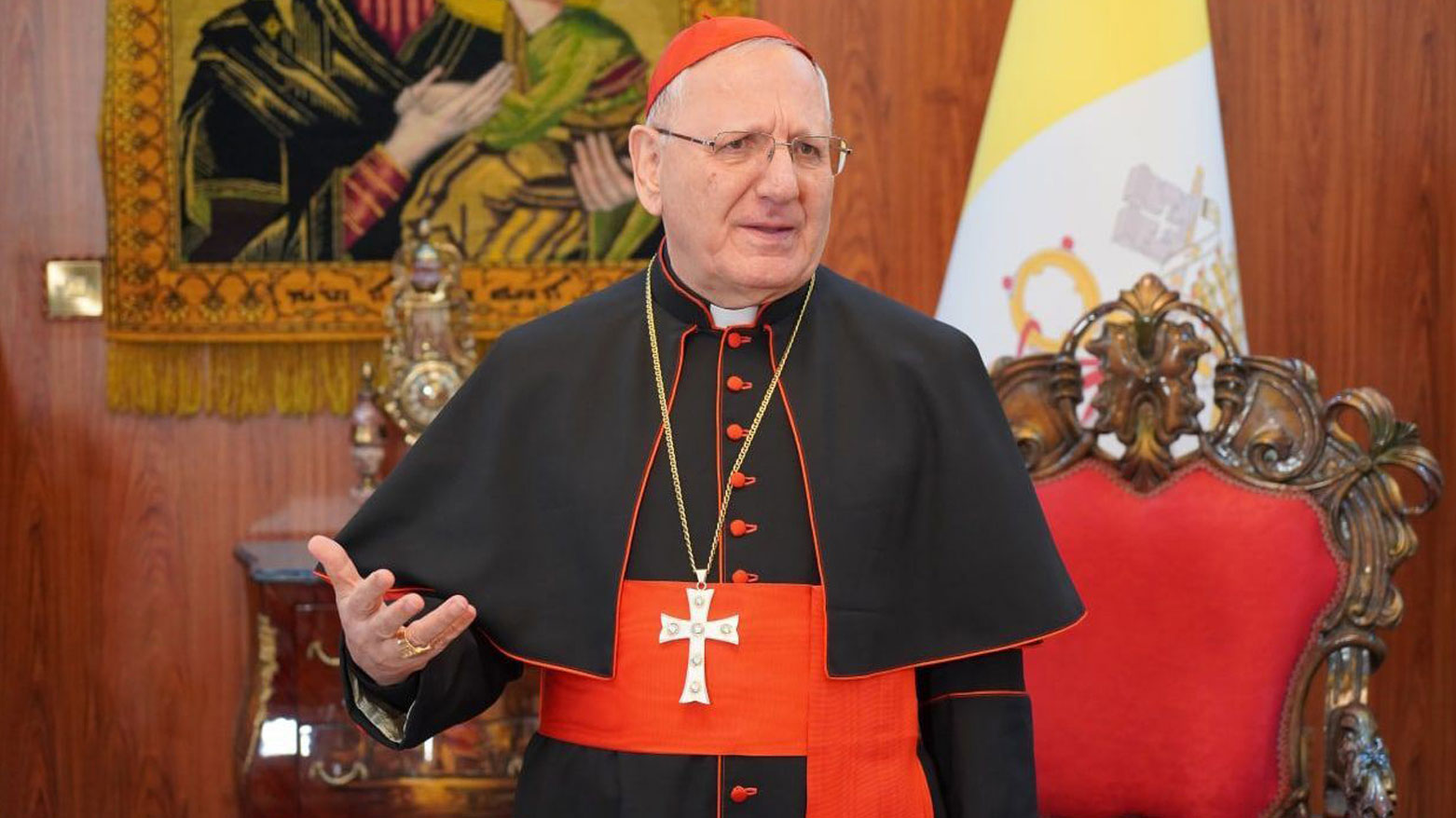
ERBIL (Kurdistan24) — Cardinal Louis Raphael Sako, the Patriarch of the Chaldean Church in Iraq and the World, announced that he has been subjected to threats and significant harassment following public controversy regarding his comments on diplomatic relations and the status of the Christian minority in the country.
In a televised interview with Iraqi Dijlah TV, the Cardinal disclosed that despite the severity of the intimidation he faces, the supreme authority in Iraq has yet to adopt a formal stance on the matter, a silence that underscores the precarious position of one of the nation’s oldest religious communities.
The recent wave of hostility directed at the Patriarch appears linked to the sensitive political issue of relations between Iraq and Israel. During the interview, Cardinal Sako addressed allegations that he had advocated for the normalization of ties with Israel, a subject that remains legally and socially prohibited in Iraqi politics.
The Cardinal categorically rejected the claim that he used the term "normalization," asserting instead that he had merely presented a personal idea which was subsequently distorted and interpreted differently by detractors to fuel a campaign against him.
To bolster his defense against accusations of sympathizing with Israeli state policy, Cardinal Sako revealed a significant diplomatic detail regarding his past travels with Pope Francis. He noted that while he accompanied the Pontiff during his visit to Jordan, he explicitly refused to accompany him on the subsequent leg of the journey to Israel. This decision, he argued, serves as evidence of his alignment with national sentiments, contradicting the narrative used by those currently threatening him.
Despite the localized nature of the threats, Cardinal Sako emphasized that his position is fortified by a global constituency.
He stated that he is "not alone," reminding his detractors that he represents a worldwide community of one billion and 400 million people.
Simultaneously, he sought to anchor his legitimacy in Iraqi soil, rejecting any characterization of Christians as outsiders. He declared himself an indigenous citizen of the country, noting that his ancestors are buried in Kufa, a city in central Iraq with deep historical and religious significance.
The Cardinal’s comments regarding his personal security were set against a backdrop of grim statistics detailing the exodus and persecution of Iraq’s Christian population.
He indicated that the demographic collapse of the community is ongoing, with data showing that one million Christians have migrated from the country. Beyond displacement, the violence has been lethal; the Cardinal cited figures indicating that 1,500 Christians have been killed.
Economic dispossession has accompanied this violence. Cardinal Sako reported that 1,200 properties belonging to Christians have been seized, a practice that has stripped the community of its wealth and historical footprint in cities like Baghdad. On this issue, the Patriarch highlighted a disparity in the response from Iraq’s political leadership.
He revealed that he had sent letters regarding the return of these seized assets, but the only response he received came from Muqtada al-Sadr, the influential Shia cleric and political leader.
As a direct result of Sadr’s intervention, the Cardinal noted, 100 of the seized properties were successfully returned to their owners. The lack of engagement from other political factions on the property issue remains a point of contention.
The current tensions are the latest chapter in a protracted crisis between the Chaldean Patriarchate and the Iraqi political establishment that began in July 2023.
The conflict was precipitated when the President of Iraq, Latif Rashid, revoked a republican decree originally issued in 2013 by the late former President Jalal Talabani. The 2013 decree had granted official state recognition to Sako as the Patriarch of the Chaldean Church and formally acknowledged him as the custodian of the church's property and assets.
The revocation of this decree in 2023 caused profound concern among Christians both within Iraq and globally, who interpreted the move as a deliberate step toward the further marginalization of the Christian component of Iraqi society.
The political fallout was immediate and severe. In a dramatic act of protest, Cardinal Sako relocated the headquarters of the Patriarchate from Baghdad to Erbil, the capital of the Kurdistan Region. He announced at the time that he would not return to his traditional seat in the Iraqi capital until the official recognition of his position was fully restored.
The standoff lasted for nearly a year, creating a significant rift between the church and the federal government. Resolution efforts involved various domestic and international parties working behind the scenes to bridge the divide.
These efforts culminated in April 2024, when Cardinal Sako returned to Baghdad following an official invitation extended by the Iraqi Prime Minister, Mohammed Shia' Al-Sudani.
The reconciliation process was formalized months later in June 2024, when the Prime Minister issued a new decree that reinstated the recognition of Cardinal Louis Sako as the Patriarch of the Chaldeans in Iraq and the world, effectively reversing the administrative action that had sparked the crisis.
However, the restoration of the Cardinal’s legal status has not arrested the broader decline of the Christian presence in the country. Despite the new decree and the return of the Patriarch to Baghdad, threats to the existence and future of the community persist.
According to statistics cited in the context of the Cardinal's recent remarks, the Christian population has plummeted since the U.S.-led invasion in 2003. The numbers have dropped from more than 1.5 million people to nearly 250,000 today.
The primary drivers of this demographic collapse remain consistent: violence, displacement, and the systematic seizure of properties and assets. As Cardinal Sako’s latest statements reveal, even the highest ecclesiastical authority in the country is not immune to the intimidation tactics that have driven hundreds of thousands of his followers into exile.
While the church has regained its legal footing through the Prime Minister’s decree, the Cardinal’s revelation of "headaches" and threats suggests that the security environment for Iraq’s indigenous Christians remains volatile, with the state’s supreme authority yet to intervene decisively in their defense.