Governor Says Erbil Sustained Growth Through a Difficult 2025
Erbil Governor Omed Khoshnaw reports record 3.5m tourists and major water and power upgrades in 2025 despite severe budget cuts.
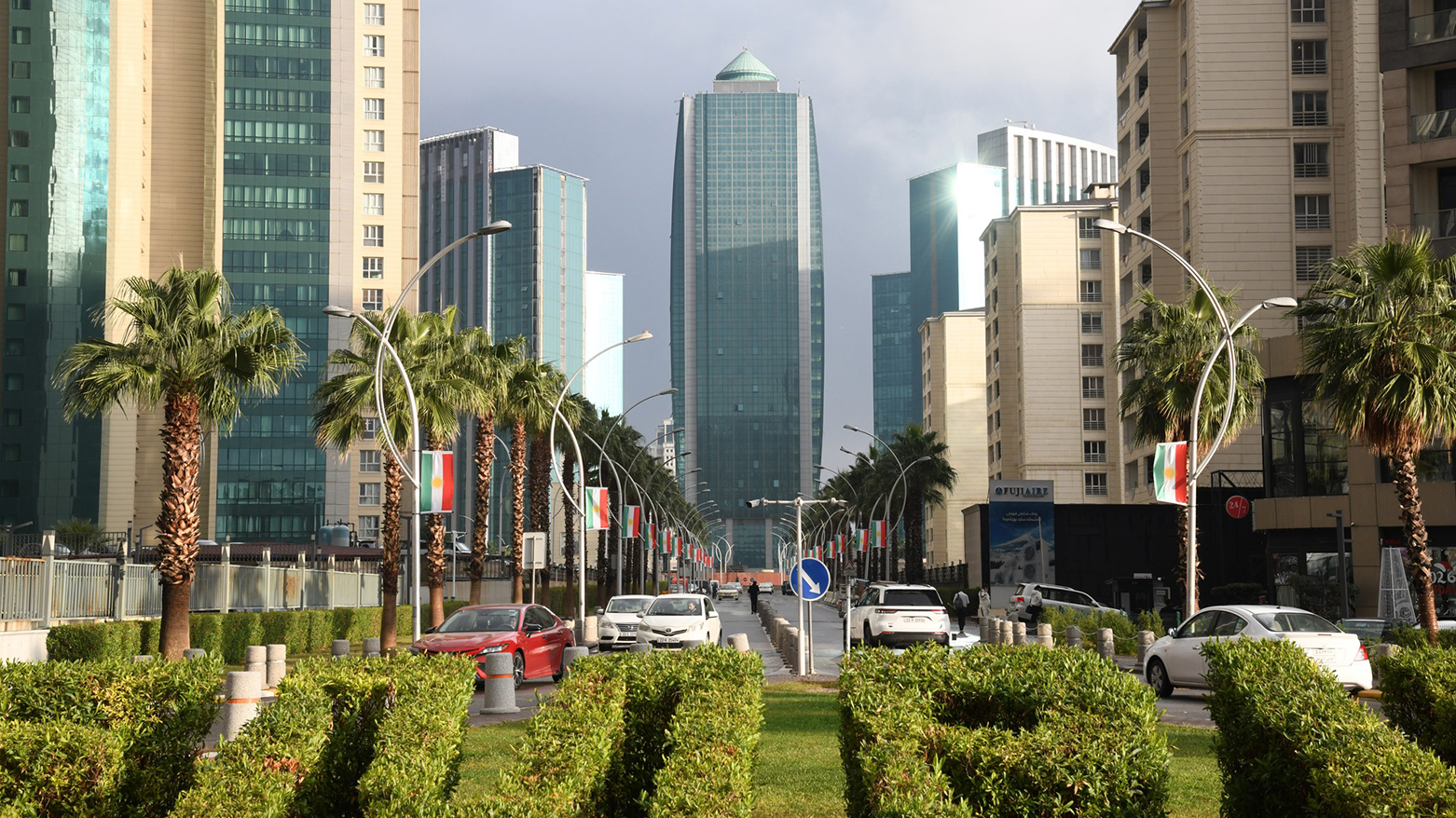
ERBIL (Kurdistan24) — Omed Khoshnaw, the Governor of Erbil, characterized 2025 as a year defined by severe financial constraints imposed on the Kurdistan Region, even as the provincial administration reported record-breaking tourist arrivals and the completion of critical infrastructure projects involving water and electricity.
Speaking in a year-end interview on Wednesday, Khoshnaw balanced his assessment of the fiscal hardships with an outline of strategic advancements achieved over the past twelve months, painting a complex picture of a governorate navigating economic austerity while pursuing aggressive development goals.
In an appearance on the 1:00 p.m. news bulletin of Kurdistan24 on Wednesday, Governor Khoshnaw provided a comprehensive review of the year’s events. When asked by the presenter to describe 2025 in a single word, the Governor chose "tough."
He elaborated that the year was difficult "in every aspect," specifically citing what he termed the "financial injustice" practiced against the Kurdistan Region. This external economic pressure, he noted, had significantly hampered the local government's ability to implement its planned agenda to the fullest extent required.
The Governor highlighted the direct human impact of these financial strains, pointing to the precarious situation of public sector employees. He acknowledged that the fate of salaries for two months remains unknown, a situation that has placed considerable stress on the civil service workforce.
Despite these immediate difficulties, Khoshnaw expressed a guarded optimism for 2026. He indicated that his hope for the coming year is predicated on the formation of new governments in both Baghdad and Erbil following recent elections.
The Governor expressed his expectation that these political developments would lead to a normalization of relations and the resolution of outstanding disputes within the framework of the Iraqi constitution.
While the financial landscape remained bleak, the Governor presented data indicating a robust expansion in the tourism sector, which served as a vital economic lifeline for the province in 2025.
Khoshnaw released statistics showing a significant year-over-year increase in visitor numbers. In 2024, Erbil welcomed three million tourists. However, data collected up to Dec. 1, 2025, showed that the number had already reached 3.4 million.
The Governor projected that by the close of the year, the total number of visitors would exceed 3.5 million, marking a new record for the governorate.
Khoshnaw attributed this surge in tourism not merely to organic demand but to specific administrative reforms and facilitations implemented at entry points. He detailed a series of measures designed to streamline access for visitors, particularly those from central and southern Iraq.
These measures included keeping security checkpoints open to tourists 24 hours a day and significantly accelerating processing times. According to the Governor, procedural improvements have reduced the time required for a tourist to pass through a checkpoint to between two and three minutes.
Furthermore, the administration extended the permitted stay period for tourists from one month to three months, encouraging longer visits and increased local spending.
Beyond the tourism sector, the Governor outlined substantial progress in essential infrastructure, citing two strategic projects that addressed long-standing grievances of Erbil’s citizenry: water supply and electricity generation.
Khoshnaw stated that the city had historically suffered from water shortages, a problem he claimed has now been met with a "radical solution." He announced the completion of an emergency water project, constructed at a cost of nearly $500 million. This investment has effectively doubled the water supply to the city.
The Governor noted that while the previous supply capacity stood at 10,000 cubic meters per hour, the new infrastructure has raised this figure to 20,000 cubic meters per hour.
In parallel with the water initiatives, the Governor described the administration's push for 24-hour electricity as a "revolution" in public services. He reported that the center of Erbil city, along with the strategic 120-meter and 150-meter ring roads, has been fully integrated into a continuous power supply system.
This transition has not been without challenges; Khoshnaw acknowledged technical disruptions caused by cold weather, heavy rains, and the terrorist attack on the Khor Mor gas field. However, he maintained a commitment to expanding the system, promising that the entire Kurdistan Region is slated to have 24-hour electricity in 2026.
The shift toward a stable, state-provided power supply has yielded secondary benefits for the environment, a major priority for the governorate in 2025. The implementation of the 24-hour electricity project allowed for the shutting down of thousands of neighborhood diesel generators, which had been a primary source of noise and air pollution.
The Governor revealed that environmental concerns had previously reached a critical level, prompting a scientific response. Upon the recommendation of the Prime Minister, the governorate collaborated with Salahaddin University and Erbil Polytechnic University to conduct a confidential survey identifying pollution sources.
Based on the findings of this academic survey, the administration took aggressive regulatory actions, including the closure of illegal refineries and the enforcement of stricter environmental standards on factories.
Khoshnaw announced that these efforts had received international validation. He stated that two international agencies based in Norway and Sweden had, in their 2025 reports, removed Erbil from their "red list" of cities considered dangerous to visit due to pollution, reclassifying it as a "clean city."
Looking ahead to the immediate future, Khoshnaw discussed the preparations for New Year’s Eve celebrations. He assured the public that a comprehensive security and service plan is in place to manage the festivities.
The city has organized 10 nights of various activities and celebrations. To support local economic opportunities during the holiday season, the governorate opened three temporary markets and provided 100 kiosks to young people free of charge, aimed at creating short-term employment.
The Governor concluded his remarks by emphasizing that the momentum of reconstruction would continue into the new year. He pointed to ongoing road infrastructure projects, specifically the dual carriageway initiatives for the Shaqlawa and Koya roads, as evidence that Erbil is entering a new phase of development. Despite the fiscal "toughness" of 2025, the administration maintains that these strategic investments have laid the groundwork for a more stable and prosperous 2026.