KIU Signals Intent to Nominate Muthanna Amin for Iraqi Presidency
The Kurdistan Islamic Union (KIU) plans to nominate MP Muthanna Amin for Iraq’s presidency, pending talks with opposition and other parties to secure sufficient political support.
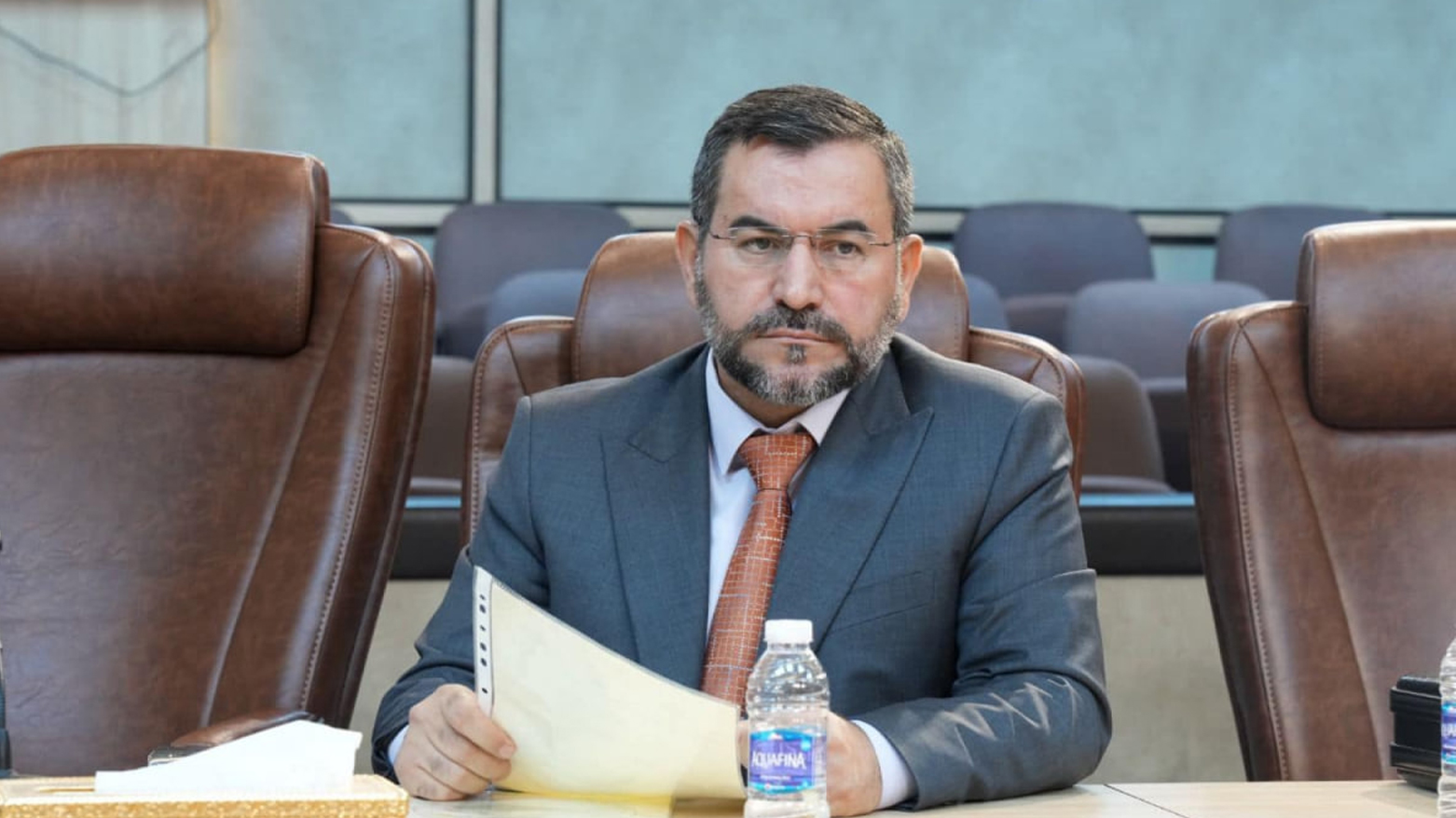
ERBIL (Kurdistan24) — The Kurdistan Islamic Union (KIU), widely known as Yekgirtû, has signaled its intention to nominate Muthanna Amin for the post of President of the Republic of Iraq, potentially adding a new dimension to the critical political maneuvering currently underway in Baghdad.
Speaking on Saturday, Amin, a sitting Member of Parliament for the party, confirmed to Kurdistan24 that internal discussions regarding his candidacy are advancing, though a formal declaration remains contingent on securing broader political support.
The announcement introduces a potential challenger from outside the two dominant Kurdish parties—the Kurdistan Democratic Party (KDP) and the Patriotic Union of Kurdistan (PUK)—into the race for the presidency, a position traditionally reserved for a Kurdish representative under Iraq’s post-2003 power-sharing customs.
The move comes as the nomination window for the presidency remains open until next Monday, placing pressure on the political blocs to finalize their candidates.
Salahaddin Babakir, Spokesperson for the Islamic Union, told Kurdistan24 reporter Hoshmand Sadiq that the party’s Politburo and Leadership Council have held discussions on the matter and "intend to nominate Muthanna Amin for the post of President of the Republic of Iraq."
However, Babakir emphasized that the nomination is not yet absolute. The party leadership is currently awaiting the official stance of opposition parties and other political entities. "If they reach an agreement with them, then Muthanna Amin will be his party's main candidate," Babakir stated.
Amin echoed this cautious approach, framing his potential run as dependent on the feasibility of building a winning coalition.
"Until discussions are held with the parties and I am certain whether I can obtain the parties' votes or not, I am not ready to officially nominate myself and enter the competition," he said.
He further noted that discussions have already been initiated with opposition factions, while outreach to other Kurdistani and Iraqi parties remains on the agenda.
The entrance of the KIU into the presidential fray complicates the efforts of the Kurdish political house to present a unified front in Baghdad.
As outlined by Mohammed Amin Faris, Advisor to the Presidency of the Republic of Iraq, in a televised interview with Kurdistan24 earlier on Saturday, the fragmentation of the Kurdish vote is a significant concern.
Faris warned that "fragmentation and multiple candidates weaken the Kurdish weight and allow other forces to choose our president for us," advocating instead for a consensus candidate agreed upon by the main parties to safeguard the constitutional rights of the Kurdistan Region.
According to Faris, the presidency is not a ceremonial role but a vital component of the executive authority, holding the power to ratify laws, propose legislation, and protect the constitution.
The President also serves as the legal key to the formation of the next government; once elected, the President is constitutionally mandated to task the candidate of the largest parliamentary bloc with forming the cabinet.
The process for electing the President is governed by strict constitutional deadlines.
Following the closure of the nomination period on Monday, the parliament must elect a President within 30 days of its first session.
Winning the post requires a two-thirds majority of the total members of parliament in the first round of voting. If no candidate achieves this threshold, a runoff is held between the top two contenders, with the winner decided by a simple majority.
Currently, the field of potential candidates is crowded.
Faris indicated that more than twenty individuals have submitted nomination forms, though many are independent applicants with little chance of success.
The real contest typically revolves around the candidates put forward by the major Kurdish blocs. Media reports suggest that the PUK is circulating three names for the position, while the KDP is expected to clarify its stance following high-level meetings scheduled for Sunday.
The KIU’s potential nomination of Muthanna Amin suggests a strategy to leverage the opposition vote and perhaps offer an alternative to the traditional duopoly of the KDP and PUK.
However, Amin’s acknowledgment that his candidacy is not yet "settled" reflects the fluidity of the negotiations.
The party appears to be testing the waters, seeking to determine if there is sufficient appetite among Iraqi lawmakers for a candidate from an Islamist opposition party to hold the highest constitutional office in the land.
As the deadline approaches, all eyes remain on the ongoing negotiations between the political blocs.
The ultimate choice for the presidency will not only determine who resides in the Salam Palace but will also set the trajectory for the formation of the next Iraqi government and the resolution of lingering disputes between Erbil and Baghdad, including issues of budget allocations and oil and gas laws.