Iraq Lacks a Law to Protect Journalists Amid Rising Violations in 2025
Press freedom in Iraq deteriorated in 2025, with 182 violations against journalists recorded amid the absence of a law protecting media workers, despite constitutional guarantees of free expression.
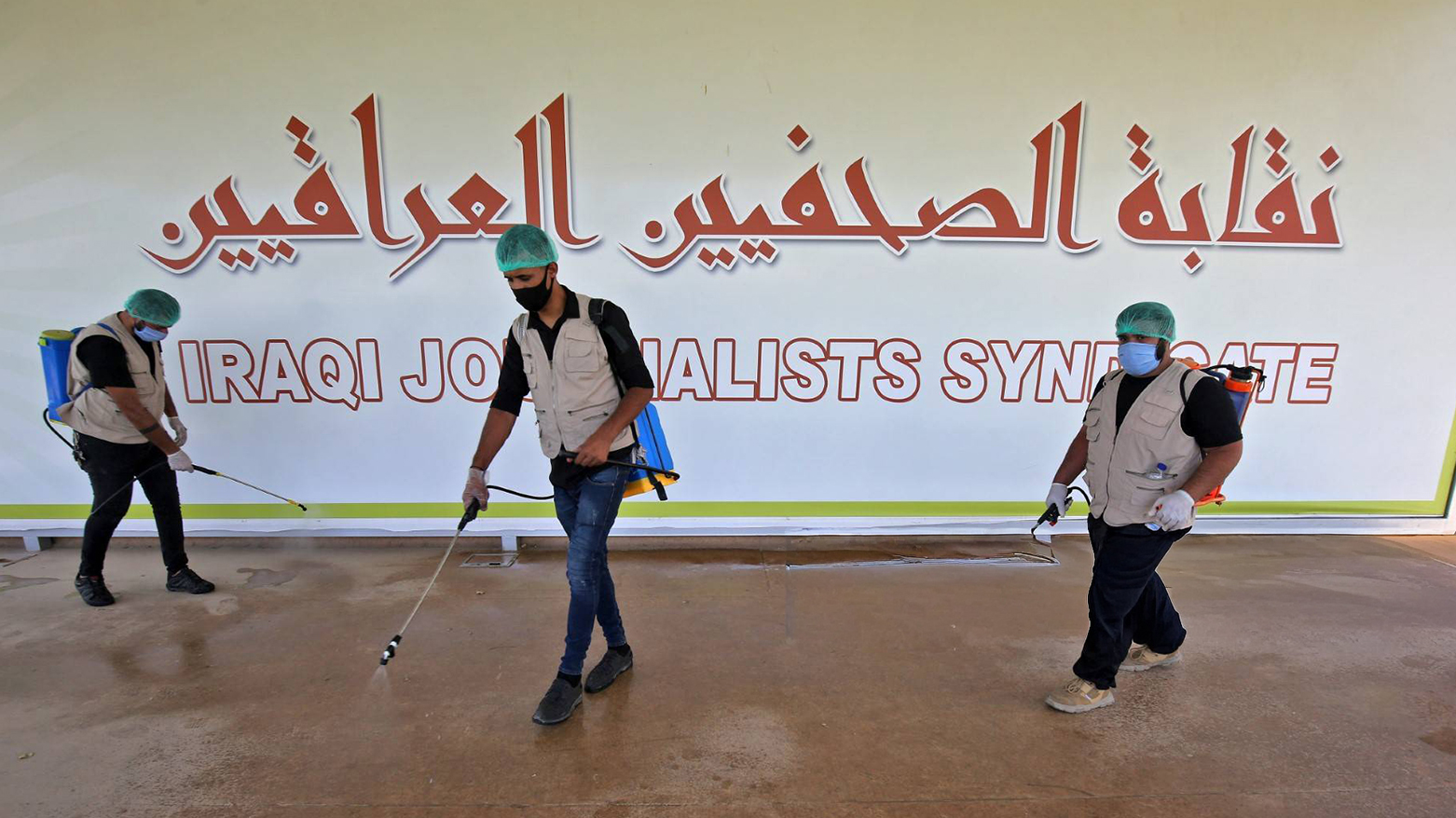
Erbil (Kurdistan24) - Press freedom in Iraq faced serious obstacles throughout 2025, as journalists continued to work in an environment marked by legal uncertainty, security pressure, and repeated violations, amid the absence of a dedicated law to protect media professionals.
According to the Journalists’ Rights Defense Association, a total of 182 violations against journalists were recorded during the year, reflecting what rights advocates describe as a dangerous deterioration in the conditions surrounding journalistic work in the country.
Field reporter Hassan Nabil said that he alone faced two legal complaints in 2025. Speaking to Kurdistan24, he said that during the coverage of protests, security forces often treat journalists harshly, at times subjecting them to worse treatment than demonstrators themselves. He added that journalists who expose corruption involving political forces are frequently placed under intense pressure and face violations in retaliation. According to Nabil, political actors view the role of journalists in defending public rights and uncovering the truth as a threat, making such work unacceptable in their view.
From a legal perspective, despite Article 38 of Iraq’s federal constitution guaranteeing freedom of expression and journalism, there is no specific law dedicated to protecting journalists. In cases involving violations or the prosecution of journalists, Iraqi courts continue to rely on the Penal Code issued in 1969, a framework critics say is outdated and ill-suited to safeguarding modern journalistic work.
Legal expert Ahmed Haidar stressed that Iraq lacks any law that protects journalists, reporters, or even political analysts. He called on lawmakers in the new parliamentary term to prioritize draft legislation currently under discussion in parliament to ensure that press freedom is protected by law.
The 182 recorded violations include two cases of killing and seven cases of kidnapping, alongside dozens of other incidents. These include 53 cases of preventing coverage, 24 cases of confiscation of journalistic equipment, 28 recorded legal complaints, and 11 cases of physical assault. Baghdad topped all other cities, with 62 violations documented during the year.
The situation in Iraq reflects a broader global crisis facing journalists. According to the International Federation of Journalists (IFJ), at least 128 journalists and media workers, including ten women, were killed worldwide in 2025, based on the federation’s final Killing List released on December 31. The figure includes nine accidental deaths, marking another deadly year for the profession.
The IFJ said 17 additional cases were confirmed after December 10, when a preliminary list recorded 111 killings, including one accidental death. The newly confirmed cases included fatalities in Palestine, Tanzania, Peru, and Guatemala, as well as accidental deaths of seven media workers in Nigeria, one in Burundi, and one in Iran.
Since launching its annual Killing List in 1990, the IFJ has documented 3,173 journalist deaths worldwide, averaging 91 per year, with 876 killings recorded over the past decade alone. The federation also reported 533 journalists currently imprisoned worldwide, noting that China remains the world’s largest jailer of journalists.
For the third consecutive year, the Middle East and Arab World was the deadliest region for journalists, with 74 media workers killed in 2025, including 56 in Palestine, accounting for 58 percent of global journalist deaths. Yemen followed with 13 fatalities, Ukraine with eight, Sudan with six, while India and Peru each recorded four deaths. Several other countries, including the Philippines, Mexico, Peru, and Pakistan, each lost three journalists.
The IFJ said the figures highlight the extreme risks journalists face in conflict zones and crisis-hit regions and stressed the urgent need to end impunity and strengthen international mechanisms to protect media professionals. By comparison, the federation recorded 122 journalist deaths in 2024, including 14 women, and 516 imprisoned journalists worldwide.
As violations mount and legal protections remain absent, journalists in Iraq continue to operate under growing pressure, reinforcing calls from media professionals and legal experts for urgent legislative action to safeguard press freedom.