From Sanctions to Strikes: How U.S. Pressure on Venezuela Culminated in Maduro’s Capture
Washington says decisive military action follows years of diplomatic efforts, sanctions, and unfulfilled promises by Caracas.
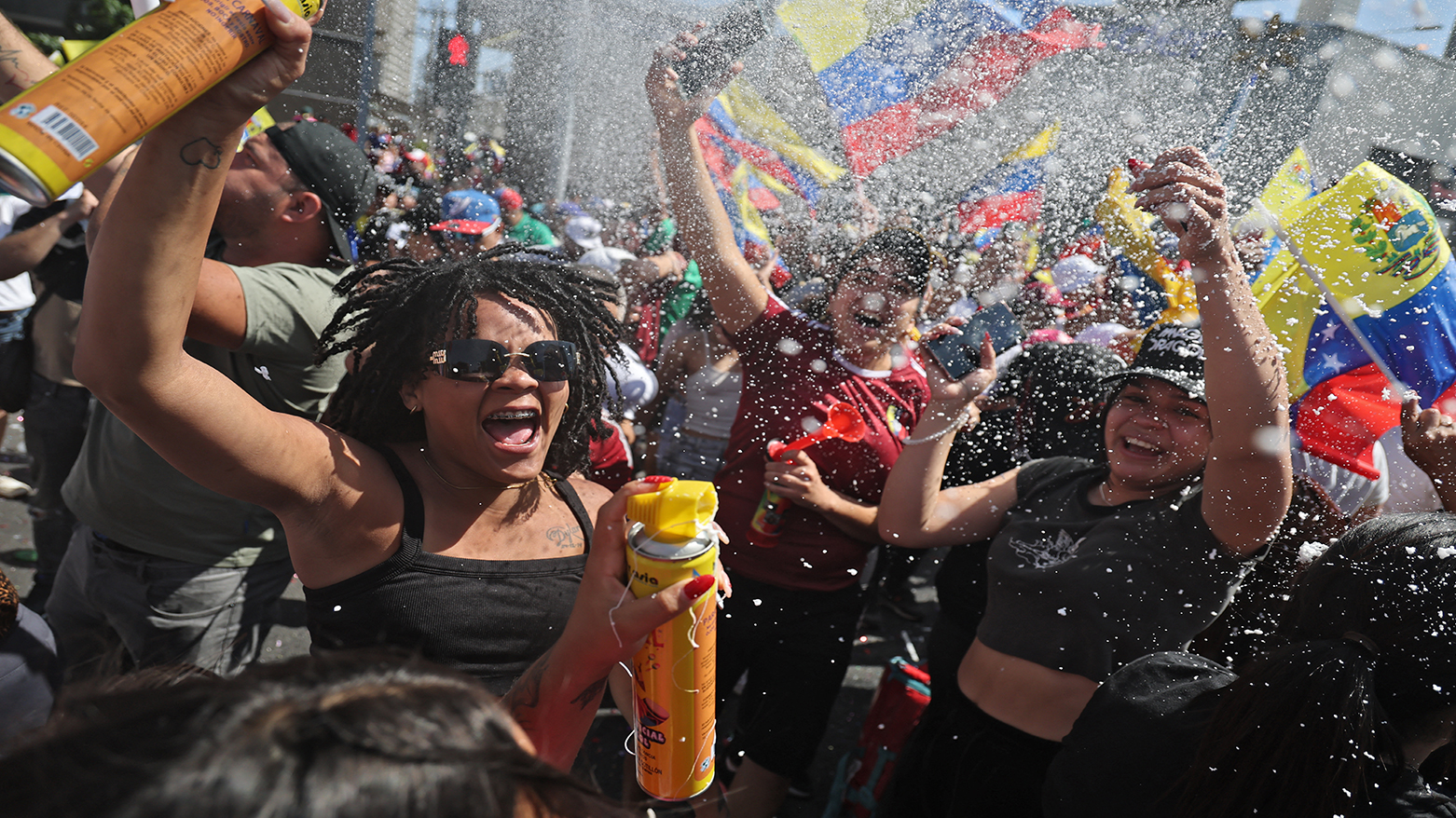
ERBIL (Kurdistan24) — The United States’ military strike on Caracas on Saturday and the reported capture of Venezuelan President Nicolás Maduro marked the culmination of nearly two decades of escalating pressure by Washington, as successive U.S. administrations sought to curb what they describe as authoritarian rule, systemic corruption, and narco-trafficking emanating from Venezuela.
The military operation, announced by President Donald Trump, followed years of sanctions, diplomatic isolation, and enforcement actions that U.S. officials say were repeatedly ignored or undermined by the Maduro government, leaving military action as a last resort.
Early sanctions and diplomatic breakdown
Tensions between Washington and Caracas date back to the presidency of Hugo Chávez, whose rise to power in 1999 led Venezuela toward hard-line anti-U.S. policies. In 2006, the administration of President George W. Bush imposed the first sanctions, banning the sale of U.S.-made weapons and military equipment to Venezuela over its lack of cooperation in counterterrorism efforts.
By 2010, diplomatic relations had deteriorated to such an extent that both countries withdrew their ambassadors, formalizing a rupture that would deepen under Chávez’s successor, Nicolás Maduro.
Human rights concerns and targeted measures
Following Chávez’s death in 2013, the Obama administration moved to sanction senior Venezuelan officials in late 2014 and early 2015, citing human rights violations linked to the violent suppression of anti-governmental protests.
The measures included asset freezes and visa bans, signaling Washington’s growing alarm over democratic backsliding in Caracas.
Trump era: sanctions and warnings of force
Under President Trump’s first term, beginning in 2017, U.S. policy hardened significantly. Financial sanctions targeted top officials, including members of Venezuela’s Supreme Court, for undermining the opposition-controlled parliament.
When Maduro created a Constituent Assembly to bypass the legislature, Washington sanctioned Maduro personally and froze his U.S.-based assets.
Trump publicly raised the prospect of a “military option” for the first time, while the U.S. banned the purchase of Venezuelan government and state oil company PDVSA bonds, tightening economic pressure on the regime.
2019 escalation and oil embargo
After Maduro’s 2019 re-election — widely rejected by Washington and its allies as illegitimate — the United States intensified sanctions with the explicit goal of forcing political change. Diplomatic ties were severed after Washington recognized opposition leader Juan Guaidó as interim president, a move later echoed by dozens of countries.
That same year, the U.S. imposed an oil embargo, freezing Venezuelan government assets and cutting off a key revenue stream. Although limited oil licenses were temporarily eased in 2023 due to global energy disruptions following Russia’s invasion of Ukraine, they were reinstated when Washington said Maduro failed to meet commitments to hold a fair 2024 election.
Opposition leader María Corina Machado, later awarded the Nobel Peace Prize, was barred from running.
Criminal charges and bounties
In 2020, U.S. prosecutors charged Maduro and senior associates with “narco-terrorism,” accusing them of conspiring to flood the United States with cocaine. Washington offered a $15 million reward for information leading to Maduro’s arrest, later raising it to $50 million in August 2025, underscoring the seriousness with which U.S. authorities viewed the case.
Military build-up and enforcement
By mid-2025, Washington began a significant military build-up in the Caribbean, citing intelligence linking Venezuela to large-scale drug trafficking. U.S. forces conducted airstrikes on vessels alleged to be used by traffickers and seized an oil tanker off Venezuela’s coast in December, actions the U.S. framed as law enforcement measures rather than acts of war.
Trump later confirmed strikes on coastal infrastructure allegedly used by drug boats, signaling a shift from maritime enforcement to limited land-based action.
2026: decisive action in Caracas
On Saturday, January 3, 2026, the United States carried out airstrikes on and around Caracas, followed by Trump’s announcement that U.S. forces had captured Maduro and his wife and flown them out of the country.
U.S. officials described the operation as the enforcement of long-standing red lines after years of broken promises by Caracas.
The Venezuelan government denounced the move as “extremely serious military aggression” and called for an emergency meeting of the U.N. Security Council.
Washington, however, has framed the operation as a necessary step to restore accountability, disrupt drug trafficking networks, and open the door to a democratic transition after years of failed diplomatic and economic pressure.
For U.S. officials, the operation represents the end point of a long policy trajectory — one that began with sanctions and warnings, and ultimately concluded with direct action after, they argue, every other avenue was exhausted.