Houthi Official Warns of ‘Decisive Battle’ Amid Escalating Intra-Coalition Conflict in Southern Yemen
Houthi officials warn of a decisive battle amid southern Yemen clashes, viewing the conflict as a Saudi-UAE power struggle while Sanaa remains on high alert against perceived US threats.
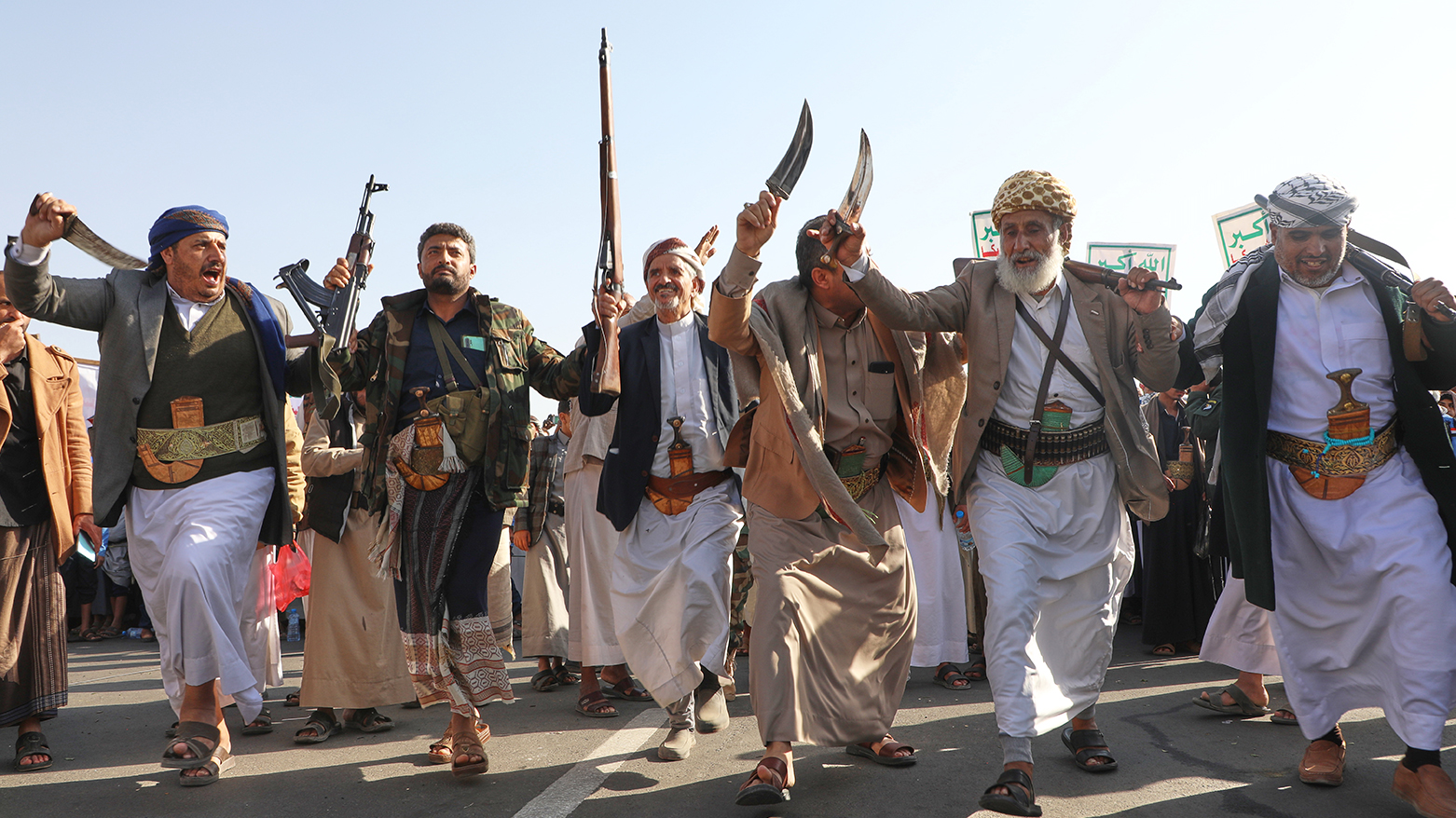
ERBIL (Kurdistan24) — A senior official aligned with the Houthi Ansar Allah movement stated on Saturday evening that the leadership in Sanaa is maintaining a state of high vigilance in anticipation of a potential "decisive battle," viewing the intensifying military clashes and political instability in southern Yemen as a manifestation of competing regional agendas.
The comments, made to the Shafaq News Agency, underscore the deepening fragmentation within the country as friction grows between factions backed by Saudi Arabia and the United Arab Emirates.
Adel Rajeh, a member of the Central Committee of the Justice and Construction Party and a member of the Executive Committee of the Alliance of Parties Opposing the Coalition, told Shafaq News that the current volatility in the southern governorates is not merely internal discord but reflects a broader struggle for influence.
Rajeh characterized the situation as a "conflict between regional agendas seeking to share influence and interests," explicitly referring to the involvement of Saudi Arabia and the United Arab Emirates in the contest for control over Yemen’s strategic southern territories.
According to Rajeh, the Houthi leadership in Sanaa is monitoring these field and political developments with "high caution." He articulated a worldview in which the primary external actors, specifically the United States and Israel, remain focused on a singular objective regarding the northern-based authority.
"The United States and Israel care only about targeting Sanaa and toppling Ansar Allah," Rajeh said.
Consequently, he emphasized that the leadership in Sanaa "possesses full readiness to wage a decisive battle against those regional and international agendas," suggesting that the movement is preparing for the possibility that the instability in the south could eventually turn northward or precipitate a broader confrontation.
The Houthi official’s warning comes against the backdrop of a notable security escalation in Hadhramaut Governorate in eastern Yemen. Local sources speaking to Shafaq News reported that the province witnessed significant military activity earlier in the week.
Specifically, fighters belonging to the Saudi-led coalition carried out an airstrike at dawn on Tuesday, Dec. 30, 2025. The strike targeted facilities in the vicinity of Al-Mukalla Port, a critical economic hub for the region.
The aerial bombardment near Al-Mukalla has generated anxiety regarding the economic stability of the governorate. Southern activists who spoke to Shafaq News expressed fears about the repercussions of the raid on the province's economic interests, which are vital for the local population's livelihood.
The strike appears to be part of a series of military actions destabilizing the area. Days prior, on Dec. 26, airstrikes targeted sites in the Ghail Bin Yamin District of Hadhramaut. These strikes followed the seizure of control in that district by forces affiliated with the Southern Transitional Council (STC), coinciding with reported clashes between these forces and tribal gunmen in several areas.
In response to the rapidly deteriorating security environment, the internationally recognized government has taken drastic administrative measures. Rashad Muhammad Al-Alimi, the Chairman of the Presidential Leadership Council, has declared a nationwide state of emergency.
The decree is set for an initial period of 90 days and is renewable. As part of these emergency measures, Al-Alimi imposed a temporary ban on movement via air, land, and sea at a number of ports of entry, attempting to assert control over the flow of resources and personnel during the crisis.
The imposition of the state of emergency and the military escalations coincide with a surge in popular unrest in southern urban centers.
Shafaq News reported that gatherings and protests have been organized in several southern cities, including Al-Mukalla and the interim capital, Aden. Demonstrators in these areas are demanding the declaration of a "State of the South," a call for secession that highlights the widening political disparities between local components.
The protests and military maneuvers signal the faltering of the comprehensive negotiation track that had been intended to unify the anti-Houthi bloc. Instead, the southern landscape is increasingly defined by the friction between the Saudi-backed central government forces and the UAE-backed Southern Transitional Council.
As these rival factions struggle for dominance in Hadhramaut and Aden, the Houthi leadership in Sanaa observes the fragmentation, framing it as a prelude to a larger conflict involving international powers.
The convergence of airstrikes, tribal clashes, mass protests, and emergency decrees paints a picture of a nation fracturing along multiple fault lines.
While the Houthi movement remains entrenched in the north, Rajeh’s comments indicate that Ansar Allah views the chaotic developments in the south not as a distraction, but as a strategic indicator of a looming, decisive confrontation involving both regional coalition partners and their Western allies.