Stephen Miller Emerges as Key Architect of Trump’s Forceful Foreign Policy Agenda
Stephen Miller drives Trump’s forceful foreign policy, focusing on Greenland and Venezuela, implementing directives rooted in force and strategic resource control.
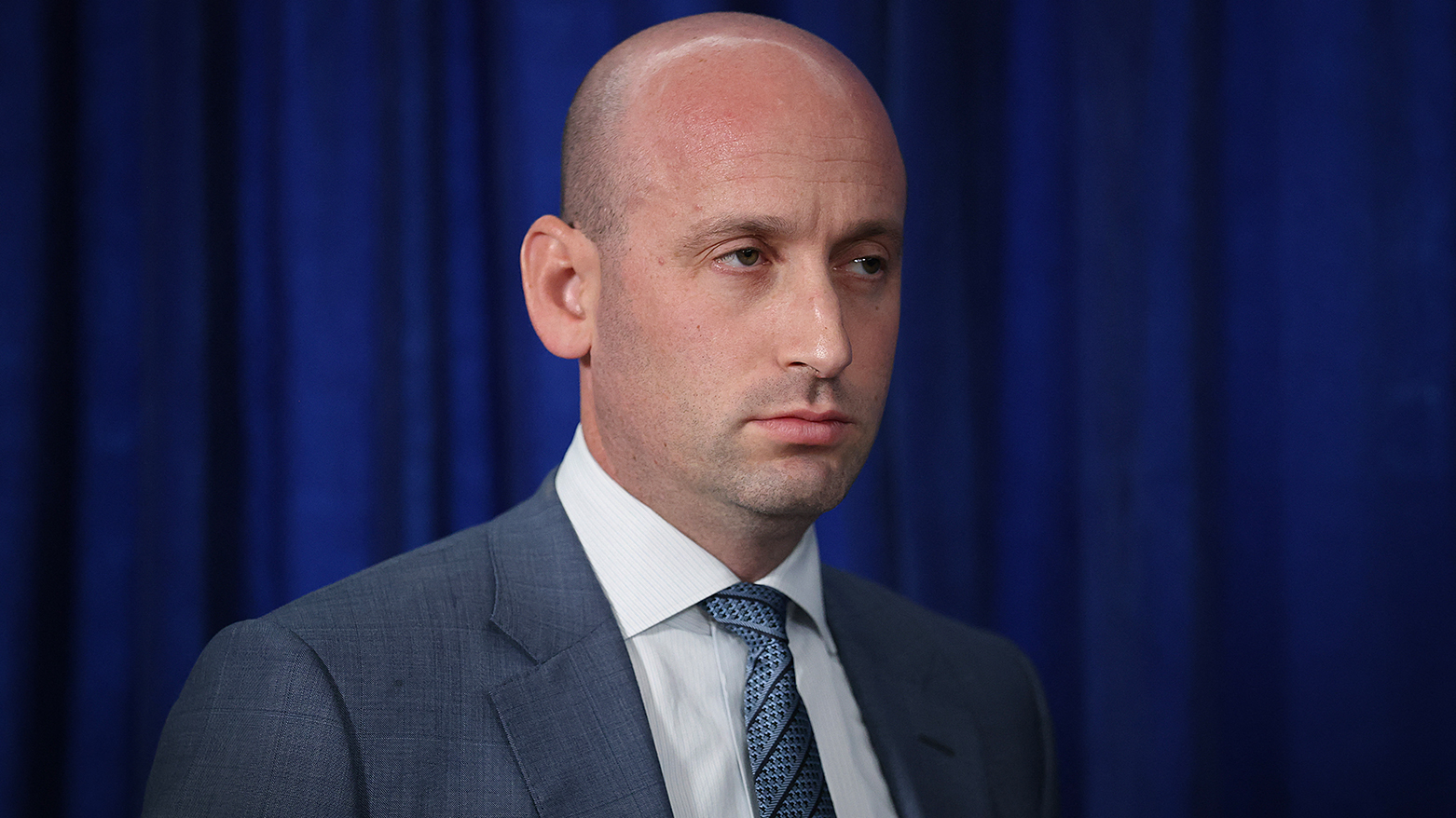
ERBIL (Kurdistan24) — Stephen Miller, President Trump’s deputy chief of staff for policy and homeland security adviser, has taken a central role in shaping the administration’s assertive approach toward strategic territories abroad, including Greenland and Venezuela, according to reporting by The New York Times.
The longtime White House aide, who has previously spearheaded hard-right domestic policies, is now directing his focus toward international matters, advocating for a policy framework grounded in the use of force.
Miller, 40, has earned the U.S. President’s complete trust and oversees a staff of more than 40 personnel tasked with implementing both domestic and foreign initiatives.
The New York Times reports that his influence reflects a broader Trump administration posture that prioritizes the projection of American power abroad and seeks to secure resource-rich territories, often framing strategic ambitions in terms of national security.
From the earliest stages of Trump’s second term, Miller has worked closely with the president to transform what was once perceived as rhetorical posturing into actionable policy threats.
A prime example, according to The New York Times, is Greenland. During Trump’s first term, the President joked about purchasing the semiautonomous Danish territory for its coal and uranium resources, a notion that was largely dismissed by his advisers. Today, Miller articulates the administration’s position that Greenland is essential to U.S. national security and has not ruled out the use of military force to secure the territory if necessary.
“We live in a world in which you can talk all you want about international niceties and everything else, but we live in a world, in the real world, Jake, that is governed by strength, that is governed by force, that is governed by power,” Miller told CNN’s Jake Tapper during a Monday interview, as reported by The New York Times.
The comments reflect a foreign policy philosophy that aligns with the president’s vision of projecting raw power to safeguard American interests.
While the administration’s messaging emphasizes negotiation and purchase, Trump told reporters aboard Air Force One that Greenland is “covered with Russian and Chinese ships all over the place,” a claim disputed by analysts but presented as justification for potential action.
Secretary of State Marco Rubio later stated that the president intends to acquire Greenland through purchase rather than military intervention, though the White House did not rule out the use of force.
Miller’s influence extends beyond Greenland. The New York Times reports that he has openly supported Trump’s objectives in Venezuela, including a recent U.S. operation in which forces seized President Nicolás Maduro and his wife.
Miller indicated on CNN that the United States may exercise authority over Venezuela’s oil-rich territories and that resistance to such actions would be limited. His guidance aligns closely with the president’s vision of leveraging America’s military and economic power to secure strategic resources.
The aide’s ascent in the Trump administration underscores the integration of ideological conviction and practical authority.
Miller’s rise has been noted for its speed and scope, from his early work on immigration in the first Trump term to shaping foreign policy strategy in the second.
As a White House correspondent reported, he previously directed hard-right domestic policies resulting in mass deportations and family separations, experiences that cemented his position as a key architect of the administration’s agenda.
Miller’s personal and professional trajectory, as detailed by The New York Times, illustrates a combination of ideological commitment and political pragmatism.
Raised in Santa Monica, California, and educated at Duke University, Miller gained early attention in conservative circles for defending the accused Duke lacrosse players in 2007 and for his outspoken views on American nationalism, quoting Theodore Roosevelt in his high school yearbook: “There can be no 50-50 Americanism in this country. There is room here for only 100 percent Americanism, only for those who are Americans and nothing else.”
After entering Washington in 2009 as a staffer for Senator Jeff Sessions, Miller cultivated a reputation for meticulous policy execution and ideological consistency, according to The New York Times.
His domestic record included drafting policy that frequently tested constitutional provisions related to citizenship and immigration, laying the groundwork for his current influence in the administration’s foreign policy agenda.
Miller’s presence in the second Trump term has also highlighted the administration’s shift in operational style.
Where ideas like purchasing Greenland were once treated as informal or whimsical, they are now presented as actionable components of a formal national strategy, with Miller executing the president’s directives closely and visibly.
White House Press Secretary Karoline Leavitt emphasized that Miller faithfully implements Trump’s policies across immigration, crime, trade, Greenland, and Venezuela, while also participating in over 200 media appearances in 2025 alone.
The aide’s approach has elicited mixed reactions in Washington.
Senator Jim Banks of Indiana praised Miller as “the smartest guy I’ve ever met in Washington” and described him as both ideologically driven and pragmatically effective.
Conversely, Representative Don Bacon, a retiring Republican from Nebraska, publicly criticized Miller’s comments on Greenland, calling them “really dumb” and warning that demeaning NATO allies risks lasting diplomatic damage.
Questions regarding the administration’s intentions for Greenland intensified after Prime Minister Mette Frederiksen of Denmark called Trump’s threats to annex the territory “unacceptable pressure,” urging restraint while acknowledging that the claims must be taken seriously.
Miller, for his part, reiterated on CNN that Greenland is formally considered part of the United States under the current administration’s stance, underscoring his alignment with the president’s objectives.
Miller’s family has also engaged symbolically in this policy discourse.
The New York Times reports that his wife, Katie Miller, a former administration official and current podcast host, posted a photo of Greenland draped with the American flag on social media following U.S. operations in Venezuela, captioned simply, “SOON,” signaling support for the administration’s assertive posture.
SOON pic.twitter.com/XU6VmZxph3
— Katie Miller (@KatieMiller) January 3, 2026
Through his consolidation of influence and strategic direction, Miller exemplifies the administration’s broader strategy of pursuing American interests abroad with minimal hesitation and maximal reliance on the projection of force.
His guidance continues to shape both the public narrative and the operational priorities of the Trump White House in its second term, emphasizing a worldview that privileges strength, power, and direct action.