Political Analyst Rustum Mahmoud: Aleppo Attacks Reflect Continuation of Repressive Policies Against Kurds
Mahmoud highlighted the historic and national role of President Masoud Barzani, saying recent messages of support from President Barzani and Kurdistan Region Prime Minister Masrour Barzani have reinforced Kurdish unity and national identity at a critical moment.
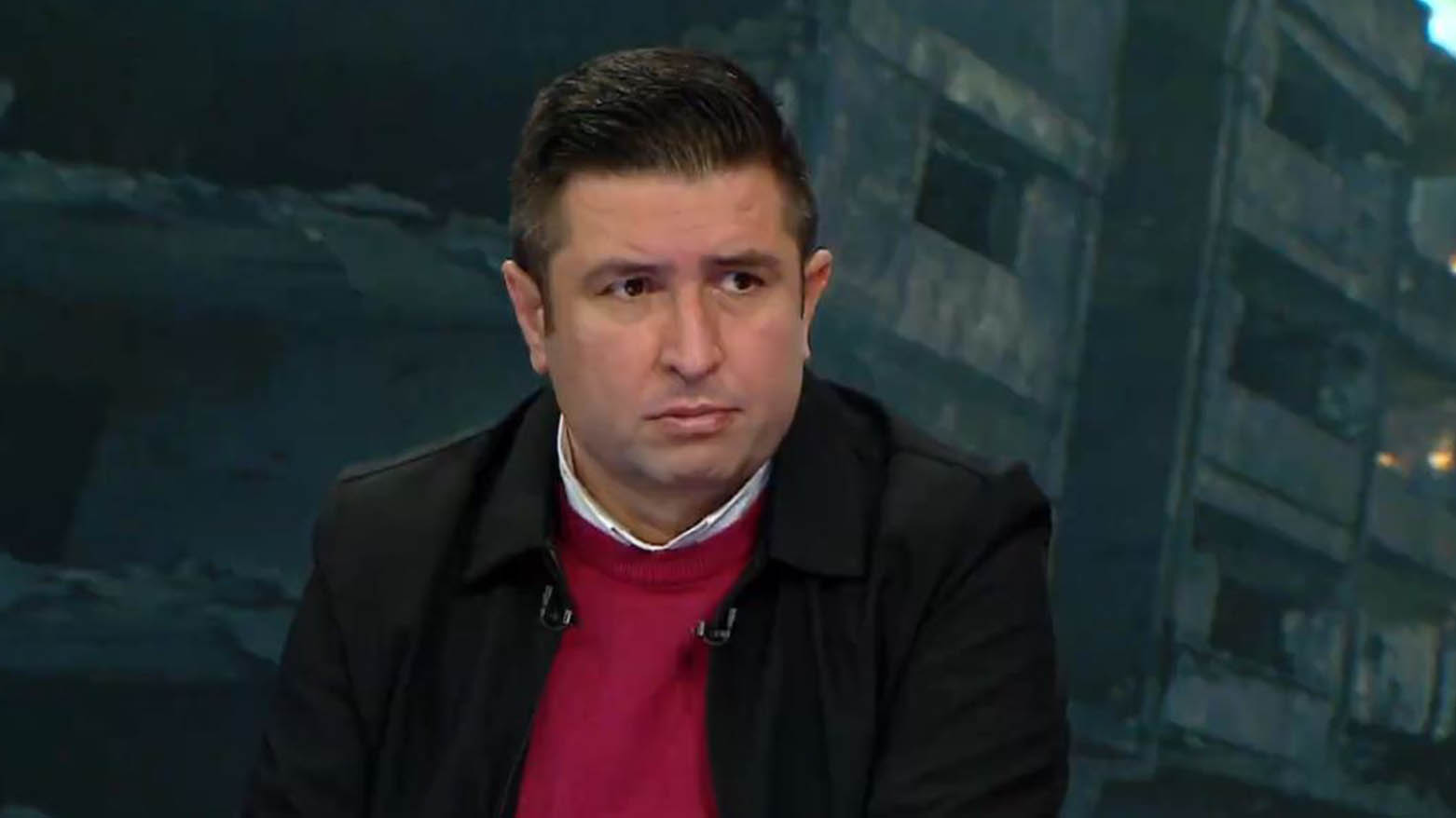
ERBIL (Kurdistan24) — Political analyst Rustum Mahmoud has warned that the ongoing attacks on the Kurdish neighborhoods of Sheikh Maqsud and Ashrafiyeh in Aleppo are not isolated military incidents, but part of a long-standing policy of repression and exclusion pursued by the Syrian authorities.
In an analysis shared with Kurdistan24, Mahmoud said the assaults reflect what he described as the Syrian government’s continued rejection of pluralism and democracy, arguing that Damascus lacks a genuine vision for a democratic Syria in the post-Assad era. He noted that the current actions against the Kurds mirror past policies of persecution used against other communities, including the Druze, Alawites, and Christians.
Mahmoud stressed that the attacks in Aleppo in 2026 are an extension of earlier offensives against Kurdish areas such as Kobani and other parts of West Kurdistan. He recalled that Kurdish fighters had previously succeeded in defeating extremist forces under far more difficult circumstances and said the same spirit of resistance remains strong today.
According to Mahmoud, recent regional developments have emboldened Syrian authorities to escalate their military campaign. He claimed that following agreements with Israel, Damascus has acted on the assumption that it will not face Israeli military retaliation for operations targeting Kurdish areas, leading to the use of heavy weapons against civilian neighborhoods.
Turning to the Kurdish leadership, Mahmoud highlighted the historic and national role of President Masoud Barzani, saying recent messages of support from President Barzani and Kurdistan Region Prime Minister Masrour Barzani have reinforced Kurdish unity and national identity at a critical moment. He described President Barzani as a symbolic father figure for Kurds across all four parts of Kurdistan, noting his repeated interventions in times of crisis.
Mahmoud stated that President Barzani’s regional and international influence could play a decisive role in pressuring an end to the attacks, pointing to his involvement during the siege of Kobani as evidence that the Kurdish leadership will not abandon communities under threat.
Addressing regional dynamics, Mahmoud claimed that a neighboring country is playing a role in fueling the current escalation, intending to obstruct political progress by the Syrian Democratic Forces (SDF). He noted that just one day before the violence erupted, talks were held between SDF Commander-in-Chief Mazloum Abdi and interim Syrian President Ahmed Sharaa on forming new military divisions and resolving oil-related issues—developments he said may have triggered opposition from external actors.
“SDF is not merely a military force; it is responsible for protecting all communities in northern Syria,” Mahmoud said, adding that growing pressure is now being placed on the international community, particularly the United States, to intervene and de-escalate the situation.
He emphasized that, unlike some other communities in Syria, the Kurds are not isolated, citing support from the Peshmerga, the Kurdish population in the Kurdistan Region, and millions of Kurds in neighboring countries with strong political, media, and international backing.
Mahmoud also said that the international community increasingly views the forces behind the attacks as extremist elements that threaten regional stability, including Israel’s security. He said this perception, combined with Kurdish resilience, will ultimately tip the balance in favor of the Kurdish people as they defend their existence with determination and dignity.