Najaf Religious Authority Reiterates Non-Intervention as Shiite Bloc Moves Toward Maliki Nomination
Sistani’s office rejects political consultation on premiership amid Coordination Framework maneuvering.
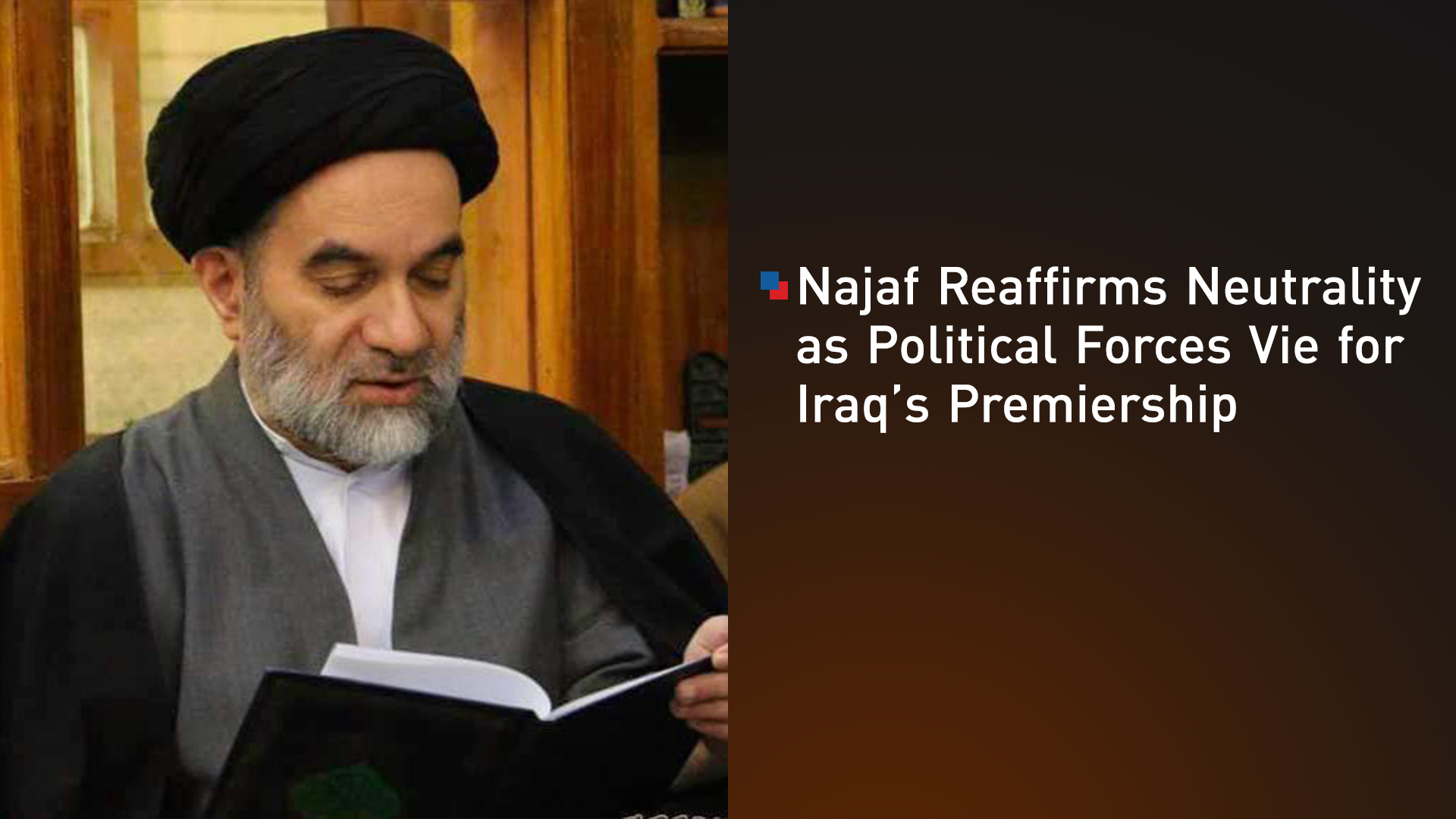
ERBIL (Kurdistan24) — Iraq’s top Shiite religious authority in Najaf has reaffirmed its firm refusal to intervene in the selection of candidates for the position of the prime minister, underscoring a long-standing position of political neutrality as Shiite parties intensify negotiations over the country’s next government.
According to a message conveyed on Sunday by Dr. Abdul Hadi al-Hakim to leaders of the Shiite Coordination Framework, the office of Grand Ayatollah Mohammed Reza al-Sistani rejected any attempt to submit names of potential prime ministerial candidates for religious endorsement. The message followed an inquiry raised by Coordination Framework leaders during a meeting held on Jan. 10, 2026.
“Previously, the supreme religious authority clarified that it rejects having the names of candidates for the position of prime minister presented to it,” the message stated, adding a pointed question over repeated political outreach: “Why repeat the attempt?!”
The statement reinforces the Najaf authority’s consistent approach of maintaining equal distance from executive and political affairs, leaving responsibility for forming the government and selecting its leadership to political actors within the constitutional framework.
The renewed clarification from Najaf comes as Iraq’s Shiite Coordination Framework moves toward nominating former prime minister Nouri al-Maliki for the premiership, following the formal withdrawal of incumbent Prime Minister Mohammed Shia al-Sudani from the race, according to informed political sources.
A senior source told Kurdistan24 on Saturday that Sudani, leader of the Construction and Development Alliance, relinquished his bid for a second term in favor of Maliki, head of the State of Law Coalition, amid shifting internal calculations within the powerful Shiite alliance.
The source said Maliki has secured the backing of the majority of factions within the Coordination Framework, signaling a significant consolidation of support as negotiations over the next government enter a more advanced phase.
While a broad consensus appears to be forming around Maliki’s candidacy, the source noted one notable reservation from Ammar al-Hakim, leader of the National Wisdom Movement. Hakim reportedly did not reject Maliki outright but suggested referring the matter to the senior Shiite religious authority for consultation—a proposal now effectively ruled out by Najaf’s latest response.
In a separate statement, Othman al-Shaibani, a senior figure in the State of Law Coalition, said in a Facebook post that all components of the Coordination Framework had agreed to nominate Maliki, describing the move as a unified decision within the alliance.
The developments coincided with the Coordination Framework’s 258th regular meeting, held earlier on Saturday, which focused on forming the next government and finalizing the nomination for prime minister in line with constitutional procedures.
In a statement issued by its media office, the framework described the meeting as taking place in a “positive atmosphere” marked by responsible discussions, resulting in “important developments and advanced indicators” aligned with what it termed Iraq’s supreme national interest.
While no specific names were officially announced, the statement suggested that negotiations had reached a critical stage, even as Najaf’s renewed stance makes clear that the final decision rests squarely with Iraq’s political forces—not its religious authority.