Trump Set to Meet Venezuela’s Machado as U.S. Reassesses Relations With Interim Authority
Trump hosts Machado Thursday as the US balances ties with Rodriguez’s interim government, disputes over prisoner data continue, and diplomatic channels with Caracas reopen.
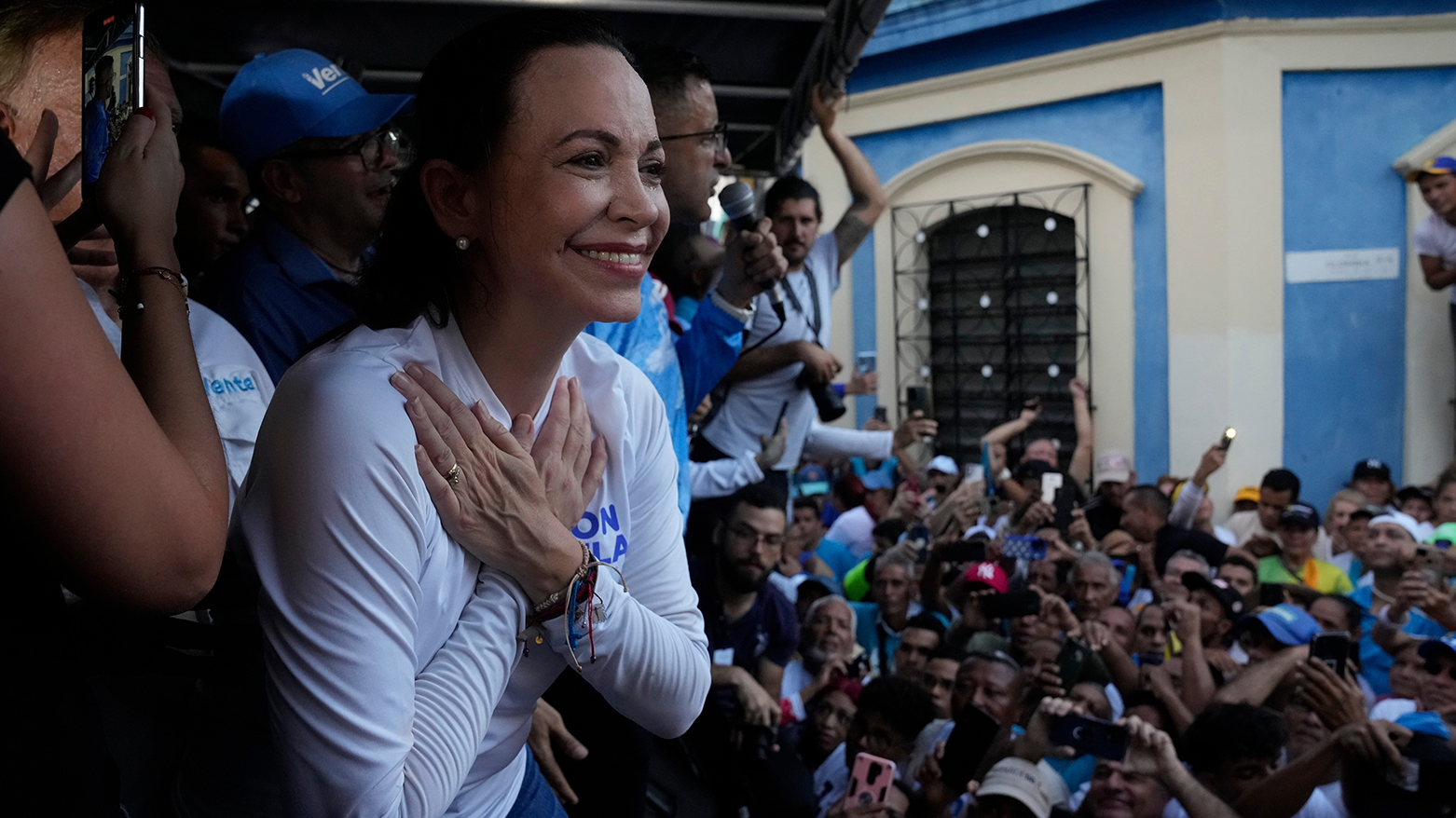
ERBIL (Kurdistan24) – President Donald Trump is scheduled to meet with Venezuelan opposition leader María Corina Machado at the White House on Thursday, administration officials confirmed, marking a pivotal moment in Washington’s evolving strategy toward Caracas following the detention of Nicolas Maduro earlier this month.
The meeting comes as the Trump administration navigates a complex diplomatic landscape, balancing engagement with the opposition movement against pragmatic cooperation with the interim government led by Vice President Delcy Rodríguez.
According to a report by Agence France-Presse (AFP), the meeting was confirmed by a US administration official on Monday, just days after President Trump publicly suggested that his administration would be "running" Venezuela following the January 3 military operation that resulted in the seizure of Maduro.
While Machado has long positioned herself as a primary ideological ally to Trump, the administration has recently signaled a preference for working with Rodríguez.
According to The Wall Street Journal, this strategic pivot was influenced by a classified US intelligence assessment, briefed to the president before the raid, which determined that top members of the Maduro regime—specifically Rodríguez—were best positioned to lead a temporary government.
The Thursday meeting represents a high-stakes opportunity for Machado to reassert her role in the country's transition.
The Wall Street Journal reported that Machado arrived in Washington after spending over a year in hiding and eventually escaping Venezuela by sea with the aid of a private extraction team to accept a Nobel Peace Prize in Oslo.
However, her political standing faces challenges from Washington’s recent maneuvers. Trump told Fox News last week that the Venezuelan opposition "couldn't have an election" and that Machado "doesn't have the support or the respect within the country" to lead, Politico reported.
Despite these comments, Republican lawmakers have urged the president to maintain support for the opposition. Rep. Maria Elvira Salazar (R., Fla.) told CBS’s "Face the Nation" that she was confident Machado would have a "solid conversation" with the president, asserting that the opposition leader has earned the support of the Venezuelan people, according to Politico.
Meanwhile, the diplomatic situation on the ground in Caracas remains fluid.
AFP reported that US envoys visited the Venezuelan capital last week to discuss reopening the US Embassy, seven years after diplomatic ties were severed.
On Monday, Diosdado Cabello, a staunch figure in the ruling socialist party, stated during a televised meeting that steps were moving forward to reopen the embassy and resume oil sales to the US. "We're going to continue on this path, looking for peace and tranquility," Mr. Cabello said, as cited by The Wall Street Journal.
The Trump administration has warned the interim leadership to adhere to Washington's directives, particularly regarding access to the nation's oil reserves, or face consequences.
President Trump noted on Sunday that he was working "really well" with Rodríguez’s administration, AFP reported.
A central point of contention remains the release of political prisoners.
The Venezuelan government announced it had freed 116 people jailed under Maduro, many of whom were detained for participating in protests following the disputed 2024 election. However, rights groups and United Nations experts disputed these figures.
According to AFP, UN experts and opposition figures stated that only about 50 prisoners have been released so far, contrasting sharply with the 800 to 1,200 individuals estimated to be in custody. The legal aid group Foro Penal placed the number of releases at 49 as of Monday.
The disparity has fueled frustration among families of detainees.
AFP reported that relatives have been camped outside the El Rodeo prison, approximately 30 kilometers from Caracas, for days. Manuel Mendoza, who traveled six hours to the facility, told AFP, "It's already been four nights waiting out in the open air, suffering," as he awaited the release of his son.
Family members also reported that some prisoners were removed through back exits without reuniting with their waiting relatives.
In a statement on Monday, experts from a UN fact-finding mission declared that the releases fell "far short of Venezuela's international human rights obligations," according to AFP.
Amid these domestic tensions, Machado has sought international support.
On Monday, she met with Pope Leo XIV at the Vatican, urging him to "intercede" for Venezuelans who remain "kidnapped and disappeared," according to her statements cited by AFP.
During the audience, she also underscored the legitimacy of Edmundo Gonzalez Urrutia, who ran as the opposition's presidential candidate in 2024 after Ms. Machado was disqualified by institutions loyal to the former regime.
Machado’s relationship with President Trump has been characterized by public overtures.
She dedicated her Nobel Peace Prize to the US president, describing him as a "champion of freedom," and offered to share the award with him. However, Politico reported that the Nobel Institute issued a statement clarifying that the prize "cannot be revoked, shared or transferred."
President Trump subsequently remarked that Norway was "embarrassed" by the decision, telling reporters he would need to speak with Machado regarding the matter.
In Caracas, Rodríguez is consolidating her administration's internal structure.
AFP reported that she appointed a former bodyguard of Maduro as minister of the presidential office and replaced the head of the presidential guard, who leads the country's counterintelligence unit.
Her government also indicated a readiness to pursue a "new agenda" with the European Union and Britain following discussions with their envoys.
As the US weighs its options, the timeline for a democratic transition remains uncertain. President Trump told NBC News that elections would likely not take place within the next 30 days, suggesting that the US could oversee the country for several years to ensure stability, according to Politico.