Trump Hails ‘Tremendous Progress’ After Call With Venezuela’s Delcy Rodríguez
Talks with Rodríguez centered on oil, minerals, trade, and security as Trump prepares to host Venezuelan opposition leader María Corina Machado at the White House.
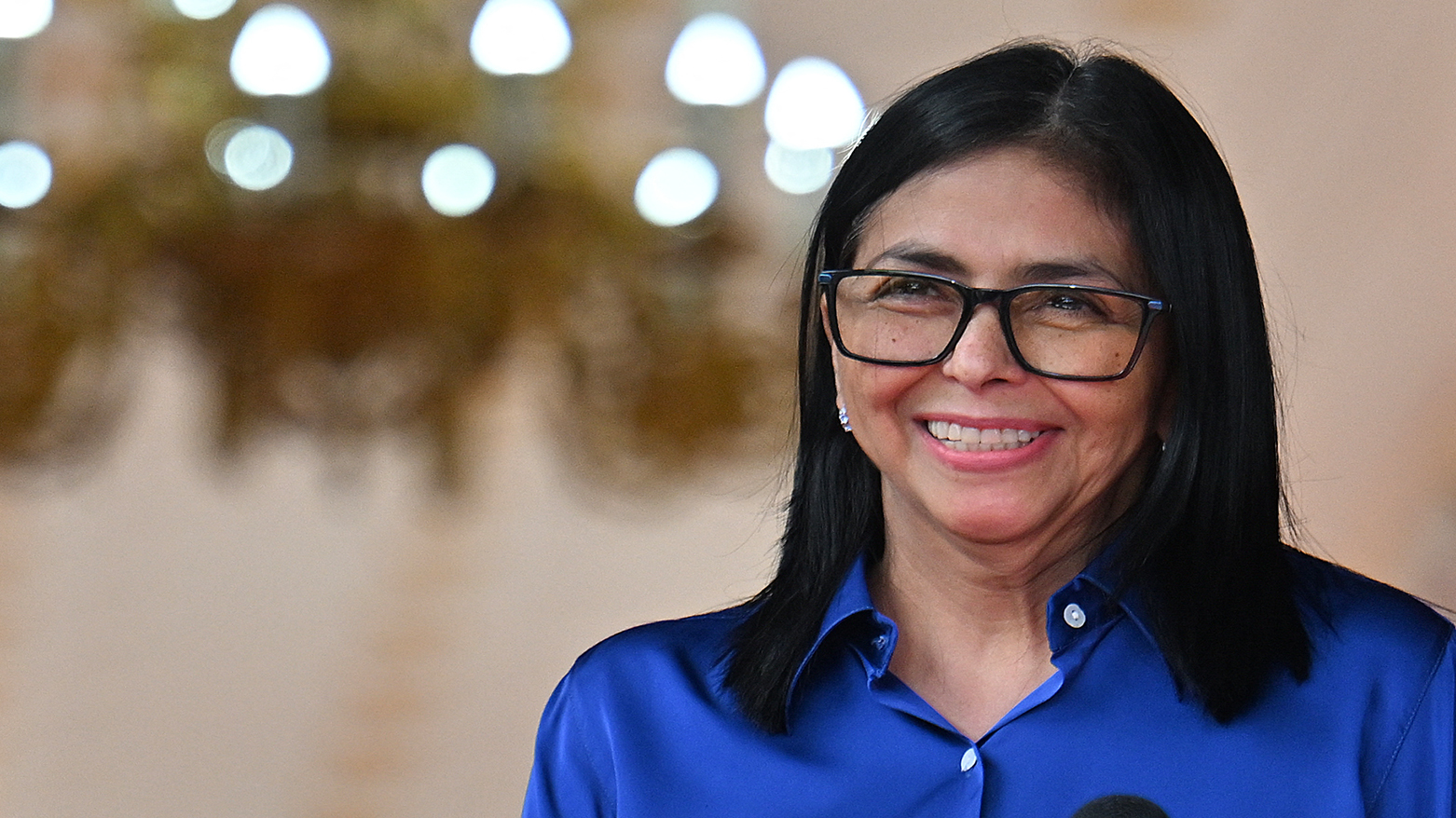
ERBIL (Kurdistan24) — U.S. President Donald Trump said he held a “very good” phone call on Wednesday with Venezuela’s interim leader Delcy Rodríguez, describing what he characterized as significant progress toward stabilizing the crisis-hit South American nation and resetting bilateral relations.
In a statement posted on his social media platform Truth Social, Trump said the conversation covered a wide range of issues, including oil, minerals, trade, and national security, framing the talks as part of a broader effort to help Venezuela “stabilize and recover.”
“We are making tremendous progress, as we help Venezuela stabilize and recover,” Trump wrote, adding that the partnership between Washington and Caracas “will be a spectacular one for all.”
He also claimed that Venezuela would “soon be great and prosperous again.”
Independent reporting by multiple international news outlets confirmed that the call took place and that it focused on economic cooperation and security-related matters, echoing the themes outlined in Trump’s post.
Venezuelan officials, cited by foreign media, described the conversation as lengthy and courteous, signaling a potential thaw after years of strained relations.
The outreach marks a notable moment in U.S.–Venezuela relations, which have been defined in recent years by sanctions, diplomatic isolation, and sharp political rhetoric.
Energy analysts say the emphasis on oil and minerals is particularly significant, given Venezuela’s vast reserves and Washington’s long-standing restrictions on the country’s energy sector.
Trump’s comments suggest an intent to explore pragmatic engagement tied to economic recovery and strategic interests, although no concrete policy changes or agreements were announced following the call.
The White House has not released a formal readout beyond Trump’s social media remarks.
Observers note that any shift in U.S. policy toward Venezuela would likely face scrutiny at home and abroad, especially regarding sanctions, democratic governance, and human rights concerns.
Still, the tone of the exchange—and its public framing—points to a possible recalibration in how Washington approaches Caracas in the months ahead.
Trump’s outreach to Rodríguez comes as he is also preparing to meet on Thursday with Venezuelan opposition leader María Corina Machado at the White House.
The meeting follows Trump’s unusually positive public remarks about Rodríguez, whom he described as a “terrific person,” and his satisfaction with what he called “terrific progress” since U.S. special forces seized former leader Nicolás Maduro and his wife in a deadly raid.
Rodríguez, for her part, said the call was “productive and courteous” and marked by “mutual respect.”
Notably, Trump’s public account of the conversation made no reference to a political transition in Venezuela, an issue that has long been central to U.S. policy but has recently been downplayed in favor of economic priorities, particularly access to Venezuelan oil.
Machado, who has campaigned for years to end Maduro’s rule, is expected to use her meeting with Trump to push the issue of democratic transition back to the forefront of Washington’s agenda.
Machado, 58, was awarded the Nobel Peace Prize last year for her pro-democracy activism despite repeated threats of imprisonment by Maduro’s government. Venezuela’s opposition has presented evidence alleging that Maduro stole the 2024 election from Machado’s party and its candidate, Edmundo González Urrutia—claims supported by Washington.
Venezuela’s electoral authorities, widely viewed as aligned with Maduro, never released official voting data. Following post-election protests, hundreds were arrested, González Urrutia fled to Europe to seek asylum, and Machado went into hiding inside Venezuela before later traveling to Norway to receive her Nobel Prize.
Meanwhile, Caracas has moved to release political prisoners under pressure from Washington, though the scope of the releases remains disputed. Rodríguez said 406 detainees had been freed since December in a process that she said was ongoing, while the Foro Penal legal rights group put the figure closer to 180.
AFP’s count showed about 70 people released since Maduro’s fall, with authorities reportedly freeing detainees quietly at undisclosed locations to avoid public scenes of celebration.