'Anti-SDF Forces Follow ISIS Ideology,' Says ISIS Camp Supervisor
Sheikhmous Ahmed warned that anti-SDF forces hold ISIS ideologies, endangering 10,000 prisoners. Senator Lindsey Graham cautioned Damascus against escalation, citing U.S. national security risks.
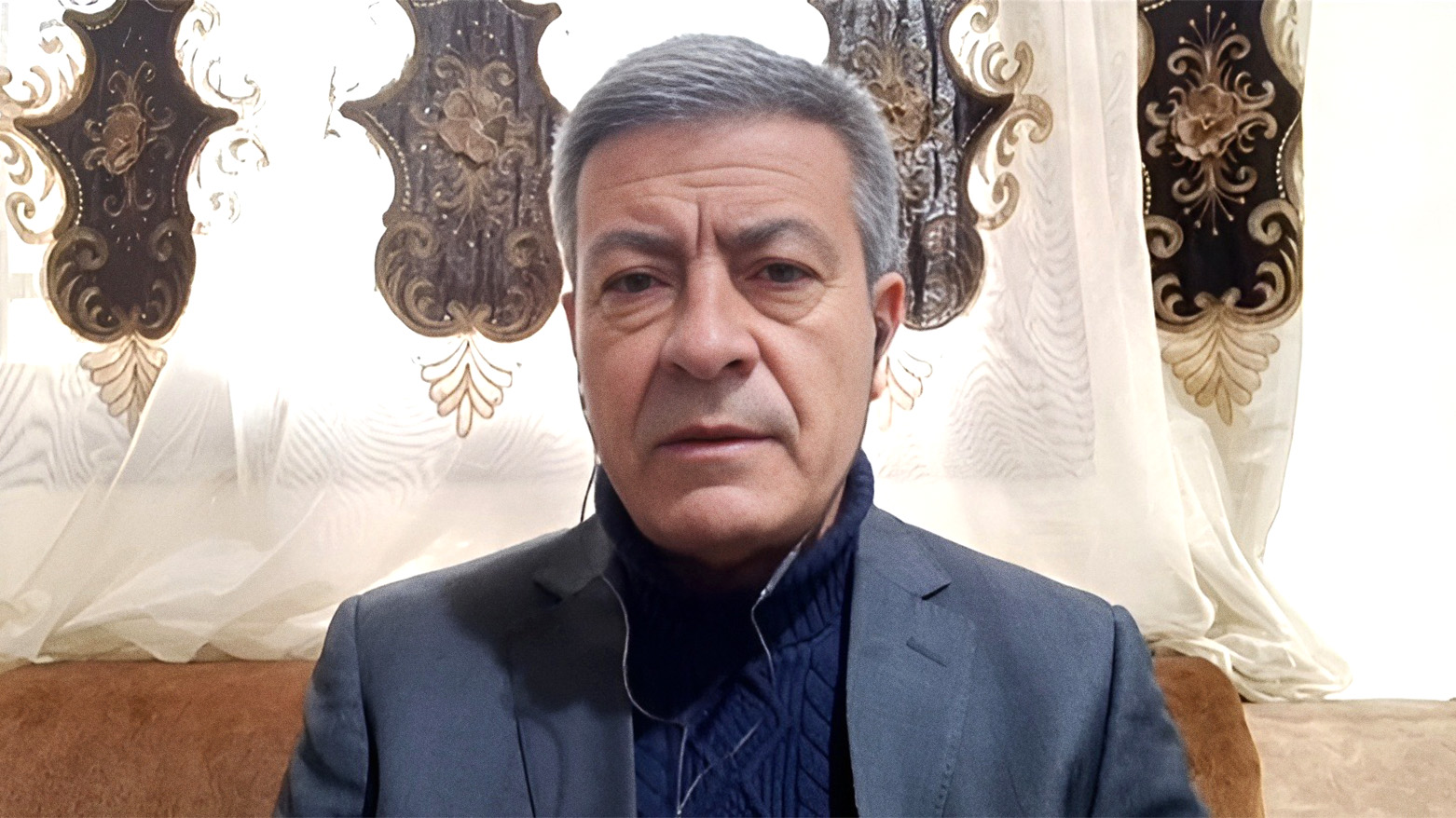
ERBIL (Kurdistan24) – A senior official overseeing detention camps in Western Kurdistan (Rojava) issued a stark warning on Friday regarding the ideological composition of the forces currently engaged in hostilities against the Syrian Democratic Forces (SDF), asserting that these groups adhere to the same extremist doctrines as the Islamic State (ISIS).
The comments by Sheikhmous Ahmed, the Supervisor of the IDP and ISIS camps, coincide with a forceful intervention from the United States Senate, where influential lawmakers have cautioned the new Syrian government that any military escalation threatens the security of thousands of detained terrorists.
Speaking during a news bulletin on Kurdistan24 on Friday, Jan. 16, 2026, Ahmed characterized the current wave of attacks against the SDF not merely as a political or territorial dispute, but as an ideological conflict with severe implications for regional stability.
"Those who attack the SDF forces behave according to the ideology and the same beliefs of the terrorist organization ISIS," Ahmed told Kurdistan24.
He argued that the objective of these attacking forces is to establish a governance structure where only those with extremist views hold power in Syria. "They have no belief in coexistence and democracy," he added.
The Specter of Mass Breakouts
Central to Ahmed’s warning is the precarious status of the detention facilities located across North and East Syria. He revealed that there are currently approximately 10,000 ISIS gunmen incarcerated in these prisons, a population that includes both Iraqi nationals and foreign fighters.
Ahmed expressed deep concern that the ongoing instability provides the specific conditions these detainees have been awaiting. "Those gunmen have been waiting for years for an opportunity to escape; their exit from prison would undoubtedly create a major danger for the entire region," he stated.
He further elaborated on the evolving tactics of the extremist remnants.
According to the camp supervisor, the SDF has issued multiple warnings that ISIS is reorganizing within the Syrian plains. Rather than operating openly under their own banner, these elements are reportedly masking their activities under different names and the guise of "tribal gunmen."
Ahmed indicated that these groups are committing terrorist acts and actively attempting to seize control of prisons and camps to replenish their ranks.
The implications of such a resurgence, he noted, would extend far beyond the Syrian borders.
Ahmed emphasized that the threats posed by these groups constitute "a real threat to Iraq and the Kurdistan Region as well," given that they operate with the same strategy and methods as the Islamic State at its zenith.
US Senator Issues Ultimatum to Damascus
The concerns raised by local officials regarding prisoner security have been amplified by high-level warnings from Washington.
On Friday, United States Senator Lindsey Graham (R-S.C.) posted a statement on the social media platform X, expressing alarm at reports that the new Syrian government is aligning with Türkiye to use military force against the Syrian Kurds.
Senator Graham, a prominent voice on U.S. foreign policy, explicitly linked the protection of the SDF to the containment of the ISIS threat. He noted that the Kurdish-led forces have control of approximately 9,000 of the "worst of the worst" ISIS prisoners.
"It is in our vital national security interest that these prisoners do not go back to the battlefield," Senator Graham wrote. He issued a direct warning to the leadership in Damascus: "If there’s an escalation of attacks against the Kurds by Syrian forces supported by Türkiye, this will create a whole new dynamic."
The Senator predicted "wide and deep bipartisan support" in Washington to push back against such aggression.
He also dismissed the notion that the U.S. would accept any transfer of custody for the detainees. "If anyone believes that I or any of my colleagues would be comfortable - at this stage - for the ISIS prisoners to be guarded by the Syrian army or Türkiye instead of the Kurds, you are sadly mistaken. Choose wisely," Graham stated.
SDF Welcomes "Early Warning"
The Syrian Democratic Forces immediately welcomed Senator Graham’s intervention. Farhad Shami, the spokesperson for the SDF, wrote on X that the force highly appreciates the Senator’s "clear stance and efforts."
Shami framed the Senator's statement as an "early warning" regarding the risks of escalation against the people of northern and eastern Syria.
He noted that the warning reflects a "deep understanding of the requirements of regional and international security" and expressed hope that such responsible positions could help prevent "new massacres against our people."
Context of Violence and Humanitarian Crisis
The warnings regarding prison security are set against a backdrop of intense military escalation that began earlier in January 2026.
The Syrian Arab Army (SAA), supported by heavy armor and artillery, launched a large-scale offensive against Kurdish-led Internal Security Forces in the Aleppo neighborhoods of Sheikh Maqsud and Ashrafiyeh.
The operation resulted in the effective end of the Kurdish autonomous administration in those districts and generated a severe humanitarian crisis. Reports indicate that at least 216 combatants were killed, while more than 260 Kurdish civilians remain missing.
The violence forced the displacement of between 142,000 and 155,000 residents, many of whom fled to the Afrin district amid harsh winter conditions. Critical infrastructure was also targeted; the Khalid Fajr Hospital, the sole medical facility serving the neighborhoods, was rendered inoperable by repeated shelling.
While a partial ceasefire was eventually reached to allow for evacuations, the conflict has expanded geographically.
The SDF has reported strikes by suicide drones and artillery targeting the vicinity of the strategic Tishreen Dam and other areas in the eastern countryside of Aleppo. Additionally, the SDF reported that a Turkish Bayraktar drone struck a position in the village of al-Buassi near Tabqa, injuring several fighters.
Bipartisan Consensus in Washington
Senator Graham’s assertion of bipartisan support for the Kurds is corroborated by recent statements from U.S. lawmakers across the political spectrum. In interviews with Kurdistan24, members of Congress emphasized the necessity of protecting the Kurdish minority.
Congressman Joe Wilson (R-SC) warned that divisions in Syria create openings for ISIS, while Congressman Adam Smith (D-WA) stated, "It’s very important that the United States protect the Kurdish minority in Syria."
Congressman Mark Takano (D-CA) highlighted the importance of keeping "Kurdistan’s autonomy intact," and Congressman Seth Moulton affirmed the U.S. obligation to "stand up for our allies."
As the security architecture in northern Syria remains fragile, Sheikhmous Ahmed concluded his remarks by noting that the international community is fully apprised of the stakes. "The United Nations, and above all America, are very well aware of the details of the situation and the dangers facing the region," he said.