SDF Reports Mass Deployment of Hostile Forces as DAANES Declares State of Emergency
SDF official Farhad Shami reports over 100,000 hostile forces attacking North and East Syria. The region declared a state of emergency as the Syrian Army seized key oil fields and clashes intensified.
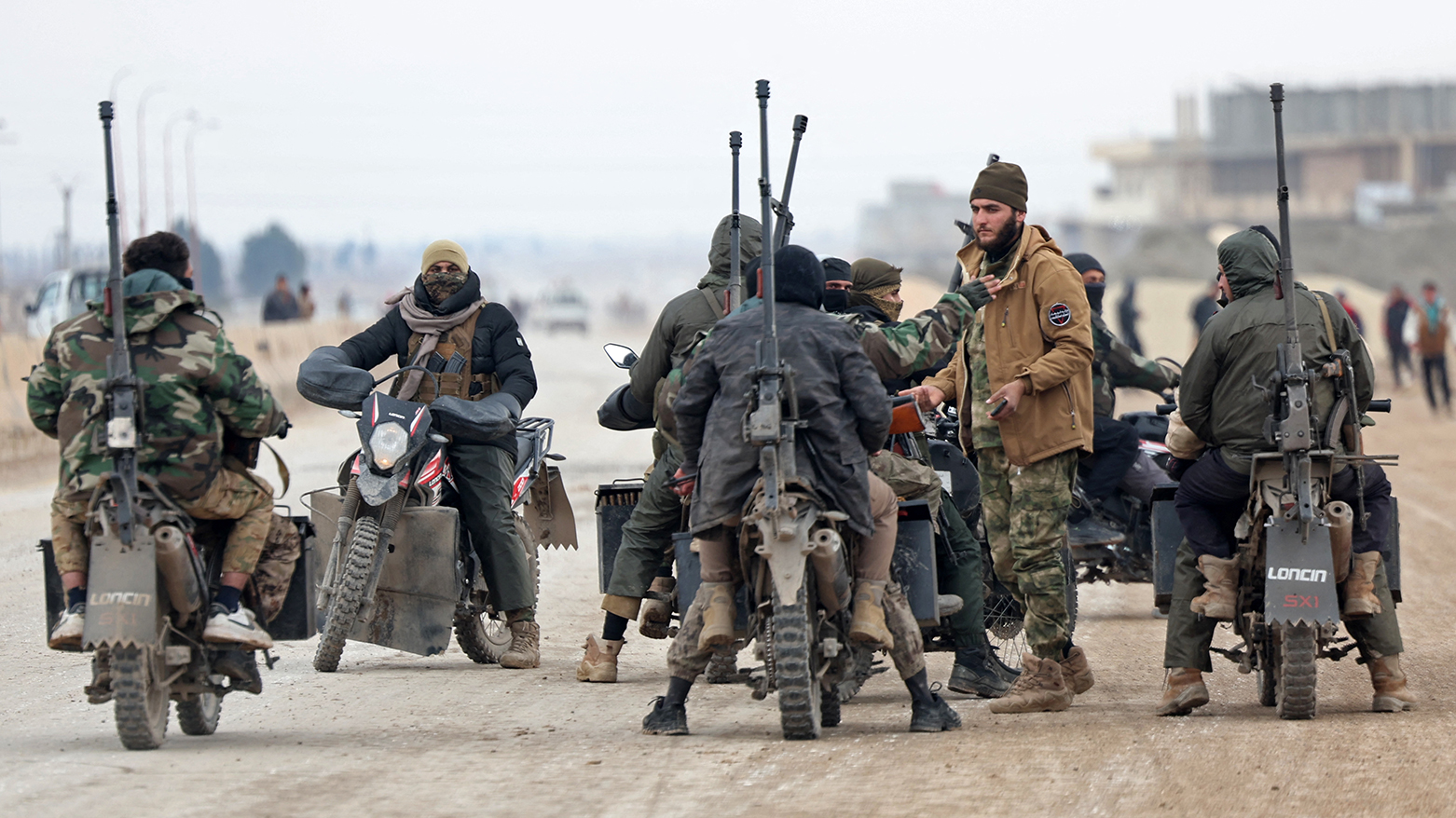
ERBIL (Kurdistan24) - Farhad Shami, the Director of the Media Center of the Syrian Democratic Forces (SDF), announced that the Interim Government has deployed its forces to the outskirts of North and East Syria, signaling a major escalation in the multi-front conflict destabilizing the region.
In a series of statements regarding the deteriorating security environment, Shami warned that a combined force comprising more than 100,000 "mercenaries" is currently launching coordinated attacks on the territory, an offensive that Kurdish leadership has now characterized as an "existential war."
Shami outlined a complex threat matrix facing the region, asserting that the Interim Government, Turkish-backed mercenaries, and Islamic State (ISIS) operatives are conducting simultaneous assaults.
According to the Media Center Director, the government is determined to expand the scope of these military operations. He noted that SDF units have engaged these advancing elements, claiming that "dozens of mercenary convoys have been targeted by our forces."
Shami also addressed the security of detention facilities holding ISIS affiliates, clarifying that international forces are not responsible for the attacks targeting these centers, implying that the instability is being driven by the encroaching hostile actors.
The disclosure of these massive troop movements and the coordination between disparately aligned groups comes amid a heightened state of alert across the northeast.
On Sunday, January 18, 2026, the Democratic Autonomous Administration of North and East Syria (DAANES) formally declared a state of emergency and issued a general call to arms.
Citing imminent threats to its territorial integrity, the administration urged citizens, particularly those in the Jazira and Kobani areas, to remain vigilant and prepare for "popular defense."
The administration’s statement underscored the gravity of the situation, declaring, "We are facing an existential war; to protect our achievements and identity, the only option before us is popular defense."
The mobilization of local defense forces described by Shami coincides with significant territorial shifts in Syria’s resource-rich northeast.
On Sunday, the Reuters news agency reported that the Syrian Arab Army (SAA) had seized control of the Omar oil field and the Conoco gas field in the eastern countryside of Deir ez-Zor Governorate. These facilities represent critical economic infrastructure previously secured by the SDF following the territorial defeat of the Islamic State.
The advance of government troops has precipitated a breakdown in local governance and security.
The Governor of Deir ez-Zor suspended official duties and issued a directive instructing citizens to remain in their homes, advising against travel unless for absolutely necessary business.
Syrian state media corroborated reports of the energy fields' seizure and indicated that army units had deployed in the villages of Ziban and the areas surrounding Deir ez-Zor city.
As the conflict widens, the humanitarian situation has deteriorated sharply.
In Raqqa, the local Media Directorate reported on Sunday that the city’s drinking water supply had been completely cut off. Authorities attributed the outage to damage sustained by main water transmission pipelines, alleging that shelling by the SDF had incapacitated the infrastructure.
The SDF categorically denied these allegations, dismissing the accusation as "merely Damascus propaganda" with "no basis in truth."
Conflicting narratives continue to obscure the reality on the ground regarding strategic urban centers. The Operations Command of the Syrian Arab Army announced a "military victory" on Sunday, claiming full control over the city of Tabqa, the Tabqa Military Airport, and the Euphrates Dam.
Government sources also asserted that their troops had seized the Mansoura Dam and the towns of Ratla and Hamam, positioning them within five kilometers of Raqqa. However, SDF leadership denied that Tabqa or the dams had fallen, emphasizing that their fighters had repelled the army's attacks and prevented any advance toward these strategic locations.
Shami’s call for vigilance follows the collapse of a withdrawal agreement intended to de-escalate the violence. On Friday, Mazloum Abdi, the General Commander of the SDF, announced a "decisive decision" to withdraw Kurdish forces toward the east of the Euphrates river as a gesture of goodwill.
While the withdrawal reportedly began on Saturday morning, the SDF Media Center stated that government forces violated the arrangement by launching an offensive in the "Dabsi Afnan" area before the agreed-upon 48-hour deadline had expired. The SDF has held international monitors responsible for the ensuing bloodshed.
Despite the escalation described by Shami, diplomatic channels remain active. On Saturday, Kurdistan Region President Masoud Barzani hosted a high-level summit in Erbil with U.S. Special Envoy Tom Barrack and General Abdi.
The participants discussed practical steps to prevent further escalation, with President Barzani emphasizing the necessity of dialogue.
This sentiment was echoed by imprisoned Kurdish leader Abdullah Öcalan, who, in a meeting with a delegation from the DEM Party on January 17, warned that the violence is an attempt to "sabotage the peace process" and urged a resolution through negotiation rather than conflict.