SDC Official Warns of Imminent Humanitarian Disaster in Raqqa, Tabqa as Conflict Widens
SDC official Abdulwahab Khalil warned of a humanitarian disaster in Raqqa and Tabqa due to ongoing clashes, urging dialogue over military solutions. He welcomed the Erbil summit as a positive step amid widening conflict.
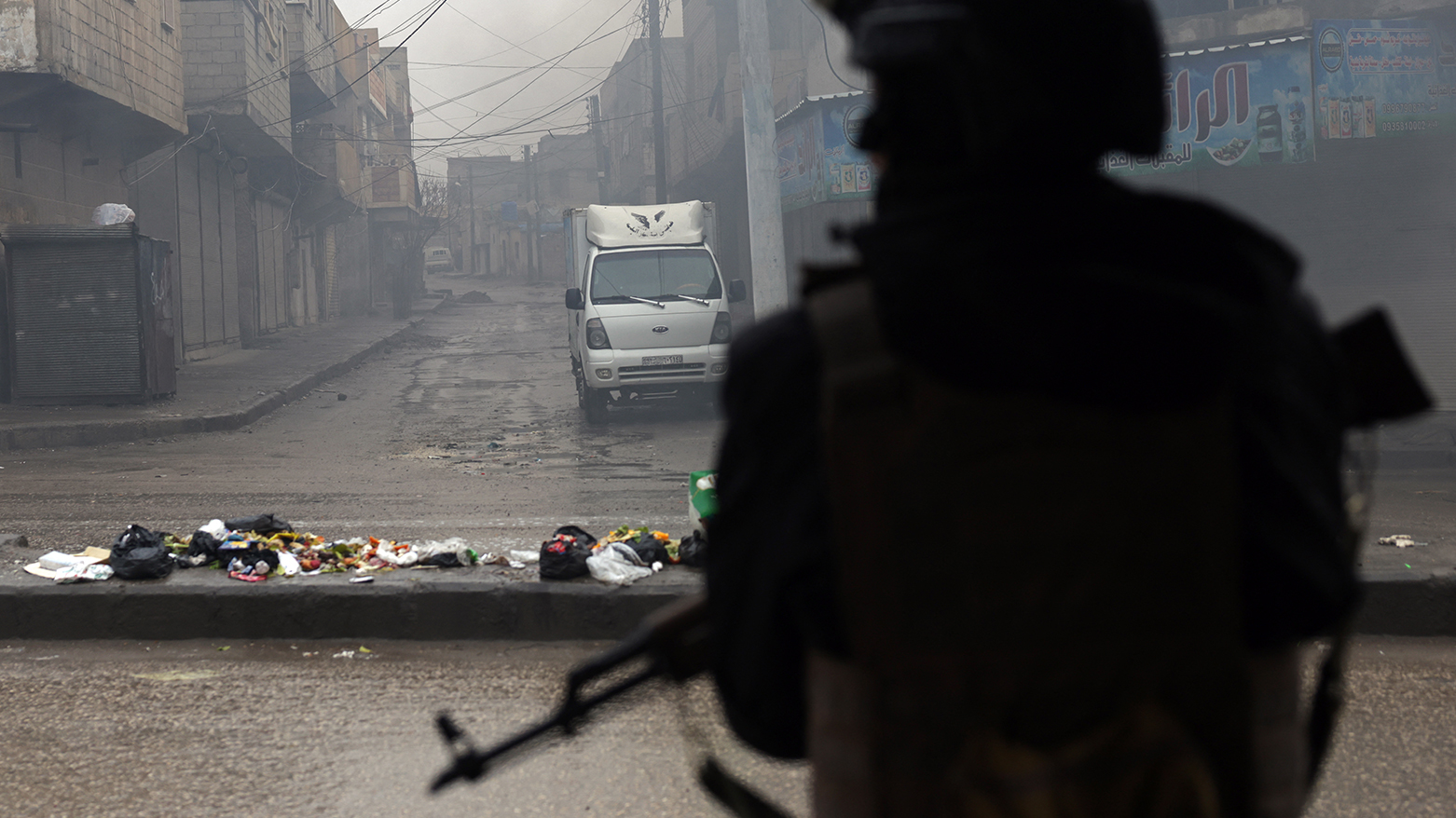
ERBIL (Kurdistan24) - A senior official from the Syrian Democratic Council (SDC) warned on Sunday that the intensifying military conflict between the Syrian Democratic Forces (SDF) and the Syrian Arab Army has created a critical threat to civilian populations in Raqqa and Tabqa, raising the specter of a widespread humanitarian disaster. Abdulwahab Khalil, the Head of Relations for the SDC in Damascus, told Kurdistan24 in a special statement that the deterioration of the security environment in these strategic urban centers has reached a tipping point, necessitating an immediate pivot toward dialogue to prevent further loss of life.
Speaking on Sunday, January 18, 2026, Khalil provided a grim assessment of the situation on the ground, indicating that fighting continues to rage within the city of Raqqa. He emphasized that the violence is not limited to the frontlines established by government troops but has been complicated by new actors joining the fray.
Specifically, Khalil noted that Arab tribes in the Deir ez-Zor region have begun targeting SDF bases and headquarters, a development that has significantly compounded the security challenges facing the Kurdish-led administration.
The warning from the SDC official comes amidst a rapidly shifting battlefield that has seen government forces claim substantial territorial gains.
On Sunday, the Syrian Arab Army pressed a multi-front offensive that has compromised the territorial integrity of the semi-autonomous northeast. Reports indicate that government troops have seized control of the Omar oil field and the Conoco gas field in the eastern countryside of Deir ez-Zor Governorate.
These facilities represent the economic lifeblood of the autonomous region and were key assets secured by the SDF during the campaign against the Islamic State.
Khalil emphasized that the military escalation carries risks beyond immediate combat casualties.
He highlighted the precarious status of detention centers holding Islamic State (ISIS) prisoners, describing the potential security vacuum around these facilities as a "major danger" that must be taken seriously by all parties involved.
The prospect of a resurgence of extremist activity amidst the chaos remains a primary concern for the SDC leadership.
Despite the intensity of the current clashes, Khalil reiterated the SDC’s position that a military solution is unviable. "Problems cannot be resolved through military means," he stated, affirming that the SDF desires dialogue and a peaceful resolution to end the current tensions.
In this context, he expressed satisfaction with recent diplomatic initiatives, specifically referring to high-level talks held in the Kurdistan Region. "We consider the Erbil meeting a positive step," Khalil said, signaling the SDC's support for the mediation efforts undertaken by the Kurdistan Regional Government.
The "Erbil meeting" referenced by Khalil refers to a significant summit hosted on Saturday by President Masoud Barzani in Pirmam.
The gathering brought together key stakeholders including Tom Barrack, the United States President’s Special Envoy for Syrian Affairs; Mazloum Abdi, the General Commander of the Syrian Democratic Forces; and the President of the Kurdish National Council of Syria (ENKS).
The summit was part of a broader diplomatic framework intended to resolve the deepening instability in Syria, which the Democratic Autonomous Administration of North and East Syria (DAANES) has formally characterized as an "existential war."
Following that summit, President Barzani issued a formal message on Sunday calling for an immediate halt to the fighting. He urged all parties to return to previously concluded agreements to resolve outstanding issues and achieve stability.
President Barzani also offered a guarded endorsement of recent political overtures from Damascus, characterizing the Syrian President’s decree regarding Kurdish rights as a "positive step" and in the "right direction," while stressing that it should serve as a foundation for constitutional guarantees.
However, the diplomatic optimism expressed regarding the Erbil summit contrasts sharply with the reality described by Khalil and other reports from the field. The humanitarian crisis he warned of is already manifesting in Raqqa.
On Sunday, the Raqqa Media Directorate issued an official statement declaring that the city’s drinking water supply had been completely cut off.
Authorities attributed the outage to damage sustained by main water transmission pipelines, alleging that shelling by the SDF had put the infrastructure out of service. The SDF categorically denied these allegations, describing the accusation as "merely Damascus propaganda" with "no basis in truth."
The breakdown of essential services is exacerbated by conflicting narratives regarding control of strategic infrastructure.
The Operations Command of the Syrian Arab Army announced a "military victory" on Sunday, claiming to have established complete control over the strategic city of Tabqa, the Tabqa Military Airport, and the Euphrates Dam.
Government sources asserted that their troops were positioned only five kilometers from the western entrance of Raqqa city. In contrast, the SDF leadership has denied that Tabqa and the dams have fallen to the Syrian Army, emphasizing that their fighters had repelled the attacks.
The volatility extended to Deir ez-Zor, where the SDC official noted the involvement of Arab tribes.
The situation there has deteriorated to the point where the Governor of Deir ez-Zor announced the immediate suspension of official duties and issued a directive instructing citizens to remain in their homes, advising against travel unless for absolutely necessary business.
Syrian state media corroborated reports that army units had deployed in the villages of Ziban and the areas surrounding Deir ez-Zor city.
Faced with these threats, the Autonomous Administration declared a state of emergency on Sunday and issued a general call to arms.
The administration’s statement cited imminent threats to its territory, particularly in the Jazira and Kobani areas, urging citizens to prepare for "popular defense" to protect their identity and achievements. This mobilization reflects the severity of the "existential war" mentioned in their declaration.
While the SDC pushes for dialogue, pointing to the Erbil talks as a model, the breakdown of previous agreements looms over the current crisis.
General Abdi had previously announced a decision to withdraw Kurdish forces toward the east of the Euphrates river as a gesture of goodwill to implement the March 10 agreement. However, the SDF claims that government forces violated this truce by launching offensives before the agreed-upon withdrawal deadline, specifically in the Dabsi Afnan area.
The complex diplomatic landscape also involves direct engagement with Damascus. Reports indicate that General Abdi held a phone call with authorities in the Syrian capital on Sunday to arrange an urgent meeting with Syrian President Ahmed al-Sharaa, in an attempt to arrest the conflict.
This track, combined with the U.S. re-engagement signaled by Envoy Barrack’s presence in the region, represents the diplomatic alternative to the military escalation that Khalil warns will lead to disaster.
Khalil concluded his assessment with a stark prediction: if the situation continues in its current manner without a return to the negotiating table, a humanitarian disaster is not merely a risk but an expected outcome in Raqqa and Tabqa.
His comments underscore the fragility of the civilian situation as major urban centers become the focal point of a renewed and high-stakes struggle for control of eastern Syria.